


On Christmas Day last year, a major disruption occurred between Finland and Estonia — a key power line running along the seabed was damaged, cutting electricity transmission by two-thirds.
The following day, Finnish authorities boarded and detained a vessel carrying Russian oil to Turkey. The ship, registered in the Cook Islands and named Eagle S, was suspected of dragging its anchor across the ocean floor, damaging the power cable and several nearby internet lines over a 100-kilometre stretch.
The European Union labeled the incident as sabotage and pointed to Russia’s “shadow fleet” — also known as “ghost ships” — which the Kremlin uses to bypass Western sanctions on oil exports.
In response, NATO allies sprang into action. Eleven member nations have since committed to a coordinated mission aimed at preventing further sabotage at sea.
Inside NATO’s Baltic Mission
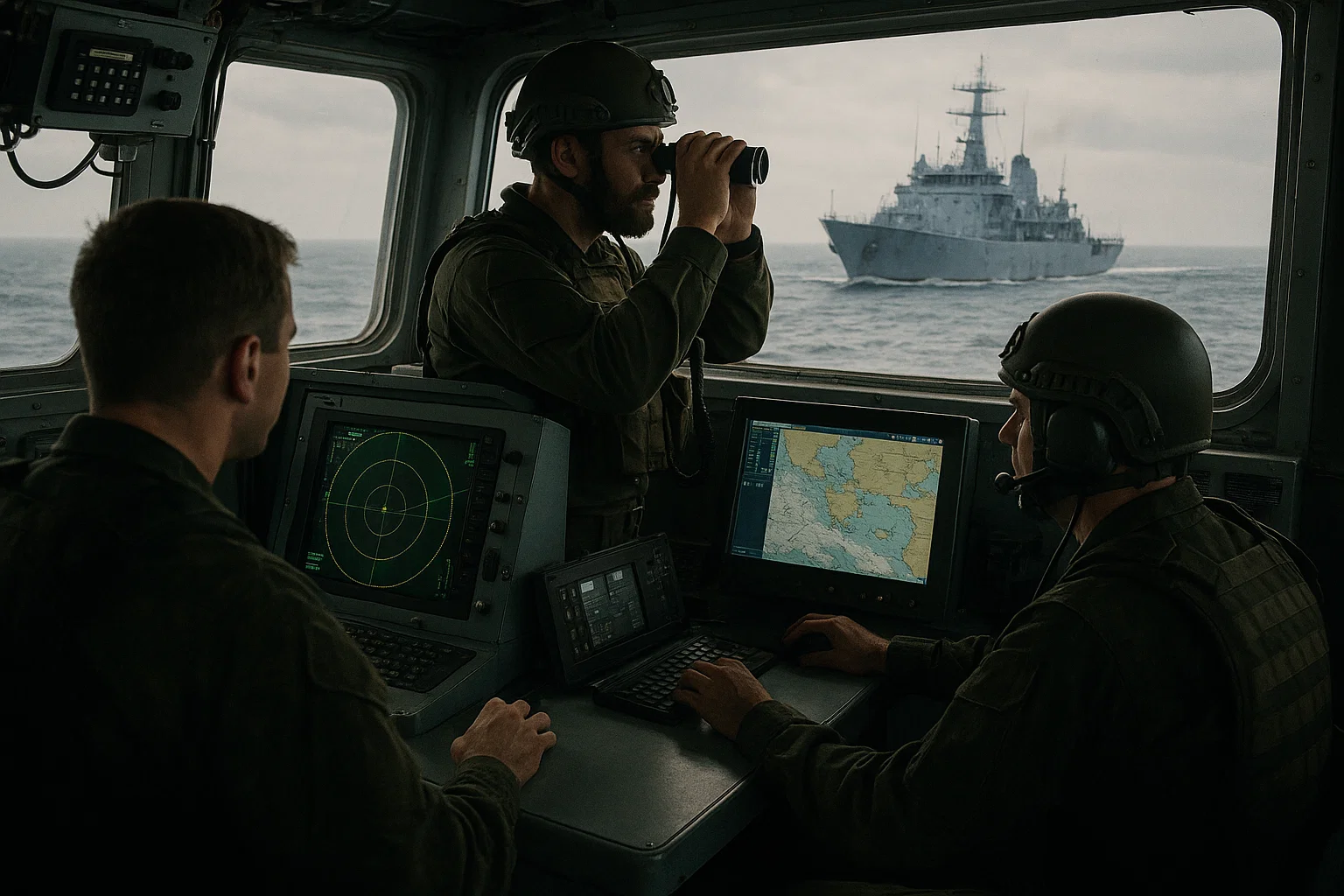
The ABC joined Dutch and Belgian crews operating in the Baltic Sea, off the coast of Lithuania — a former Soviet republic now a strong NATO ally.
After a lengthy trip from London to the Lithuanian port city of Klaipeda, reporters met the NATO convoy. Their mission: to protect vital undersea cables that carry power and data between nations. Commander Erik Kockx, who leads the operation, explained the high stakes.
“These cables and pipelines are expensive to fix, and their damage can disrupt energy supplies or cut off access to vital data,” he told the ABC.
Since Russia’s full-scale invasion of Ukraine in February 2022, both Finland and Sweden have joined NATO, leaving Russia as the only non-member country bordering the Baltic Sea. In that time, several subsea cables have been mysteriously severed.
“Anyone intending to damage infrastructure in this region should know they’re being watched and that consequences will follow,” Commander Kockx warned.
Strategic Waters and Russian Tensions
Russia’s key Baltic access point is the port of St Petersburg. To the south, the heavily militarized enclave of Kaliningrad — wedged between Lithuania and Poland — adds further strategic tension.
To counter this threat, NATO’s increased military presence above and below the water serves both as surveillance and deterrent. Drones, divers, and remotely operated vehicles are being deployed to survey and map the sea floor.
Merte Peeters, commanding officer of the Dutch vessel Snellius, described the dual objective of the mission.
“Firstly, it reminds vessels that someone is watching,” he said. “Secondly, it reassures neighbouring countries that NATO is present and alert.”
Rogue Ships and Suspicious Incidents
Most of the suspected sabotage involves ships dragging anchors across the seabed for long distances, sometimes over hundreds of kilometres.
Just a month before the Christmas Day attack, two other cables were damaged within 24 hours: the Arelion cable between Gotland and Lithuania, and the C-Lion 1 between Helsinki and Rostock, Germany.
Investigators suspect another ship, the Yi Peng 3 — Chinese-flagged but believed to be part of Russia’s covert fleet — damaged both. Similarly, the Newnew Polar Bear was identified in the rupture of a Finnish-Estonian gas pipeline in October 2023. China admitted the ship was responsible but denied intentional wrongdoing.
“If I dropped anchor on a ship like that, I’d definitely notice,” Peeters said.
The Ghost Fleet’s Growing Role
Both the Eagle S and Yi Peng 3 are considered part of Russia’s “ghost fleet” — vessels used to export oil clandestinely. By mid-2024, this hidden fleet handled over 70% of Russia’s oil shipments.
The EU recently increased sanctions on this shadow fleet, banning 342 ships, though analysts estimate the real number exceeds 700.
Moscow is believed to have spent over $15 billion expanding the fleet — made up largely of outdated, unflagged, uninsured ships that disable tracking to avoid detection. These tactics are crucial for sustaining Russia’s war economy.
Despite persistent denials from the Kremlin, many European countries — including Estonia, Finland, and Germany — hold Russia responsible for cable sabotage.
Hybrid Warfare Escalates
What began as a workaround to sanctions has evolved into a form of “hybrid warfare” — subversive tactics meant to destabilize Western democracies through fear and disruption.
Gill Priem, commander of the Belgian ship Lobelia, said his crew is adapting to this new type of threat. “NATO must evolve with the geopolitical climate,” he said. “Since we’ve increased our presence here, no further incidents have occurred in this area.”
Though these actions fall short of direct military attacks, they’ve forced NATO countries to strengthen their security responses.
Last month, Russia raised the stakes. When the Jaguar, a sanctioned Russian shadow ship, entered Estonian waters, the Estonian navy moved to intercept. The crew refused, and shortly after, a Russian fighter jet violated NATO airspace, remaining there for nearly a minute.
“This is a serious breach,” said Lithuania’s Foreign Minister Kestutis Budrys. “They responded militarily — this is no longer civilian.”
A New Front in the Conflict
The incident marked the first time Russia visibly backed one of its shadow ships with military force.
“This reckless use of hundreds of vessels to sustain Russia’s war machine creates a volatile situation,” said Lithuanian Foreign Minister Gabrielius Landsbergis.
He accused Russia of exploiting loopholes to sidestep sanctions and warned the West not to underestimate Moscow’s strategy.
“Russia is preparing for prolonged conflict with the West,” he said. “If we’re not strong, resilient, and determined, we make it easier for them to act on their intentions.”
The combination of intent and sabotage is stirring fears of a broader confrontation in Europe.
