


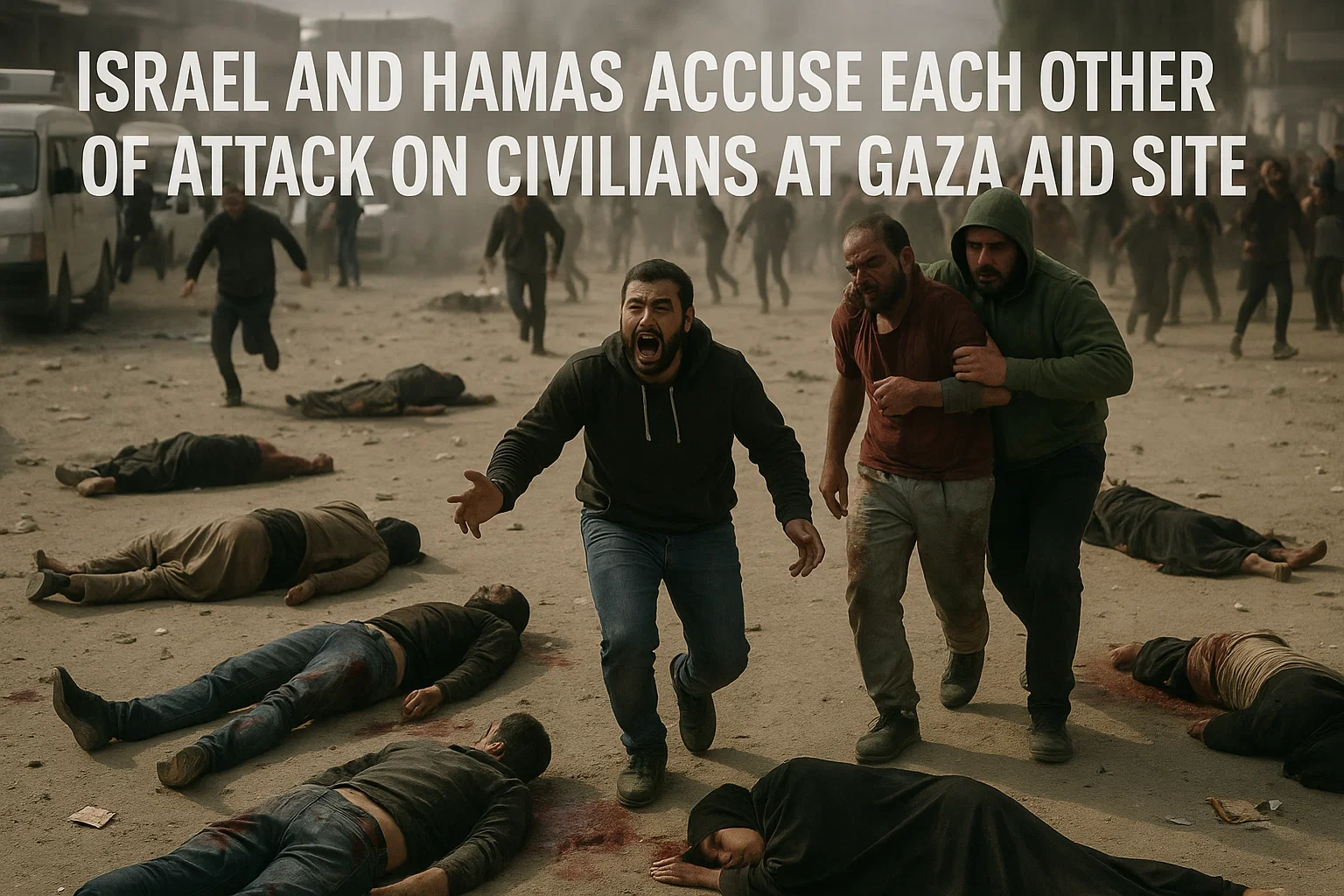
International aid organisations have once again condemned the new aid distribution system being implemented in Gaza, calling it a “death trap” after more than 30 Palestinians were killed and many others injured during gunfire at a distribution site on Sunday morning.
Field hospitals became overwhelmed with casualties following the incident near Rafah, in southern Gaza, where thousands of desperate Palestinians gathered to collect supplies for their families.
Hamas accused Israeli forces of opening fire, but both the Israel Defense Forces (IDF) and the Gaza Humanitarian Foundation (GHF)—a US-Israeli backed group managing the aid sites—denied these claims.
In response, the IDF accused Hamas of sending armed men to the site, releasing drone footage it said showed militants targeting civilians. ABC has not independently verified this footage.
One of the Palestinians at the site, 37-year-old Ikram Nasser, arrived Saturday night to secure her family’s place in line. She said Israeli drones announced the site would open at 6 a.m. Sunday, instructing people to wait and “be disciplined.”
Nasser described hiding overnight to avoid being shot by planes or tanks. When the drone signalled it was time to enter, they moved forward but were soon surrounded and fired upon by soldiers from all sides.
“We were like sheep,” she told ABC.
Nasser is still searching for two brothers missing after the violence and said ambulances were blocked from entering to help the injured or collect the dead.
“We used a garbage trolley to carry bodies to an ambulance outside,” she said. “I feel like I’m born again today. I will never go to these distributions again. I’d rather starve.”
Despite having no food, flour, sugar, or formula for her son, she vowed not to return.
In an official statement, the IDF said an initial review found “no evidence” that its forces fired at civilians near or inside the aid distribution site, calling reports otherwise false.
IDF spokesperson Brigadier General Effie Defrin accused Hamas of trying to sabotage aid efforts, spreading false information, and urged the public not to believe Hamas’ rumours.
The IDF later released drone footage it said showed armed, non-uniformed gunmen firing on civilians and accused Hamas of fueling chaos.
GHF also released security camera footage from the site showing large crowds entering the facility but no visible gunfire or injuries, highlighting the desperation of the starving population.
Most casualties were taken to field hospitals in southern Gaza. Marwan Al-Hams, director of Gaza’s field hospitals, reported 31 killed and at least 179 wounded, with injuries focused on the upper body.
Al-Hams said the IDF seems to be sending a “clear message” to starving Palestinians that they will be killed either from the air or on the ground near aid sites.
The International Committee of the Red Cross (ICRC) said its Rafah field hospital treated the highest number of weapon-wounded in a single incident since opening over a year ago, overwhelming their capacity.
The ICRC highlighted that civilians in Gaza have faced months of intense fighting and are forced to navigate dangerous areas to access food and water.
Philippe Lazzarini, head of the UN’s Palestinian aid agency UNRWA, called the Israeli-American backed aid distribution method a “death trap,” forcing thousands to travel long distances to a heavily bombarded area.
He stressed that aid must be delivered at scale and safely, which can only be done by the United Nations including UNRWA.
Lazzarini also mentioned “competing narratives” and “disinformation campaigns” surrounding the event and called for international media to be allowed into Gaza to report independently on ongoing atrocities.
Currently, Israel restricts international media access to Gaza, only permitting visits under tightly controlled IDF supervision. No independent international journalists have entered Gaza since the January ceasefire. The Foreign Press Association is challenging this media ban.
