


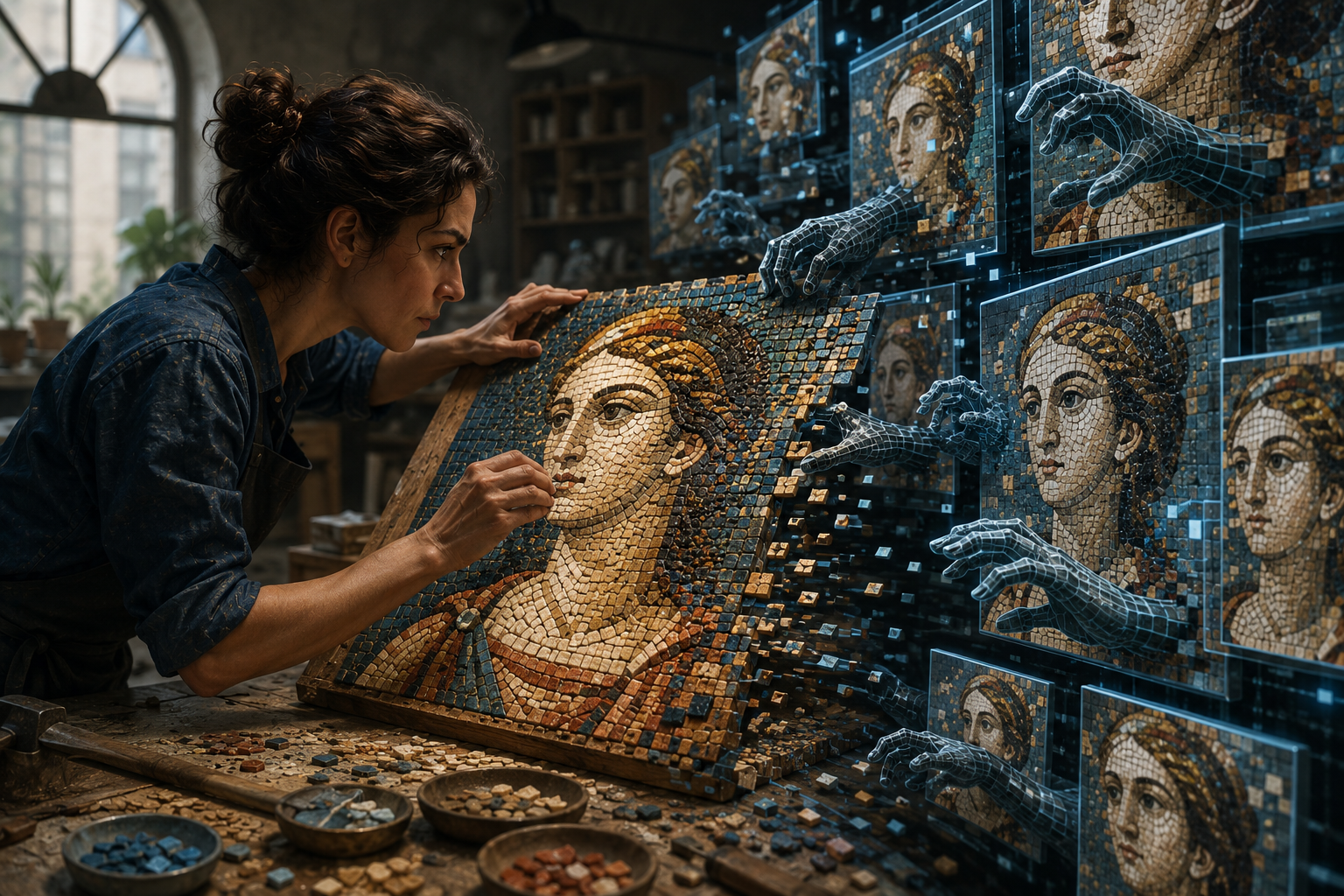
South Australian artist Julie Aldridge is fighting to regain control of a mosaic design that has been repeatedly copied and sold online without her permission.
The Port Lincoln artist created Sunset Wave for an exhibition at the Barossa Regional Gallery. Although it initially failed to sell, an American buyer later discovered the work through Pinterest and purchased it in 2013.
Since then, Aldridge has found versions of the design across the internet, including murals, quilts, canvases, colouring pages, crochet patterns and homewares. She says the copies have appeared without payment, approval or proper credit.
Her latest battle involves low-cost rugs displaying the artwork on online marketplace Temu. At one stage, more than 20 sellers were allegedly offering products featuring the design. Temu removed reported listings, but Aldridge said new versions continued to appear.
The Arts Law Centre of Australia described the direct reproductions as clear copyright infringements. However, legal advocates warned that artists often lack the money and resources required to pursue international sellers and large technology platforms.
Digital media expert Teodor Mitew said early social-media platforms frequently stripped identifying information from images as users reposted, cropped and shared them. This allowed artworks to circulate widely while their creators became increasingly difficult to identify.
Temu said intellectual-property infringement was prohibited on its platform and that reported listings had been removed. The company also added Aldridge’s work to its protection database for future monitoring.
Pinterest said its copyright policies and reporting systems had significantly improved since the artwork first appeared online.
Aldridge said she would continue searching online marketplaces for unauthorised copies, despite describing the experience of seeing years of creative work reproduced without consent as deeply upsetting.
