


Australian farmers are reaping record returns for their lambs, with international demand skyrocketing and supply unable to keep pace.
At saleyards across the country, records were shattered this week. In Wagga Wagga, a pen of 131 crossbred lambs sold for $424 each. Seller Sam Phillips from Yarrawonga Pastoral expressed surprise, having expected around $300.
“It was unbelievable… I was blown right out of the water,” he said.
Meanwhile, in Griffith, heavy lambs fetched $431 per head—a new national benchmark.
According to Meat and Livestock Australia (MLA), national price indicators for heavy, trade, and light lambs have all reached record highs.
Industry Reactions: “Phenomenal”
Veteran livestock agent Ron Rutledge called the current prices “phenomenal,” especially for farmers who have endured drought and high feed costs.
“Long-time agents haven’t seen prices like this… it’s amazing.”
Peter Cabot, another agent based in Wagga, echoed the sentiment:
“The lamb market is as dear as it has ever been… any well-presented, fat lamb is fetching top prices.”
Export Demand Fueling the Surge
Unlike typical drought scenarios where oversupply crashes prices, this time demand from processors and overseas buyers is overwhelming supply. Dry weather in Victoria, South Australia, and southern NSW prompted early sales, shrinking available stock.
Australia set a lamb export record in 2024 with nearly 360,000 tonnes, and 2025 is already up 2%. The United States remains the largest buyer, despite tariffs under Donald Trump. China increased access for Australian abattoirs, and Papua New Guinea is emerging as another key market.
Cabot expects strong prices to continue:
“With limited supply and abattoirs running at full capacity, the outlook is very positive for producers.”
Impact on Australian Consumers
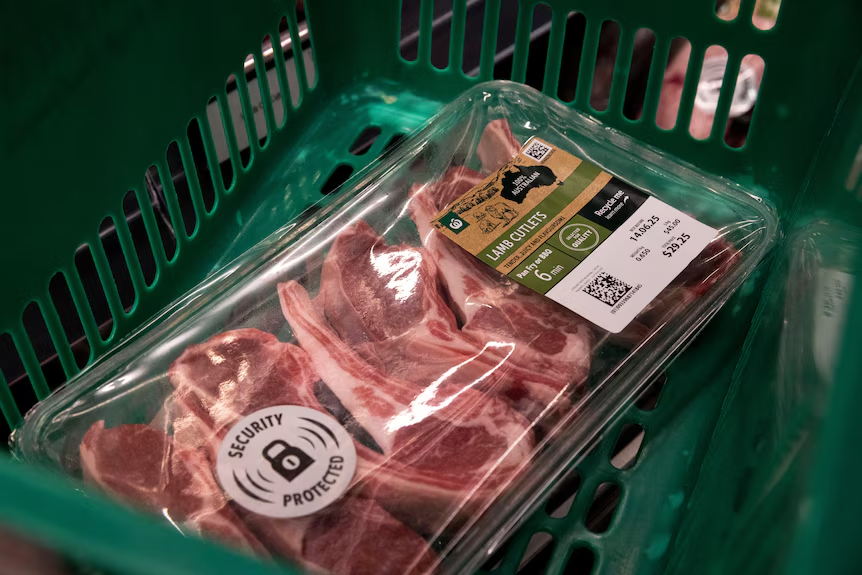
While farmers celebrate receiving over $10/kg, retail prices are starting to reflect the market, with lamb cutlets selling for around $45/kg in NSW.
Livestock expert Richard Bailey said that although supermarket prices haven’t jumped dramatically yet, it’s likely only a matter of time.
“Major supermarkets are already paying premiums—it will eventually affect retail pricing.”
He also noted that with most lamb now exported, global demand will play a growing role in shaping local affordability.
Recent Senate inquiries in 2024 suggested that supermarkets may raise prices regardless of commodity trends, raising concerns about price fairness for Aussie shoppers.
