


US Drops ‘Revenge Tax’ Threat, Sparing Australian Super Funds
Australian investors in the United States have been granted a reprieve, with the Trump administration backing away from a proposed 15 per cent “revenge tax” that was aimed at countries imposing levies on American tech giants.
US Treasury Secretary Scott Bessent confirmed he would recommend removing the tax from President Trump’s sweeping economic legislation—dubbed the “big, beautiful bill”—after securing a key exemption from global tax rules.
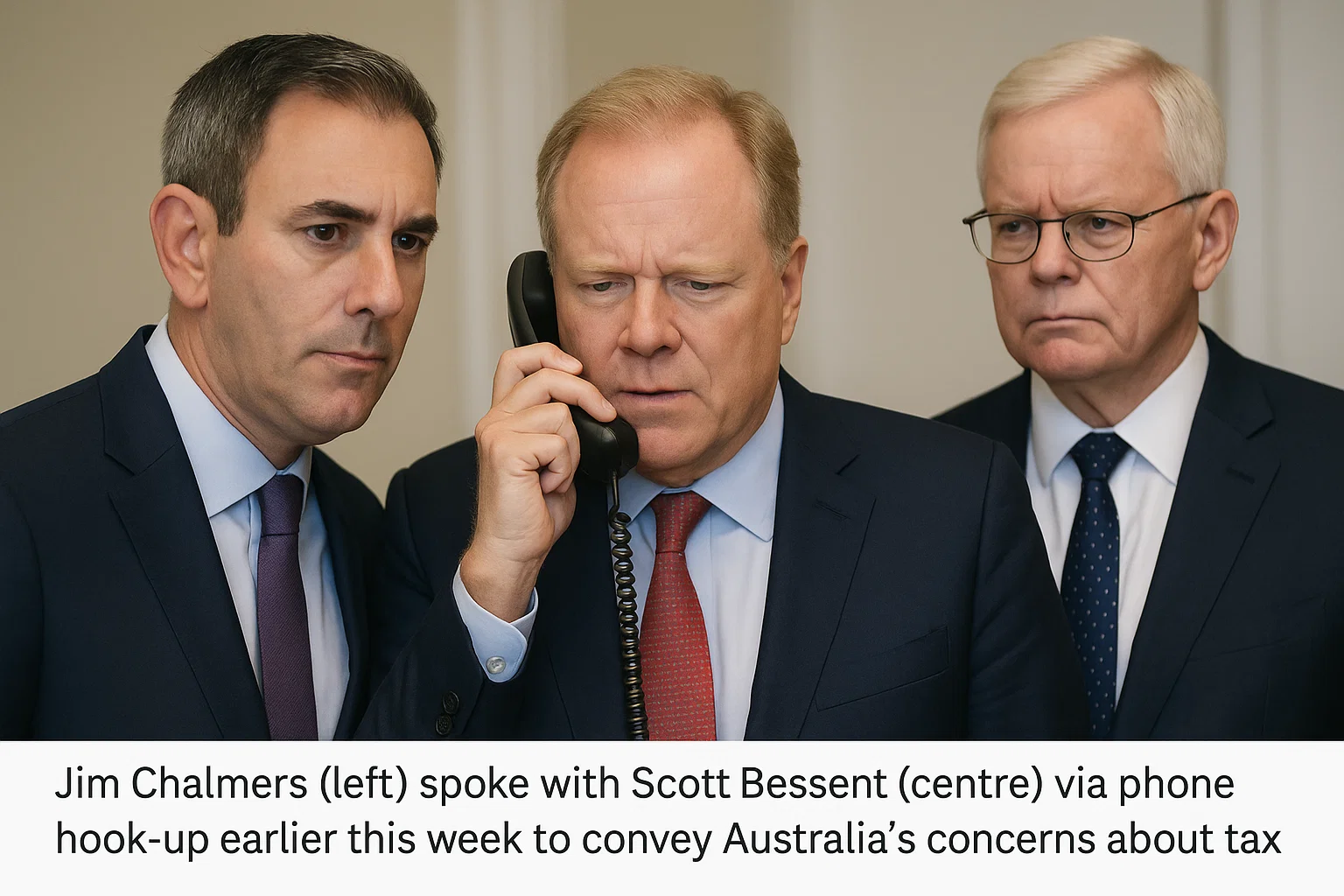
The move came after lobbying by Australian Treasurer Jim Chalmers, who raised concerns with Bessent earlier in the week.
“This is a really welcome outcome for Australians,” Chalmers said.
“In my meeting with Secretary Bessent, I put our concerns directly to him, and we’re pleased to see progress on this issue.”
Australia Was Not the Primary Target—but Would Have Been Hit
While Australia was not the main focus of the US proposal—its origins lie in tensions with European digital services taxes—Australia’s own planned levy on social media platforms could have fallen within the scope of the US retaliation.
That tax, aimed at platforms that fail to pay for news content, drew criticism from US Trade Representative Jamieson Greer during recent G7 talks with Prime Minister Anthony Albanese.
If implemented, the 15 per cent retaliatory tax would have applied broadly, impacting Australian superannuation funds and individual investors with US holdings.
“We do not want to see our investors and funds unfairly treated,” Chalmers had warned earlier.
US Backs Away From Global Tax Deal, Reaches Side Agreement
The Trump administration remains firmly opposed to the OECD’s “pillar two” multinational tax agreement, which seeks to establish a 15 per cent global minimum corporate tax. While signed under President Biden, Trump pulled the US out via executive order in January, replacing it with a warning of retaliatory measures.
Now, Bessent has announced a separate understanding with G7 countries that recognises the US’s existing minimum tax framework—known as GILTI, which applies rates between 10.5% and 13.125%.
In exchange, the US will drop its plan for retaliatory digital taxes. While this undermines the global consistency of the pillar two deal, it averts a broader conflict over international taxation.
“This agreement provides more stability and certainty for the global economy,” Bessent said, adding that he had asked US lawmakers to strip the revenge tax from current legislation.
UK Chancellor Rachel Reeves praised the move, calling it an “important action” that promotes fairness in the global tax system.
Australia Signals Cautious Optimism
Chalmers said Australia would review the deal’s details but reiterated the government’s commitment to ensuring multinationals pay their fair share of tax.
“We’ll continue to engage constructively in shaping international tax rules that are fair,” he said.
Threats Remain as Trump Uses Tax Policy as Leverage
Despite the apparent resolution on digital taxes, Bessent made it clear the Trump administration reserves the right to use tax law as a tool against foreign governments.
“We will defend our tax sovereignty and respond to any discriminatory or extraterritorial foreign tax policies,” he said.
Trump reinforced that sentiment on Thursday by threatening higher tariffs on Spain if it fails to raise defence spending—a move that could signal similar pressure on countries like Australia if they don’t meet NATO-aligned defence commitments.
Asked to respond, Prime Minister Albanese declined to address the US-Spain issue directly but emphasised Australia’s independent policy-making:
“My job is to look after Australia’s national interest—that includes our defence and security—and that’s exactly what we’re doing,” he said Friday.
