


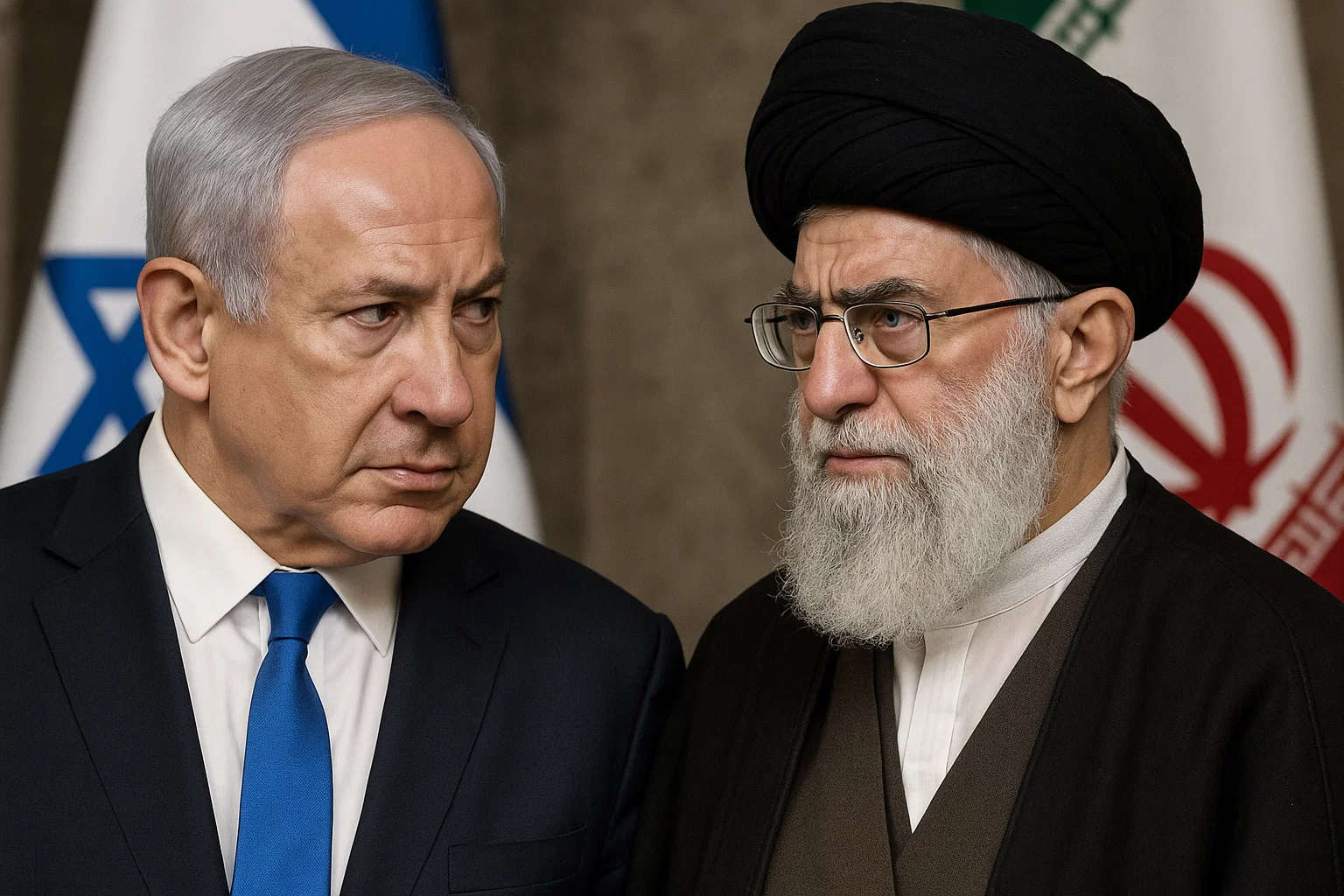
In a week marked by relentless airstrikes across Israel and Iran, dozens have been killed and many more injured, while tensions between the two nations continue to spiral. At the center of this crisis are two long-standing leaders: Israeli Prime Minister Benjamin Netanyahu and Iran’s Supreme Leader Ayatollah Ali Khamenei — both deeply shaped by their respective ideologies and histories.
Netanyahu’s Final Battle?
For Israeli Prime Minister Benjamin Netanyahu, this escalation may represent the final chapter of a long political career. Born in 1949 in Tel Aviv and raised partly in the U.S., Netanyahu has long viewed Iran’s nuclear ambitions as an existential threat. Critics and analysts alike describe his campaign against Iran as deeply personal and rooted in the ideology of his father, a hardline historian.
Netanyahu first became Prime Minister in 1996 and has since served five terms. His recent comparison of Iran’s nuclear ambitions to the Nazi threat reflects his belief that preventing another catastrophe is part of his legacy. As his political coalition weakens and re-election prospects fade, some analysts see this confrontation with Iran as his “last hurrah.”
Khamenei: The Revolutionary’s Resolve
In contrast, Iran’s Supreme Leader Ali Khamenei represents the last of Iran’s first-generation revolutionary leaders. After being chosen as Khomeini’s successor in 1989, Khamenei has led with a steadfast anti-Western stance, especially against the U.S. and Israel. He views compromise under pressure as a sign of weakness and continues to warn of harsh retaliation against Israeli aggression.
After Israel’s “Operation Rising Lion” targeted Iranian nuclear and military infrastructure, Khamenei condemned the strikes, promising a powerful response. He described the campaign as a “grave error” and vowed that Iran would not allow such actions to go unanswered.
Trump: Playing Both Sides
Former U.S. President Donald Trump has also re-entered the spotlight. His 2018 withdrawal from the Iran nuclear deal and the assassination of Iranian general Qasem Soleimani in 2020 played key roles in heightening tensions. While he has attempted to distance the U.S. from Israel’s latest strikes, Trump has also praised them and warned Iran not to retaliate.
Trump recently posted on Truth Social, asserting the U.S. had no role in the strikes but warning that any attack on America would trigger an overwhelming military response. He also hinted that a peace deal is still possible, urging Iran to act before the situation becomes irreversible.
What’s Next?
With nuclear talks between Iran and the U.S. now cancelled and both sides promising further retaliation, the risk of a full-scale regional war appears greater than ever. Though both Netanyahu and Khamenei are nearing the twilight of their political careers, their legacies — and their decisions now — may define the future of the Middle East.
