
More than four decades after the Iranian Revolution, many Iranians—both inside the country and across the diaspora—believe that the Islamic Republic’s days may be numbered.
“The regime won’t survive… change is coming, whether they like it or not,” said one Iranian from Hamadan, speaking anonymously due to growing risks of state surveillance and repression, particularly amid mass arrests and alleged espionage accusations by Tehran.
The comment came amid ongoing conflict between Israel and Iran. Although U.S. President Donald Trump announced a ceasefire deal, many Iranians continue to debate the potential for regime change—especially whether foreign intervention or internal momentum would be more effective.
Some in Iran feel that Israel’s attacks on Iranian military infrastructure weakened the regime and could have catalyzed a public uprising if they had continued. Others stress that real change must come from within, without outside interference.
No Clear Leader, No Unified Opposition
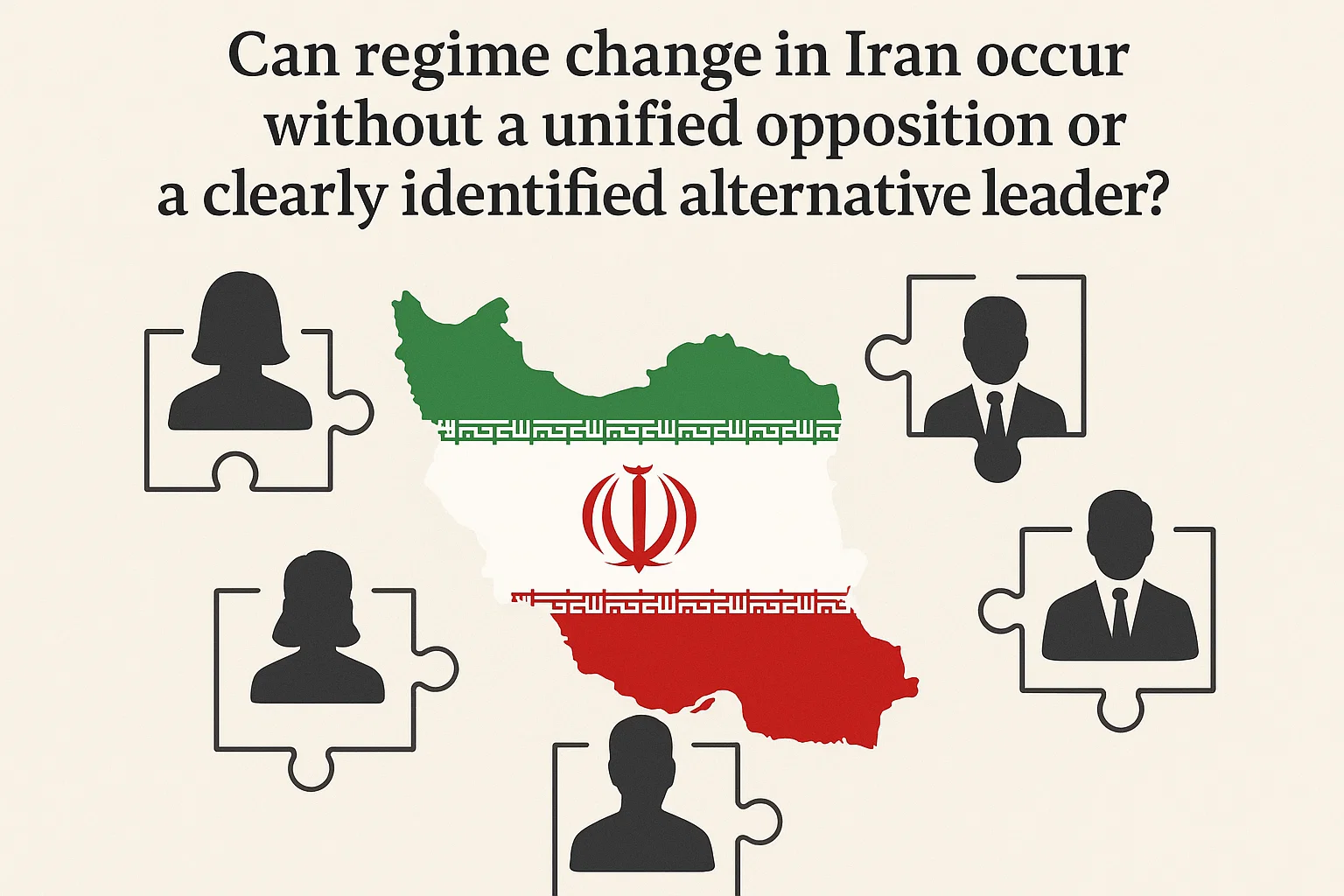
Among young Iranians in private chat groups, there is little agreement on who should lead if the regime collapses. Some propose jailed political dissidents or moderate insiders, while others support exiled figures like Crown Prince Reza Pahlavi. But divisions remain deep.
Experts agree that without major defections from Iran’s security apparatus—including the military, police, and intelligence services—a public uprising alone is unlikely to succeed. In contrast to 1979, when Ayatollah Khomeini unified disparate factions to overthrow the Shah, today’s opposition is fractured and lacks a central figure.
Historian Arash Azizi says the regime survives on “brutality” and the absence of a credible alternative. He argues Iran’s opposition needs to unify across religious, ethnic, and political lines around a shared vision, such as a liberal democracy—something not currently in place.
Pahlavi’s Role: Symbol or Solution?
Crown Prince Reza Pahlavi, living in exile since the 1979 revolution, has expressed readiness to help guide a transition, claiming no interest in monarchy but offering to serve as a bridge to democracy.
At a press conference in Paris, Pahlavi said he aims to establish safe channels for regime insiders to defect. However, not all Iranians see him as the solution. Some view former regime officials or moderate clerics like Hassan Rouhani as more realistic transition figures. Others reject anyone with ties to the existing system, arguing their past roles taint them.
One chat participant said: “I’m not a monarchist, but Pahlavi is known. Recognition matters.”
Can the Public Rise Again?
Roya Boroumand of the Abdorrahman Boroumand Center says she remains hopeful but cautious. She believes regime change requires not only widespread civil disobedience but also a cohesive strategy and leadership to guide people in resisting state violence.
Past movements, including the 2009 Green Movement and 2019’s Bloody Aban protests, were met with brutal crackdowns. In 2022, the death of Mahsa Amini sparked another nationwide protest wave, but again the state responded with killings, mass arrests, and repression.
Boroumand argues the reformist wing of the regime has lost credibility and cannot be trusted to lead a democratic transition. “They were always part of the ruling elite,” she says.
No Quick Path to Democracy
Democracy expert Mariam Memarsadeghi stresses that political change in Iran would require more than just leadership—it would demand the slow building of democratic institutions, rule of law, and civil society infrastructure.
“It’s premature to talk about leadership when there’s no security or democratic foundation in place,” she says.
She warns that nearly half a century of totalitarianism has left deep scars, and the path forward will require rebuilding education systems, independent judiciaries, and civic trust.
Will Defections Happen?
Australian academic Kylie Moore-Gilbert, once imprisoned in Iran, says protests over the years have failed in part because they didn’t trigger significant defections from within the regime.
She warns that any opposition coalition must also address internal ethnic divisions, such as the demands for autonomy from groups like the Kurds.
Washington-based analyst Saeed Ghasseminejad believes Israeli strikes may have weakened the regime enough to encourage some defections. However, he also warns of the regime’s potential for escalated violence if it remains in control.
“If the regime survives this, we could see mass executions and widespread brutality,” he says.
Hope for Return
One young Iranian woman, now in Europe, said she still dreams of returning home someday under a democratic system.
“The will of the Iranian people is clear. We want freedom, and we want to go back to live our lives in a free Iran,” she said.
Despite the divisions and challenges, many Iranians continue to hold on to the hope that meaningful change is inevitable — though when and how it will happen remains uncertain.
