


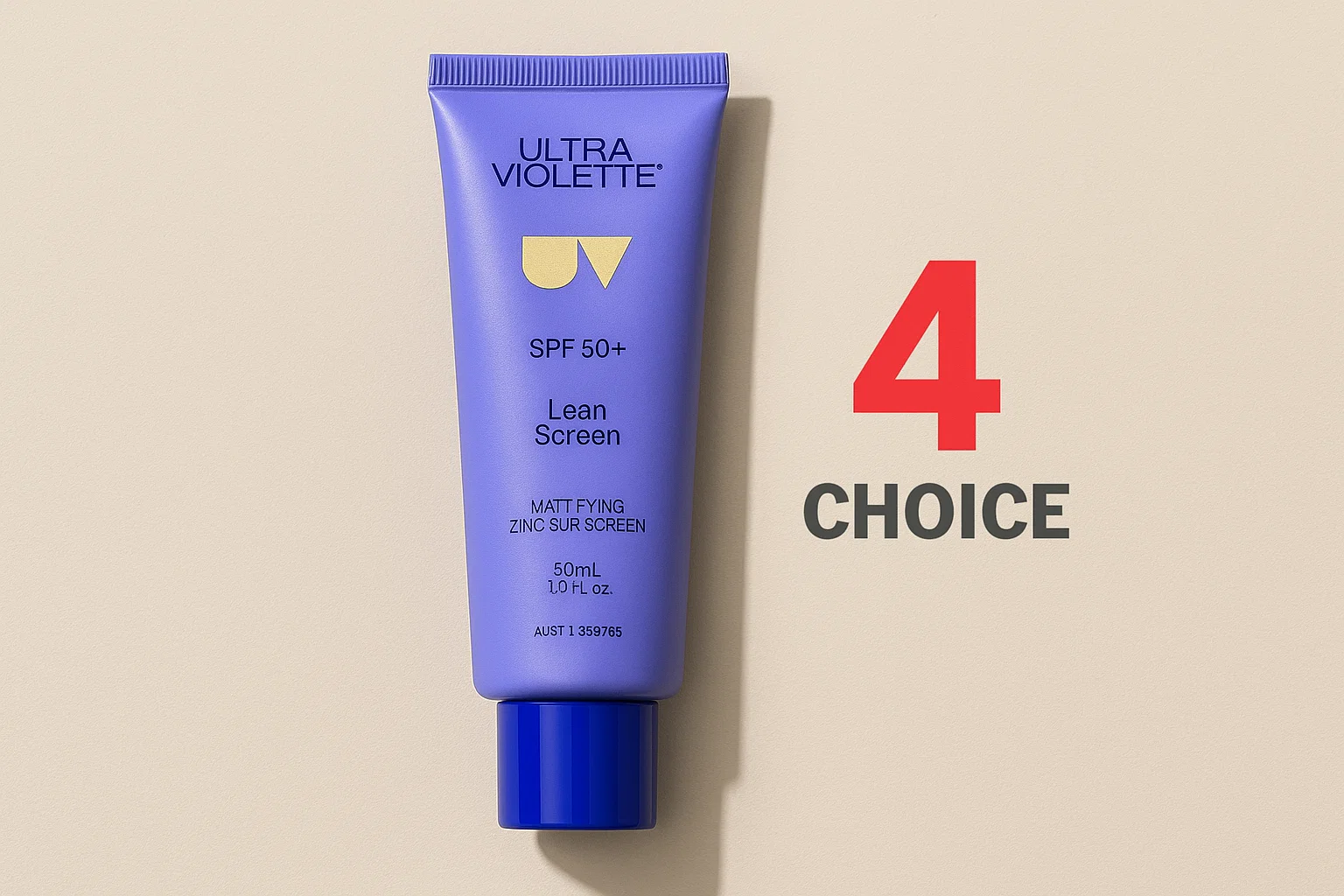
Consumer advocacy group Choice has responded to criticism over its recent sunscreen testing results, after the manufacturer of the lowest-scoring product questioned the validity of its methods.
Choice reported that only 4 out of 20 popular sunscreens available in Australia met their advertised SPF50 claims. The poorest performer, Ultra Violette’s Lean Screen SPF50+ Mineral Mattifying Zinc Sunscreen, was found to offer only SPF4 protection in tests.
Ultra Violette disputed the findings, stating that their own independent assessments showed the sunscreen had an SPF above 60. Co-founder Ava Chandler-Matthews publicly criticised Choice’s methodology over the weekend on social media, saying the group was not a regulatory authority and does not approve sunscreens.
All of Choice’s testing was conducted by accredited, independent labs. After receiving the initial surprising result for Ultra Violette’s product, they sent a second sample from a different batch to a German lab, where it returned a slightly higher — but still very low — SPF5 rating.
Chandler-Matthews took issue with the way samples were handled, specifically that Choice decanted the sunscreen into unlabelled containers before sending them to the labs in Australia (Eurofins Dermatest) and Germany (Normec Schrader Institute).
“I don’t know what conditions the product was exposed to before testing — whether it faced extreme temperatures or delays in transit,” she said.
Choice Defends Its Testing Methods
Choice CEO Ashley de Silva responded by affirming that all samples were transferred into amber glass jars, which block UV light better than clear glass and are less reactive than plastic. He said the products were sealed and delivered according to each lab’s strict handling guidelines, with transportation to the Sydney-based lab completed within an hour.
Choice followed both Australian and international testing protocols, which require SPF products to be tested on 10 human volunteers. In Germany, the follow-up test was done on five people, as it was intended to validate the original result.
Chandler-Matthews criticised the small sample sizes, noting that two results from the German panel were deemed invalid, leaving only three results to base the SPF rating on. She contrasted this with Ultra Violette’s own testing, which involved three separate studies with 30 people in total.
“While I don’t know how that will affect public confidence, it certainly gives us confidence in our product,” she said, adding that the company is still investigating the discrepancy.
De Silva reiterated that Choice stands by its thorough, independent testing and released all data publicly.
“We conducted this testing to ensure that Australian consumers receive accurate information about the SPF protection they’re paying for,” he said. “Millions rely on these ratings, and it’s essential they’re trustworthy.”
Calls for Regulatory Action
Choice has urged the Therapeutic Goods Administration (TGA) to test the 16 sunscreens that did not meet their SPF label claims.
The TGA has acknowledged that variability in sunscreen test results is common due to reliance on human subjects and is currently reviewing the data submitted by Choice.
Meanwhile, other sunscreen brands that did not pass Choice’s testing have also stated they possess independent test results showing their products comply with SPF regulations.
