


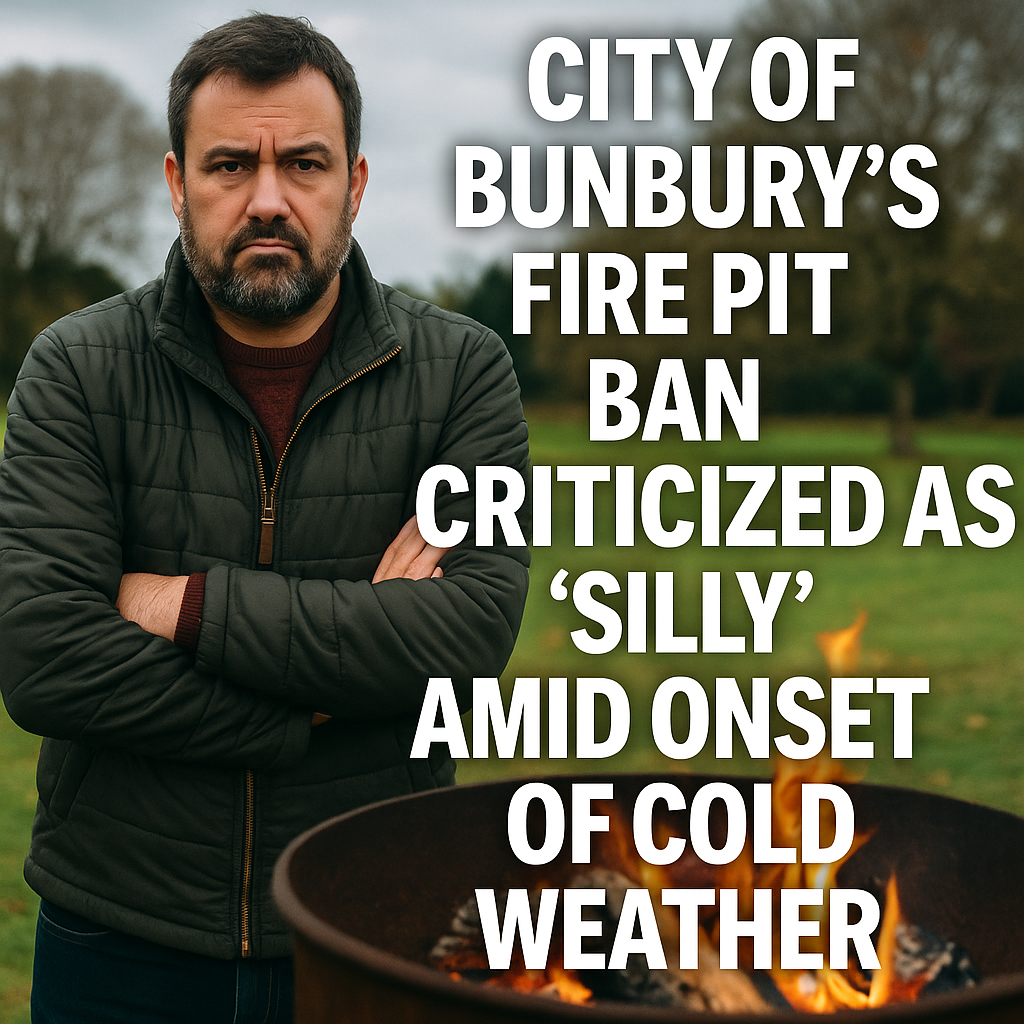
Western Australia’s largest regional city has prohibited backyard fire pits in an effort to reduce bushfire risks and ease the burden on emergency services ahead of a predicted “very dry winter.”
The City of Bunbury quietly introduced the ban late last year, restricting residents on properties smaller than two hectares from using fire pits or lighting campfires at any time throughout the year.
While seasonal fire bans are typical in WA’s south-west, residents have traditionally been able to obtain permits for backyard fires during other parts of the year. Gavin Pound discovered the new rule when he attempted to get a permit for a fire pit at his daughter’s birthday celebration.
“It was a cold and cloudy day,” he said.
“[We were informed], ‘By the way, pit fires in Bunbury are now completely banned.’”
He criticized the decision as excessive, particularly in an urban setting.
“People connect and work things out around a backyard fire,” he said.
“I get banning them in summer, but this is central Bunbury, not the bush.
It’s a ridiculous stance. What will you tell your grandkids — that backyard marshmallow roasts are a thing of the past?
We’re looking for ways to overturn this and bring in more reasonable rules for backyard fires.”
Council to Reassess Policy
The South West is highly susceptible to bushfires. Earlier this year, a fire near Bunbury Prison required overnight containment efforts, and last year a fire in neighboring Capel smoldered underground for months.
In the past five years, the Department of Fire and Emergency Services has linked 22 Bunbury fires to open flames, such as campfires, bonfires, and outdoor cooking.
A year-round fire ban is already enforced in Port Hedland due to its hot, dry climate. Bunbury’s council has acknowledged the backlash and is reviewing its decision.
“We recognize the community’s concerns and are listening,” said Mayor Jason Miguel.
“The restrictions were recommended due to dry conditions, fire frequency, and limited emergency resources.
We are now re-evaluating the policy.”
The matter is expected to be revisited by the council in June.
