


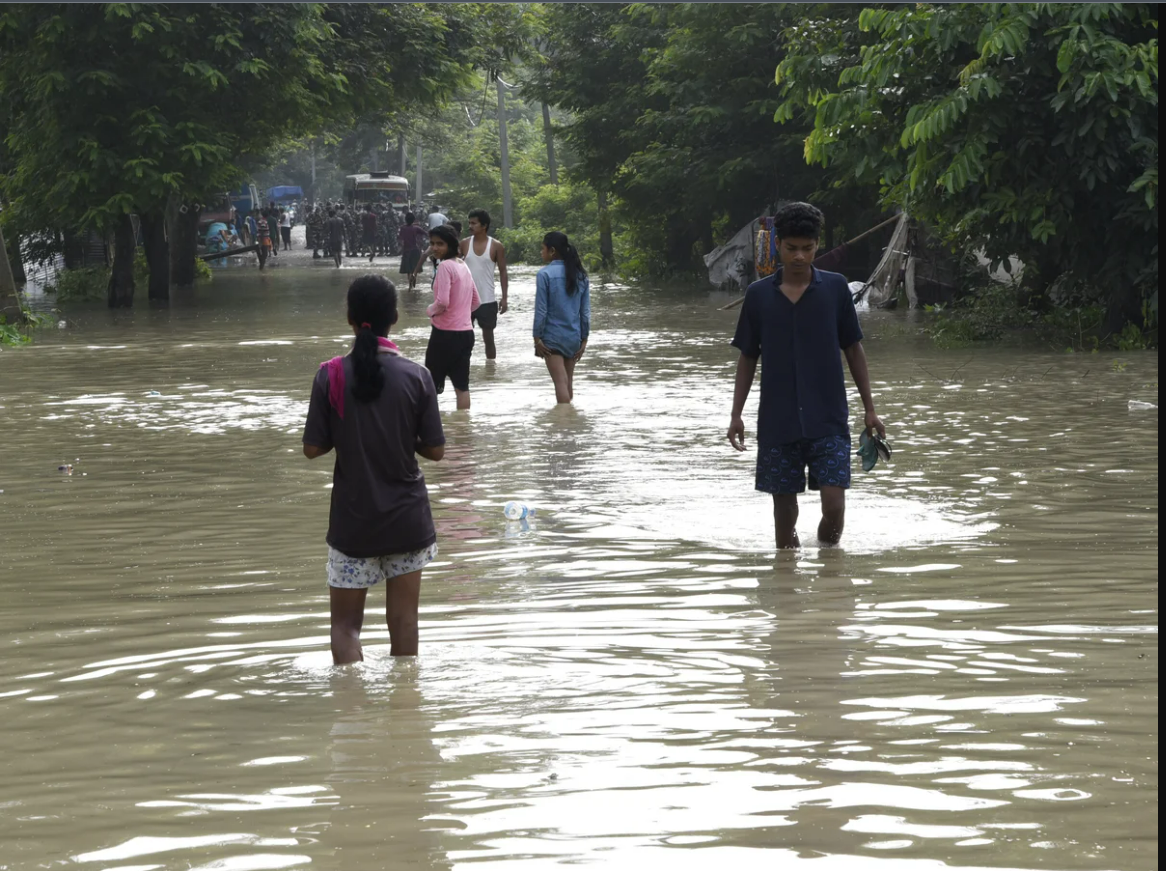
Severe monsoon weather has triggered deadly floods, landslides and major transport disruptions across several parts of India, leaving at least 26 people dead in Assam and placing multiple northern and eastern states on high alert.
Authorities in Assam said days of intense rainfall caused rivers to rise rapidly, inundating villages, damaging roads and forcing emergency teams to carry out rescue and relief operations.
The Assam State Disaster Management Authority reported that most of the deaths occurred on Tuesday as floodwaters spread across several districts. Officials warned that the number of casualties could rise as rescue workers continue reaching remote and heavily affected communities.
The Brahmaputra River has crossed the official danger mark at several monitoring stations, increasing the threat to settlements located along its banks and in surrounding low-lying areas.
One of Asia’s largest river systems, the Brahmaputra regularly causes flooding during the monsoon season. However, authorities said the scale and intensity of the latest rainfall have placed additional pressure on homes, farmland, embankments and local transport networks.
Many communities in Assam remain vulnerable because prolonged rain has saturated the ground and reduced the capacity of rivers and drainage systems to absorb further water.
Disaster management teams have been deployed to evacuate residents, distribute emergency supplies and monitor changing water levels.
The latest spell of extreme weather has also caused serious disruption across northern India.
The Jammu-Srinagar National Highway was temporarily shut after several landslides blocked parts of the mountain road. The route is a critical transport link connecting Jammu with the Kashmir Valley and is frequently affected by falling rocks, mudslides and road damage during periods of heavy rain.
Emergency crews were sent to remove debris and inspect unstable slopes before the highway could be reopened safely.
Authorities advised travellers to avoid the route until clearance work was completed and weather conditions improved.
In Uttarakhand, sections of the annual Kedarnath pilgrimage were suspended after rocks and large boulders fell onto parts of the trekking path.
Officials moved pilgrims away from exposed areas and temporarily halted movement along vulnerable sections while teams assessed whether the route remained safe.
The Kedarnath pilgrimage attracts large numbers of visitors during the season, but the mountainous terrain becomes particularly dangerous during heavy rain because of landslides, falling debris and sudden flooding.
Authorities said the suspension was imposed as a precaution to prevent injuries and ensure that emergency services could respond quickly if conditions deteriorated.
The India Meteorological Department has forecast further heavy rainfall, thunderstorms and strong winds across several regions.
States expected to experience severe weather include Assam, Gujarat, Himachal Pradesh and Jammu and Kashmir.
Weather officials warned that continued rain could trigger additional flash floods, landslides, river flooding and severe waterlogging, especially in areas where the soil is already saturated.
Mountain districts face heightened risk because prolonged rain can destabilise slopes and send mud, rocks and debris onto roads, homes and trekking routes.
Officials in Himachal Pradesh have issued alerts for possible flash flooding in vulnerable districts.
Residents living near rivers, streams, steep hillsides and unstable slopes have been urged to remain cautious and avoid unnecessary travel during intense rainfall.
Local administrations have also warned people not to attempt to cross flooded roads, bridges or rapidly flowing waterways.
Emergency agencies across several states remain on standby as rescue teams monitor river levels, inspect damaged infrastructure and assist families forced from their homes.
Authorities are preparing temporary shelters and relief centres in areas where further evacuations may become necessary.
Residents have been asked to follow official forecasts and emergency instructions rather than relying on unverified information circulating on social media.
The continuing disruption has affected road travel, religious pilgrimages, agriculture and daily life across several regions.
Floodwaters have damaged crops and farmland in Assam, while landslides in mountainous areas have repeatedly blocked highways and isolated communities.
The latest disaster has renewed concerns about India’s vulnerability during the annual monsoon season.
Monsoon rain is essential for agriculture, reservoirs and water supplies, but periods of unusually intense rainfall can cause widespread destruction.
Rapid urban expansion, construction in fragile mountain areas, inadequate drainage and settlement near flood-prone rivers can further increase the impact of extreme weather.
Experts and disaster authorities have repeatedly called for stronger early-warning systems, improved drainage, safer infrastructure and stricter controls on development in landslide-prone regions.
With more rain forecast, officials are preparing for further flooding, road closures and evacuations.
Rescue teams are continuing operations in affected communities, while authorities remain focused on preventing additional loss of life as the severe weather moves across northern and northeastern India.
