


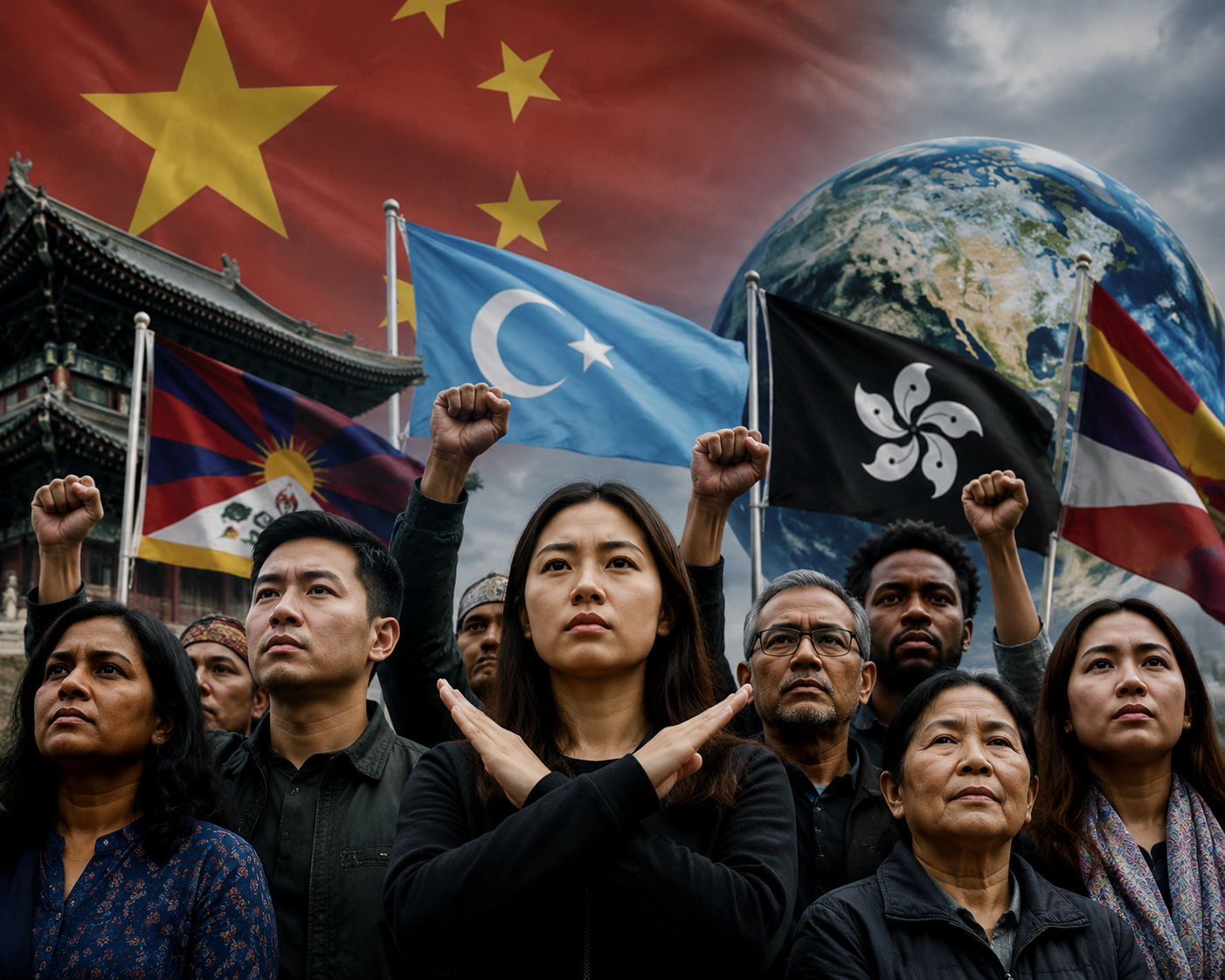
Dozens of organisations representing Hong Kong, Tibetan, Uyghur, Taiwanese and other diaspora communities have jointly condemned China’s newly introduced ethnic unity legislation, warning that it could deepen forced assimilation and extend Beijing’s influence over people living overseas.
Thirty-nine community and human rights groups from Australia and other countries signed a statement rejecting China’s Ethnic Unity and Progress Promotion Law, which took effect on July 1, 2026. The legislation is intended to promote a common Chinese national identity among the country’s 55 officially recognised ethnic minority groups.
Critics argue that the law gives Chinese authorities broad powers to suppress cultural, religious and political expression that Beijing considers harmful to national unity. They are particularly concerned about provisions allowing action against overseas individuals and organisations accused of promoting ethnic division or separatism.
Richard Lue, founder of the Western Australian Association for Pan-Asian Democracy and one of the organisers of the joint statement, said the law could affect human rights advocates regardless of where they live, including those based in Australia.
The organisations said the legislation formalised assimilation policies inside China while extending the government’s authoritarian reach beyond its borders. They urged the international community to recognise the law as a serious escalation of Beijing’s efforts to silence opposition.
Tibetan communities have held several protests since the legislation came into force. Activists in Melbourne staged a 24-hour hunger strike earlier in July, while demonstrators gathered outside the Chinese embassy in Canberra and the Chinese consulate in Sydney.
The protests also honoured Tibetan activist Lobga Rangzen, who died in New York on July 2 after setting himself on fire outside the United Nations headquarters. Before his death, he reportedly appealed for Tibetan independence and warned that Beijing’s policies threatened Tibetan language, culture and identity.
Zoe Bedford, executive officer of the Australia Tibet Council, said Australia’s Tibetan community had been devastated by his death. She said many Tibetans believed they had few opportunities to protest openly inside Tibet.
The International Campaign for Tibet estimates that 159 Tibetans have died or been injured in self-immolation protests in Tibet and China since 2009. Beijing rejects allegations that its policies are destroying Tibetan culture and identity.
University of Technology Sydney China expert Feng Chongyi said the new law effectively legitimised longstanding policies that weakened minority languages and cultures.
He raised particular concern about a provision allowing Chinese authorities to pursue overseas groups and individuals accused of undermining ethnic unity. Dr Feng described its wording as extremely vague and warned that it could be interpreted broadly enough to criminalise many forms of political expression.
Community representatives fear the legislation could produce a chilling effect among diaspora populations, causing people to avoid demonstrations, cultural events or political discussions because they are worried about possible consequences when visiting China or Hong Kong.
Jane Poon, president of Australia Hong Kong Link, compared the legislation with Hong Kong’s National Security Law, which Beijing introduced in 2020 to target secession, subversion, terrorism and alleged foreign interference.
She said the ethnic unity law could have an even broader reach because it potentially affects Tibetans, Uyghurs, Taiwanese, Hong Kongers and other communities.
Hong Kong’s security legislation has already been applied to conduct outside the territory. In 2023, a Hong Kong student studying in Japan was arrested after returning home over social media posts authorities alleged supported Hong Kong independence.
Hong Kong police have also issued arrest warrants for dozens of activists living overseas, including Australian citizens and residents. The Australian government has repeatedly objected to the extraterritorial use of Hong Kong’s national security legislation.
Taiwan Nation Association executive director Chen Ching Kuen said the new law might discourage Taiwanese people from openly supporting Taiwan’s participation in international organisations or expressing views about cross-strait relations.
Community advocates warned that people could begin censoring themselves, withdrawing from public events and avoiding organisations that promote cultural identities or political positions opposed by Beijing.
China has defended the legislation, saying stronger legal protections are necessary to prevent separatism and maintain national unity amid alleged efforts by domestic and foreign forces to exploit ethnic tensions.
The Chinese Embassy in Australia rejected claims that the legislation created extraterritorial or “long-arm” jurisdiction. It said using domestic laws to oppose separatism and protect social order was common international practice and maintained that ordinary academic, cultural and commercial exchanges would not be affected.
Australia’s Department of Foreign Affairs and Trade has said the federal government raised concerns about the legislation directly with China and at the United Nations Human Rights Council.
The department said Australia was worried about the law’s human rights implications, including its potential to restrict the freedoms of people outside China. It added that everyone in Australia, regardless of citizenship, was protected by Australian law and entitled to exercise Australian political freedoms.
However, diaspora representatives said Canberra’s response had not gone far enough. They called on the government to consider targeted Magnitsky-style sanctions, including travel restrictions and asset freezes, against Chinese officials responsible for introducing or enforcing the legislation.
Supporters of stronger action said sanctions would demonstrate that Australia was serious about protecting citizens, residents and community organisations from foreign interference and intimidation.
DFAT did not provide a new response after the joint statement was released but repeated its earlier position on the law.
Community activists said they intended to continue demonstrating and raising awareness despite the possible risks. They argued that remaining silent would allow the issue to receive less international attention and further restrict the ability of affected communities to defend their identities and political freedoms.
