


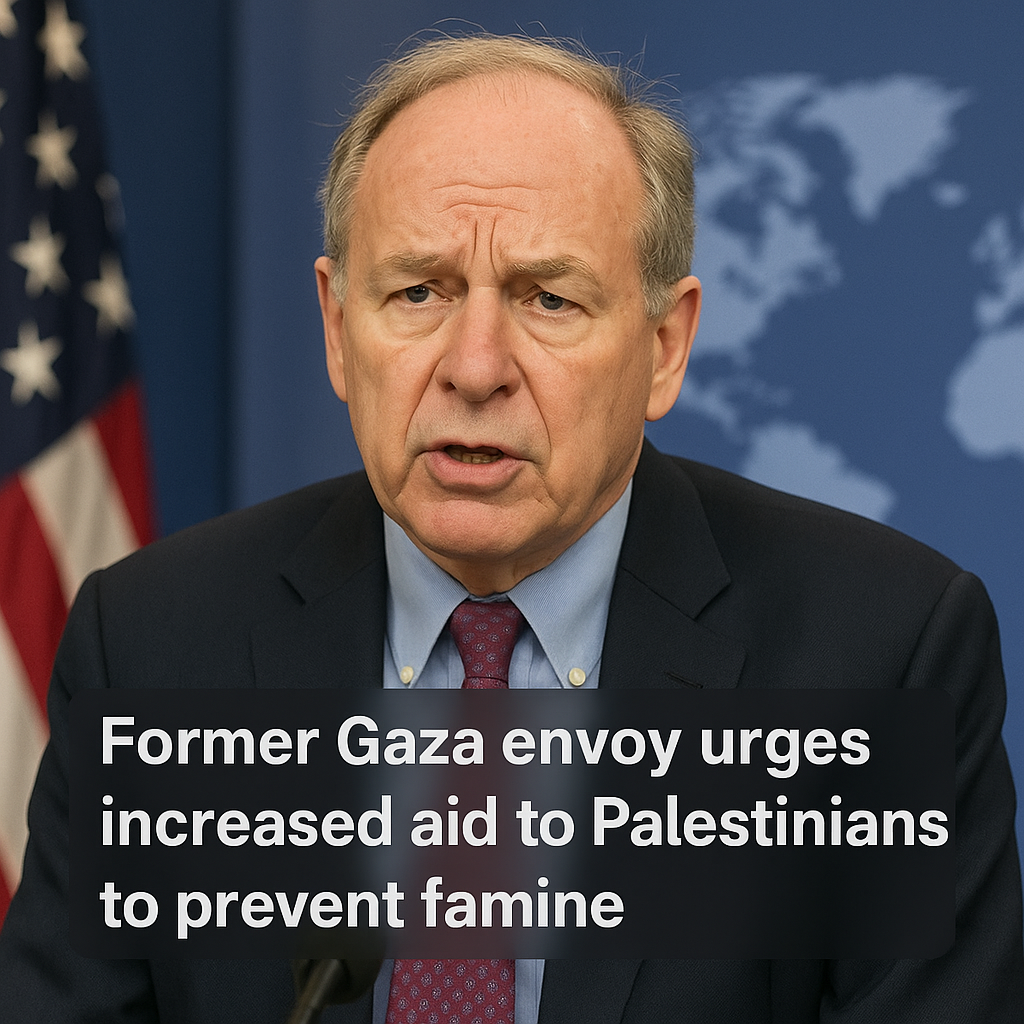
A former U.S. envoy to Gaza has warned that the limited flow of humanitarian aid into the enclave is vastly insufficient to prevent famine, stressing that hundreds of aid trucks per day are urgently needed. His comments come as Israel begins easing an 11-week blockade on Gaza under mounting global pressure.
The Israeli government, which halted aid entry into Gaza following the October 7, 2023 attacks that killed over 1,200 Israelis, has faced widespread international criticism for worsening the humanitarian crisis in the territory. In response, Israel this week allowed 100 trucks carrying baby food and medical supplies into Gaza—the first significant relaxation of restrictions.
According to Gaza’s health ministry, cited by Reuters, more than 53,000 Palestinians have died during the Israeli military campaign that followed the October attacks.
David Satterfield, a former U.S. envoy for Gaza aid, told ABC’s The World that the small number of aid trucks now entering Gaza falls far short of what is required. “The population of Gaza, approximately 2 million people, has been denied humanitarian assistance since March 2nd — the need is extreme,” he said. “A few trucks entering, a few dozen or even a few hundred on a one-off or two-off basis won’t address this need.”
He warned that efforts to deliver aid were being undermined by looting and desperation, with some supplies being stolen before reaching the most vulnerable. “You need hundreds of trucks per day—300, 400 per day,” Satterfield said. “They’re going to suffer predation, but you need to keep going.”
Meanwhile, Israel’s limited easing of the blockade has led to a few signs of recovery in southern Gaza. The UN World Food Programme managed to deliver flour, allowing some bakeries to reopen for the first time in two months. Baker Ahmed Al-Banna said his ovens were operating again, and he hoped bakeries in northern Gaza would also resume soon.
Despite the incremental flow of aid, the Israeli military continued its operations across Gaza. Local health authorities reported at least 50 Palestinians killed in strikes on Thursday. In Beit Lahiya, a tank shell reportedly hit a medicine warehouse at Al-Awda Hospital, setting it on fire. Medics say tanks stationed outside are blocking access to the facility, exacerbating an already dire healthcare crisis.
Most medical facilities in Gaza are no longer functioning due to repeated airstrikes, ground raids, and the ongoing blockade on medical supplies.
On the political front, Israeli Prime Minister Benjamin Netanyahu said he is open to a temporary ceasefire if it leads to the return of hostages held by Hamas. However, he also reaffirmed Israel’s commitment to continue its military campaign until it gains full control of Gaza if the hostages are not returned.
Netanyahu also announced that construction is underway on a humanitarian aid distribution zone in southern Gaza, expected to be operational in the coming days.
Commenting on Netanyahu’s position, Satterfield—now affiliated with the U.S.-based Baker Institute for Public Policy—suggested the Israeli leader is attempting to navigate competing pressures. “He’s trying to square two circles—responding to international demands while preserving his fragile coalition,” he said.
