
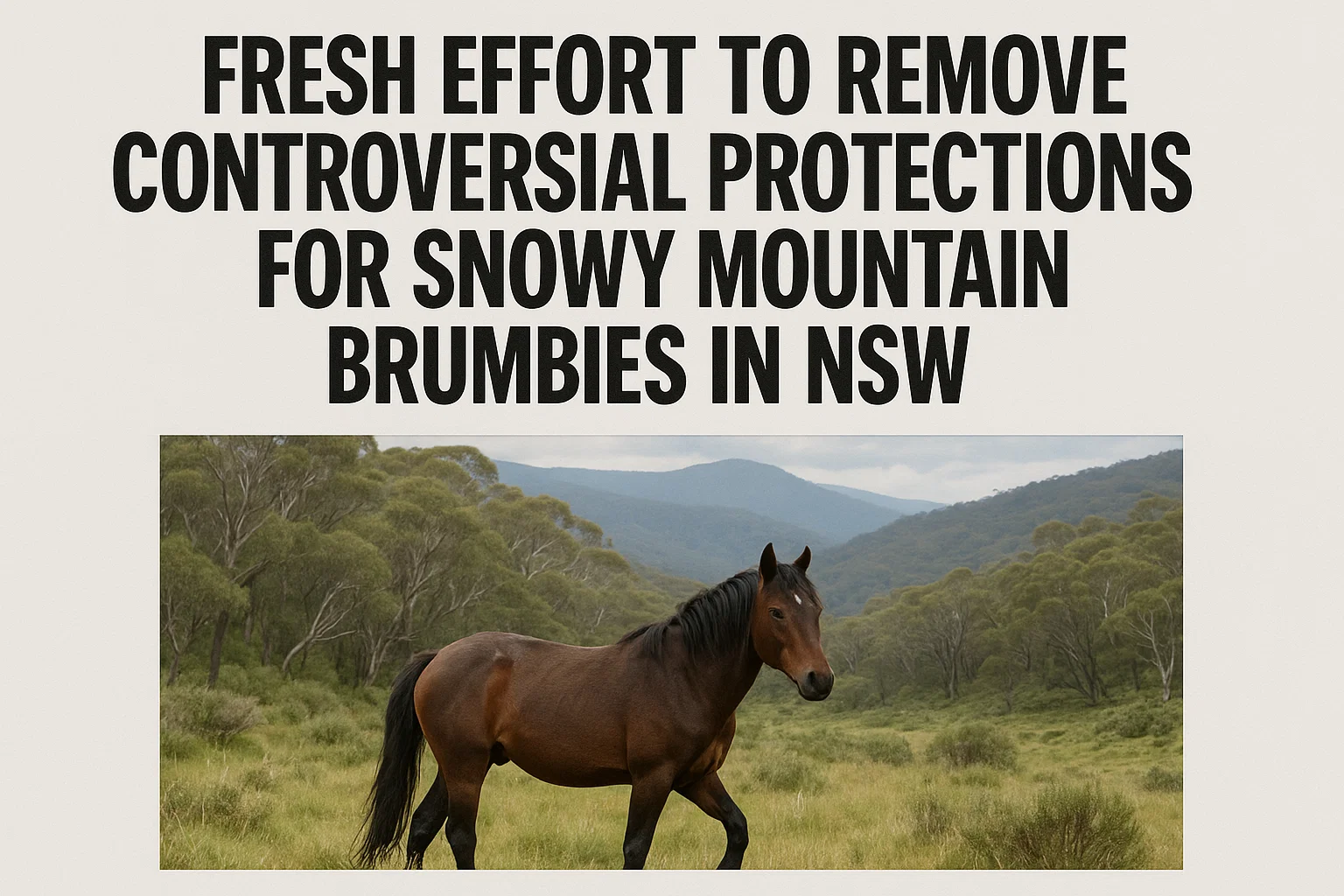
The fate of the Snowy Mountain brumbies in New South Wales is at risk with the introduction of a new bill aimed at repealing the controversial protections granted to the feral horses.
Independent Wagga Wagga MP Joe McGirr announced on Wednesday his intention to introduce a bill to overturn the Kosciuszko Wild Horse Heritage Act, which was established by former deputy premier John Barilaro. This act recognized the “heritage” value of the brumbies and set a target to reduce their population to 3,000.
While the new bill could take years to implement, Invasive Species CEO Jack Gough argued that even a single horse in the Kosciuszko National Park could cause “enormous amounts of damage.” He criticized the idea of designating large sections of the national park as a “horse paddock” instead of preserving it as a national park.
Gough acknowledged that eliminating all feral horses might be challenging but emphasized the damage the brumbies cause to the environment. He explained that large, heavy-hoofed animals like horses were not part of Australia’s natural landscape, and their presence is damaging native species’ habitats by draining peat moss and eroding the land.
In May, the NSW National Parks and Wildlife Service reported that only about 1,500 brumbies remained in the park after extensive aerial culling. While the culling method has been contentious, there have been reports showing some recovery of the delicate alpine ecosystem.
Animal Justice Party MP Emma Hurst strongly opposed the bill, calling aerial shooting in Kosciuszko unjustifiable. She expressed concerns that the bill could lead to further killing of the remaining horses in the park and urged NSW Environment Minister Penny Sharpe to honor her commitment to halt aerial shooting. Sharpe had earlier stated that aerial shooting had “ceased for now” in the horse retention area but would continue outside this area until June 30 to target “all feral animals.”
Sharpe indicated that the government was close to reaching the legislated target of 3,000 horses in the park, ahead of the 2025 deadline, and would now focus on managing the population. She stated that the government would review the bill, as it does with all proposed legislation.
If McGirr’s bill is passed, it would establish a transition period from January 1 to July 1, 2027, during which the previous management plan would end. The bill would also dissolve the Wild Horses Community Advisory Panel, allowing the state government to develop a new management strategy.
Both Gough and McGirr expressed confidence that the bill would gain approval, citing potential support from both the Labor and Liberal parties. However, Hurst raised concerns that the Nationals Party and the Shooters, Fishers, and Farmers Party might oppose the bill.
Nikki Alberts, president of the Australian Brumby Alliance, is part of a vocal minority that opposes the shooting of brumbies. She warned that repealing the Heritage Act might lead to the mass culling of the horses. The Brumby Alliance has proposed an alternative management plan focused on rehoming the brumbies.
Currently, the NSW government uses a variety of brumby management measures, including trapping, rehoming, and the use of immunocontraceptives.
