


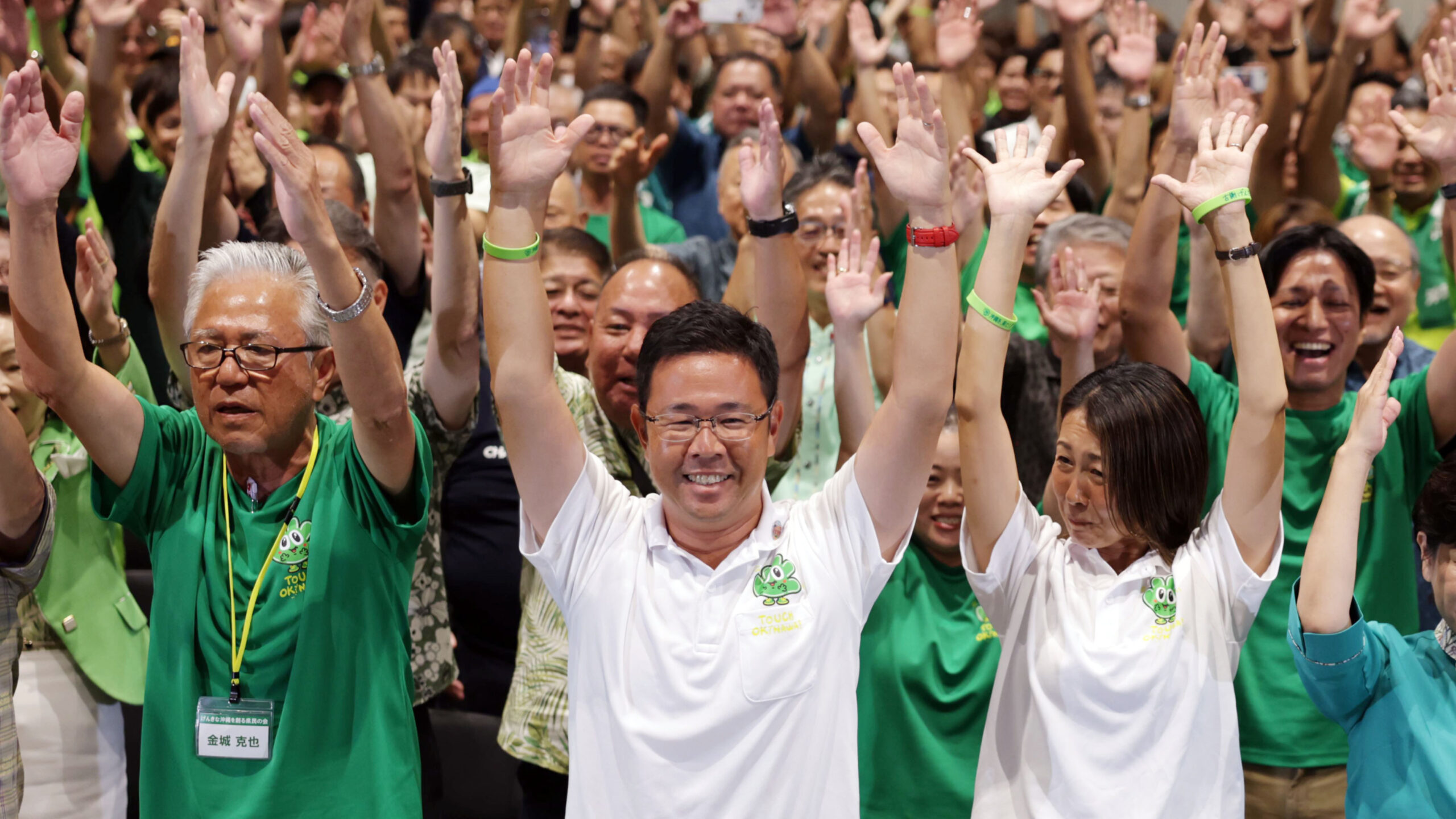
Genta Koja has won the Okinawa gubernatorial election, defeating two-term governor Denny Tamaki in a result that could significantly alter the prefecture’s long-running opposition to the expansion of United States military facilities.
Election officials said Koja secured 59 percent of the vote in Sunday’s contest.
The 42-year-old former deputy mayor of Naha was backed by Prime Minister Sanae Takaichi’s Liberal Democratic Party and will become Okinawa’s youngest governor since the prefecture was returned to Japanese administration in 1972.
He will also be the first governor born after the end of US rule.
Koja Defeats Two-Term Incumbent
Tamaki, 66, had built much of his political identity around opposition to the heavy concentration of US military facilities in Okinawa.
He has repeatedly pushed for a major US base to be moved out of the prefecture and supported legal challenges against plans to relocate Marine Corps operations from the Futenma air base to a new facility at Henoko.
Koja’s victory could bring a different approach.
His support from the governing Liberal Democratic Party has raised expectations that Okinawa may now cooperate more closely with Tokyo on defence and security policy.
Henoko Base Dispute Could Enter New Phase
One of the biggest questions following the election is the future of the planned military facility at Henoko.
For years, Okinawan leaders have challenged the relocation project through political and legal channels.
Masaaki Gabe, professor emeritus at the University of the Ryukyus, said Koja’s election could reduce resistance to the project and potentially bring an end to some of the prefecture’s legal efforts to block it.
That would represent a major shift after more than a decade of strong opposition from Okinawa’s leadership.
Military Access to Civilian Infrastructure May Expand
The result could also affect how military forces use civilian airports and ports across the prefecture.
Gabe suggested that Koja may be more willing to approve arrangements allowing military access to infrastructure currently used mainly for civilian purposes.
Such moves would be significant because Okinawa occupies an important strategic position in Japan’s southwestern island chain.
That chain stretches toward Taiwan and the Philippines and is viewed by military planners as crucial to regional security.
Election Comes During Major Japanese Defence Expansion
Koja’s victory comes as Prime Minister Takaichi prepares to unveil a new national security strategy expected to accelerate Japan’s military expansion.
The government has argued that stronger defence capabilities are necessary because of increasing security concerns in East Asia.
China’s growing military presence, its territorial claims and the possibility of a conflict involving Taiwan have become central to Tokyo’s defence planning.
Japan has been increasing spending, strengthening bases and expanding military infrastructure across its southwestern islands.
Okinawa Holds Strategic Importance
Okinawa sits at the heart of what military planners describe as the first island chain.
The chain extends from Japan through Taiwan and the Philippines and has long been viewed as strategically important in limiting access from the Asian mainland to the western Pacific.
Japan’s westernmost island, Yonaguni, is only about 110 kilometres east of Taiwan.
That proximity gives Okinawa and neighbouring islands significant strategic value in any regional security crisis.
Taiwan Tensions Add to Security Debate
China considers Taiwan part of its territory and has increased military activity around the self-governed island.
Those developments have heightened concerns in Japan.
Tensions between Tokyo and Beijing have also risen after Takaichi said last year that a Chinese attack on Taiwan could create a direct security threat to Japan and potentially lead Tokyo to respond militarily.
That statement drew criticism from Beijing and added to already strained relations.
Okinawa’s Long History With US Forces
Okinawa has hosted a large share of the US military presence in Japan for decades.
The prefecture remained under US administration until 1972, even after the rest of Japan regained sovereignty following World War II.
The concentration of military facilities has repeatedly generated local opposition over issues including land use, aircraft noise, safety and the broader burden placed on communities.
The Futenma relocation dispute has become one of the most politically sensitive aspects of that relationship.
Koja Faces Difficult Balancing Act
Although Koja’s victory may make cooperation with Tokyo easier, he will still have to balance national security priorities against local concerns.
Many Okinawan residents continue to have strong views about military installations and the social impact of hosting a large US military presence.
That means the incoming governor could face pressure from both the central government and communities within the prefecture.
Result Could Reshape Okinawa’s Security Policy
The election marks an important political change for Okinawa.
Koja’s victory could strengthen Tokyo’s ability to advance defence projects and deepen military cooperation with the United States at a time of increasing regional tension.
At the same time, the result does not eliminate the longstanding debate over how much of Japan’s security burden Okinawa should carry.
As Koja prepares to take office, decisions involving Henoko, military access to civilian facilities and cooperation with the national government will be closely watched both inside Japan and across the wider region.
