


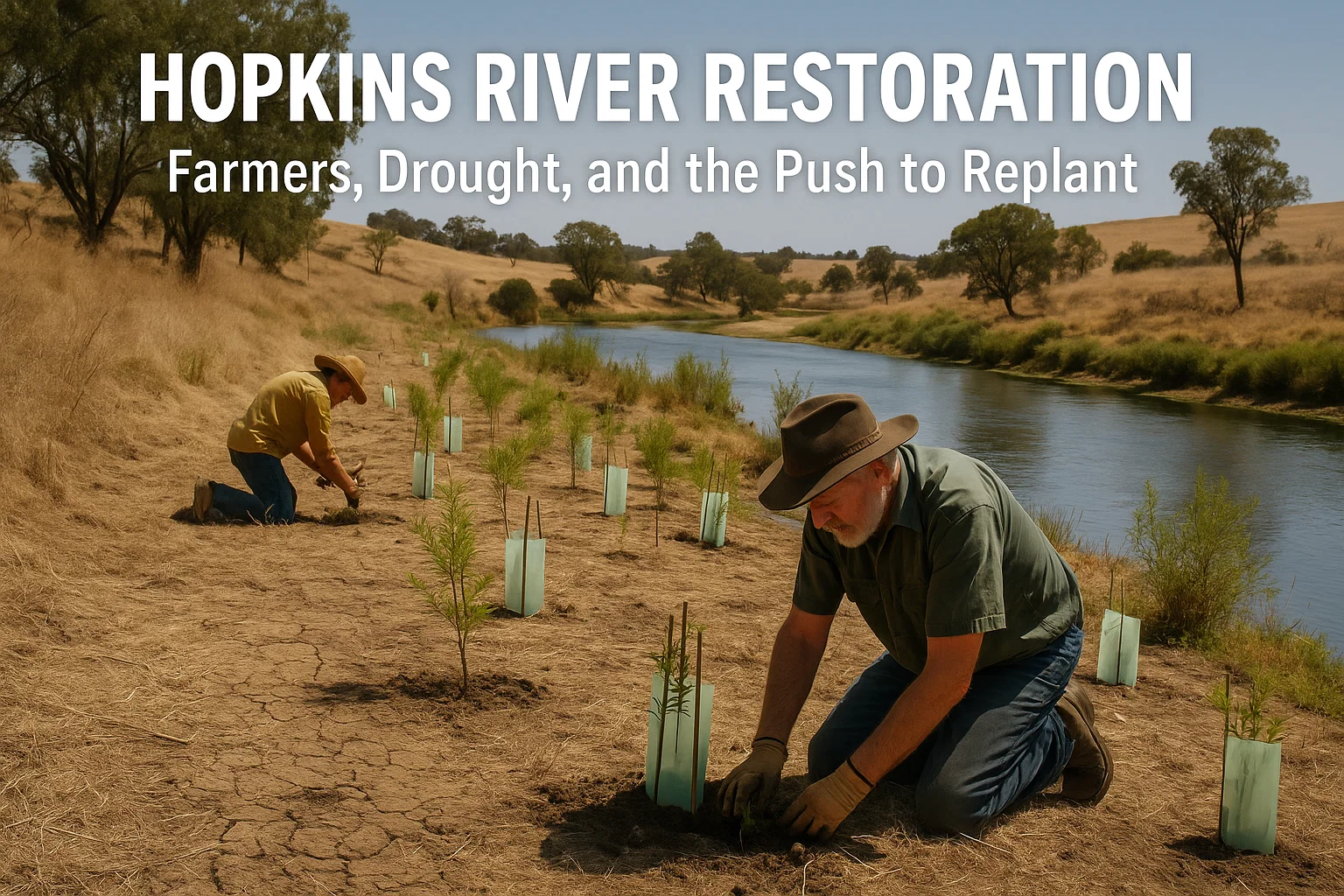
A striking strip of green flanks the Hopkins River in south-west Victoria — a 50-metre-wide buffer zone known as the riparian area, created more than two decades ago to revive the river’s health. Stretching nearly 300 kilometres from near Ararat to Warrnambool, the river passes through farmland devoted to dairy, sheep, cattle, and crops.
On the riverbanks, Jane O’Beirne tends to young trees under the canopy of mature gums her community planted years earlier. What was once a degraded landscape, trampled by cattle and stripped of vegetation, is now a vibrant habitat supporting wildlife and filtering farm runoff.
“This is my happy place,” O’Beirne says, reflecting on sightings of platypuses and the value of being surrounded by nature.
River in Decline
Despite these efforts, the Hopkins River remains in poor condition. Chris Solum from the Glenelg Hopkins Catchment Management Authority (CMA) says water quality has worsened, with nitrogen levels now four times higher and phosphorus concentrations doubling or tripling since the 1990s — surpassing environmental safety limits.
Solum attributes the decline to changing land use, especially the shift from grazing to cropping, which has increased fertiliser runoff into the river.
Push for Riparian Zones
The CMA is encouraging farmers to fence off riverbanks and establish vegetated buffer zones, promoting benefits such as:
- Filtering out farm chemicals that can cause harmful algal blooms and fish kills.
- Preventing bank erosion and providing habitat for wildlife.
- Supporting agriculture by sheltering livestock and encouraging pollinators and pest predators.
Though grants are available through CMA and Landcare, the costs — often borne in part or full by landholders — can be significant, reaching tens of thousands of dollars.
Drought Strains Commitments
Many farmers are currently facing severe drought. Brendan O’Brien, a dairy farmer in Ellerslie, has seen the Hopkins reduced to disconnected pools — the lowest flow he can recall. He values the revegetated zone on his property for its ecological and practical benefits, including keeping cattle out of the river.
However, O’Brien warns that drought pressures mean fewer farmers have the time or resources to invest in revegetation. “Right now, they’re exhausted just feeding stock. Planting trees isn’t on their radar.”
Long-Term Success Stories
North of the river, near Willaura, farmers Lois Reynolds and Chris Brain transformed a degraded salt pan into a thriving marshland surrounded by native trees. Despite setbacks from floods and increased wildlife like kangaroos, the couple sees the long-term benefits and plans to continue restoring their stretch of the river.
“The Hopkins has taken a hit,” Reynolds says. “But we can turn this around — it’ll take a community effort.”
New Economic Incentives Emerging
Beyond environmental benefits, new economic models are being developed to reward ecological stewardship. La Trobe University ecologist Dr Jim Radford points to the federal Nature Repair Market as one such opportunity. Under this scheme, revegetation projects like riparian zones could be turned into credits purchased by corporations seeking to demonstrate sustainability commitments.
Radford says companies that depend on agriculture — such as those in food, fibre, and beverage sectors — are beginning to reinvest in improving the landscapes their supply chains rely on.
Still, conversations with local farmers reveal mixed views, with some calling for stronger financial support to make such projects more feasible.
