


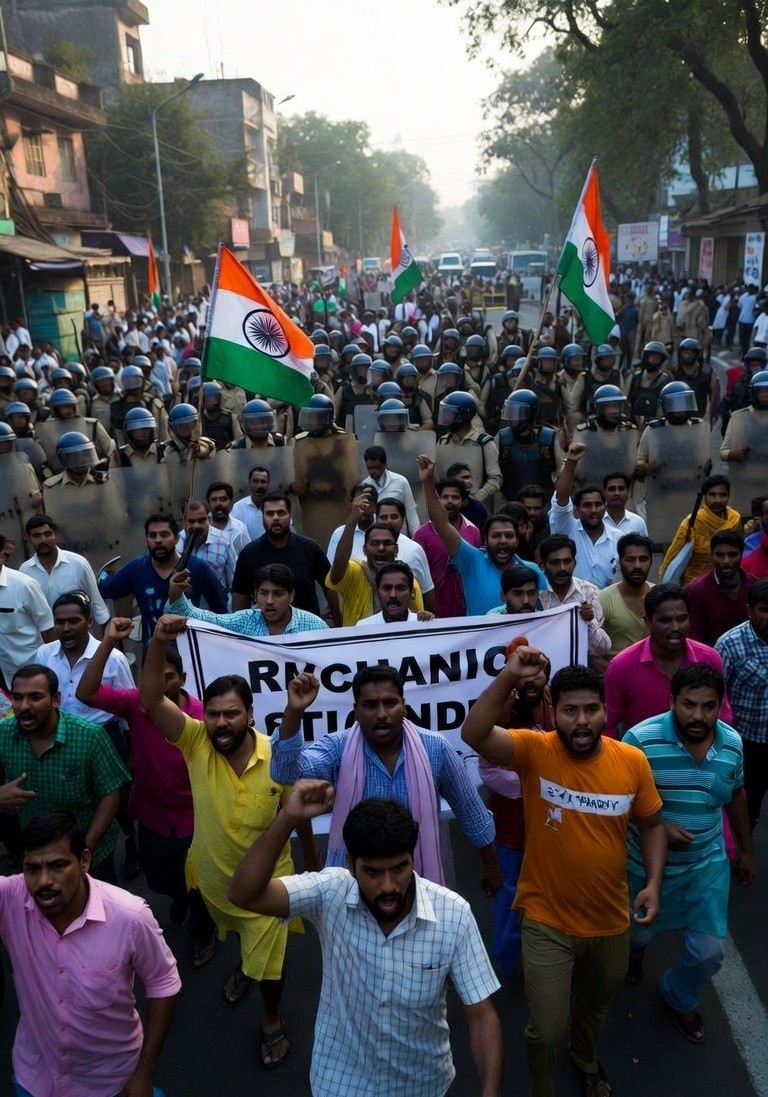
Thousands of protesters in India have continued their sit-in demonstrations despite a police crackdown, escalating tensions over alleged failures in the country’s examination system and growing concerns about youth unemployment and government accountability.
The protests, led by the youth-driven “Cockroach Janta Party” (CJP), began as a satirical online movement but have transformed into a wider campaign demanding reforms to India’s education and competitive examination system. Demonstrators are calling for accountability over alleged exam paper leaks and demanding the resignation of Education Minister Dharmendra Pradhan.Educational Resources
The movement gained momentum after protesters accused authorities of failing to prevent repeated irregularities affecting major entrance examinations, including tests linked to medical and government job opportunities. Many young demonstrators say exam failures have damaged their future prospects in an increasingly competitive job market.
Tensions increased after police used force to disperse protesters during demonstrations in New Delhi. Authorities deployed barricades, tear gas and batons as crowds attempted to march towards Parliament, leading to clashes and several detentions. Protesters accused police of using excessive force, while authorities said they were responding to attempts to breach security restrictions.
Opposition leader Rahul Gandhi also joined the protests and was detained by police while staging a sit-in outside Prime Minister Narendra Modi’s residence. Gandhi criticised the government’s handling of the crisis and demanded accountability from senior officials.
Despite the crackdown, demonstrators have maintained their presence at protest sites, including Delhi’s Jantar Mantar, saying they will continue their campaign until their demands are addressed. Supporters from across India have provided food, medical assistance and logistical support to keep the movement active.
The government has responded by promising faster investigations and special courts to deal with corruption and exam-related offences. However, protesters argue that these measures do not go far enough and want deeper reforms to prevent future failures.
The protests have expanded beyond students, attracting professionals, families and young workers who say the issue reflects broader concerns about education, employment opportunities and trust in public institutions.
The continuing demonstrations represent one of the most significant youth-led challenges facing the Modi government in recent years, highlighting growing frustration among a generation seeking greater transparency and fairness in India’s education and employment systems.
