


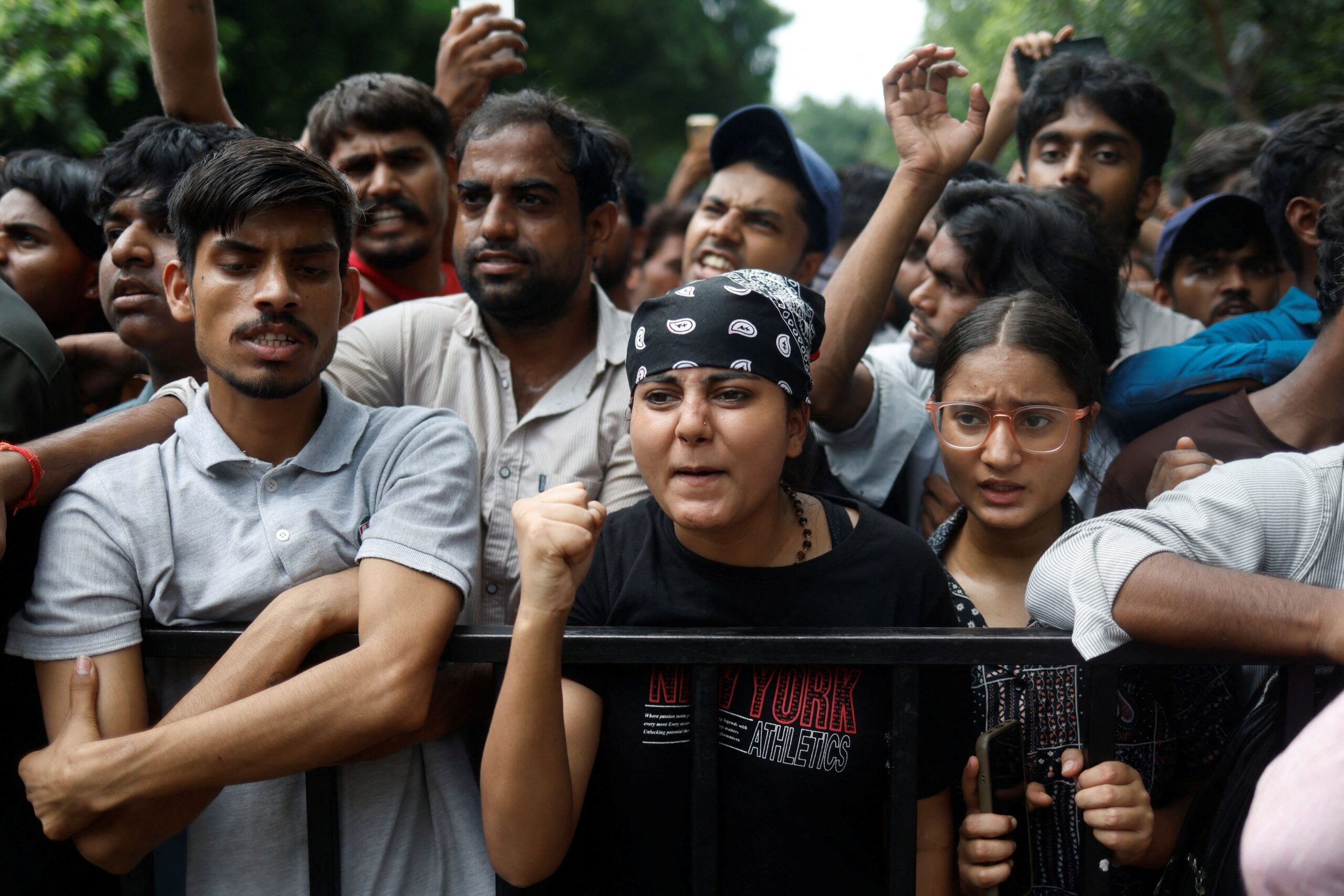
India’s Education Minister Dharmendra Pradhan has pledged changes to the country’s examination system and said the government is ready to discuss students’ concerns in Parliament as youth-led protests over alleged medical entrance test leaks continue to intensify.
The minister’s comments marked one of his most substantial public responses since the Cockroach Janta Party, or CJP, launched its campaign in New Delhi last month.
The movement is demanding Pradhan’s resignation over the alleged leak of the National Eligibility cum Entrance Test, widely known as NEET. The controversy reportedly affected around two million candidates and has become linked to broader concerns about student distress, examination pressure and the credibility of India’s testing system.
What began as a satirical online initiative involving a relatively small group of young supporters has developed into a major protest movement.
The demonstrations are now being viewed as one of the most serious youth-led political challenges faced by Prime Minister Narendra Modi’s government since it first came to power in 2014.
Tens of thousands of protesters marched through central New Delhi on Monday in an attempt to reach Parliament.
Security personnel blocked the procession with barricades. Clashes broke out after sections of the crowd attempted to push forward, prompting police to use tear gas and batons.
Both demonstrators and police officers were injured during the confrontation, while footage of the police response spread quickly across social media and fuelled further public criticism.
The movement gained additional political momentum the following day when Congress leader Rahul Gandhi, Priyanka Gandhi Vadra and other senior opposition figures staged a sit-in near roads leading to the prime minister’s residence.
Police temporarily detained several opposition leaders after they refused to disperse. They were released later the same day.
Facing mounting pressure, Pradhan said the government was prepared to debate the NEET controversy and other concerns affecting students during the parliamentary session.
He said young people deserved a credible response, structural reform and accountability.
However, the education minister also accused the Congress and Rahul Gandhi of attempting to convert student frustration into a political campaign against the government.
Pradhan argued that the opposition was using young demonstrators as symbols of political resistance rather than contributing to a constructive debate on how to improve the examination system.
His remarks followed Prime Minister Modi’s first major intervention in the controversy.
Modi promised severe punishment for individuals involved in examination paper leaks and called on lawmakers to help establish a more secure and reliable testing framework.
Health Minister J.P. Nadda also met CJP representatives in the government’s first formal engagement with the protest leadership.
The minister reportedly assured them that their demands would be examined, although protesters have said verbal assurances alone are not enough.
The demonstrations present a significant political challenge for the government because they combine anger over examination failures with broader frustration surrounding unemployment, education expenses and limited career opportunities.
Young voters have traditionally formed an important part of the Bharatiya Janata Party’s political support base.
The scale of the protests has therefore raised concerns that dissatisfaction among students, graduates and first-time voters could create longer-term electoral consequences.
The BJP has remained successful in several state elections since the 2024 general election.
However, that national vote returned Modi to office for a third term without giving his party an outright parliamentary majority, forcing it to depend more heavily on coalition allies.
Opposition parties now see the examination controversy as an opportunity to challenge the government on an issue affecting millions of students and families.
Rahul Gandhi has demanded a full parliamentary debate not only on the NEET allegations but also on the wider condition of India’s education system.
In a video recorded while he was being held at a Delhi stadium, Gandhi questioned why examination papers were repeatedly being leaked and why families were required to spend increasingly large amounts on education and preparation.
He argued that young people were raising legitimate questions about fairness, opportunity and accountability and that the government had a responsibility to respond directly.
Gandhi also called on Modi to apologise for the police action used against protesters during Monday’s march.
He urged the government to begin immediate reforms aimed at improving examination security, reducing education-related burdens and restoring public confidence.
The protest campaign has also received support from activist Sonam Wangchuk, who began a hunger strike on June 28.
Police later transferred him to hospital after his health deteriorated.
He was subsequently moved to a private medical facility following a court order issued after his wife alleged that he had been unlawfully detained.
The growing movement has transformed the NEET controversy from a dispute over one examination into a wider national debate about institutional fairness and the future of India’s youth.
Protesters say the alleged paper leak exposed a deeper failure within a system where candidates spend years preparing for competitive examinations without certainty that the process will remain transparent and secure.
They argue that examination fraud does more than affect scores. It can destroy confidence, waste years of preparation and deepen emotional and financial pressure on families.
The government’s willingness to promise reforms and offer a parliamentary discussion indicates that officials recognise the expanding scale of public anger.
However, demonstrators have said they will continue their sit-in until their central demands are addressed.
Those demands include a transparent investigation, accountability for officials responsible for the failure, compensation for affected families and political responsibility at the ministerial level.
As Parliament’s Monsoon Session continues, the examination dispute is expected to remain a major political issue.
The government is seeking to reduce tensions by promising reforms and dialogue, while the opposition is attempting to widen the debate to include unemployment, education costs and the growing frustration of young Indians.
