


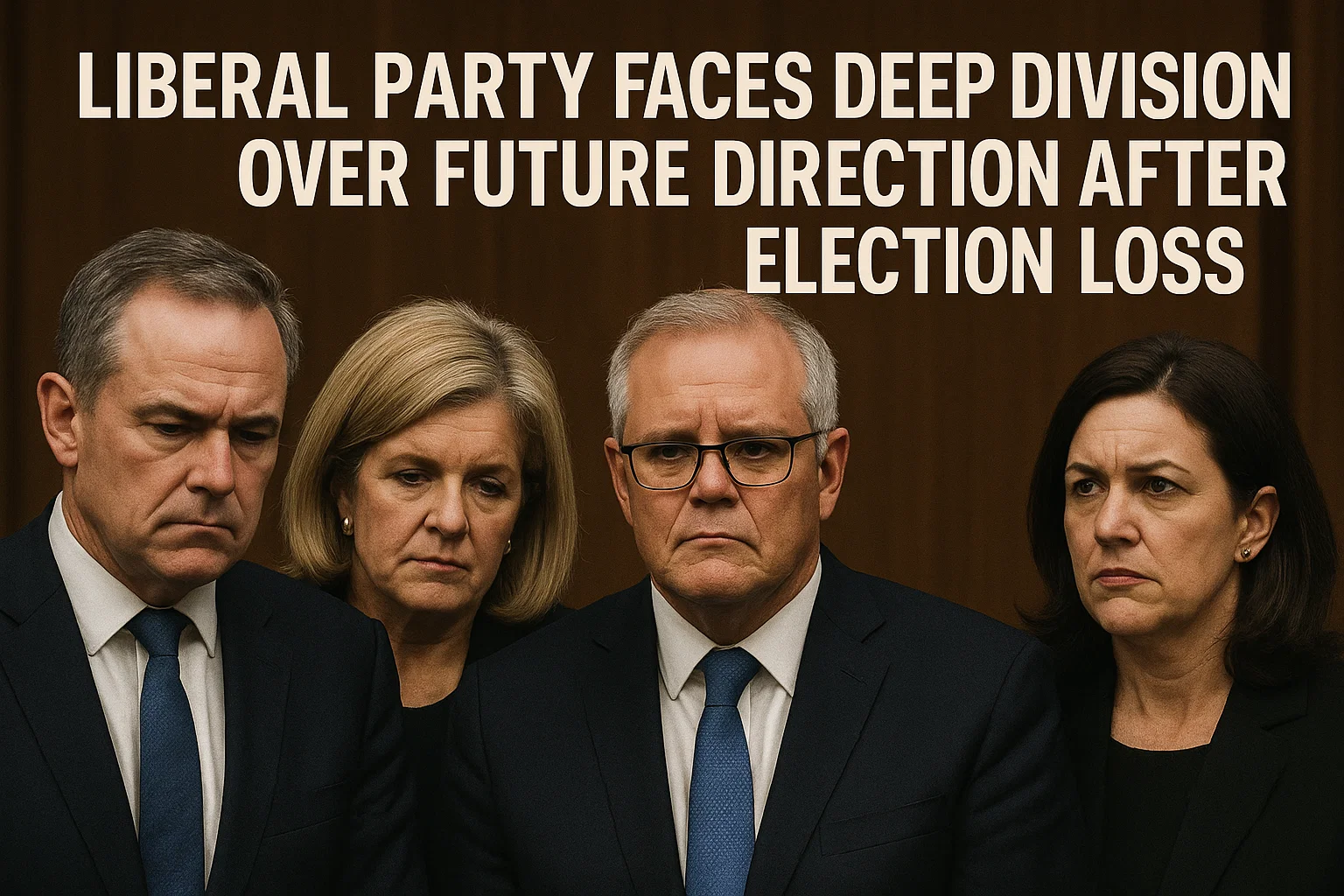
The Liberal Party is grappling with internal turmoil as a rift grows between those advocating a shift to the political centre, led by new leader Sussan Ley, and others who argue that moderates are exploiting the party’s electoral defeat to push their own agenda.
Senior party members, speaking to Four Corners, voiced strong criticism of the recent campaign, with one frontbencher calling for resignations over strategic failures. Rising conservative figure Andrew Hastie warned that without major reforms, the Liberal Party could collapse entirely.
“There’s no reason to think we won’t disappear if we don’t get our act together,” Hastie said.
Policy Frustrations and Strategic Missteps
Several frontbenchers revealed that key policies were sidelined or poorly managed. Hastie said he struggled to get his defence policy released, eventually being delayed until Anzac Day — far later than intended.
“It became very difficult to talk about defence without a clear policy,” he said.
Shadow Minister Sarah Henderson shared similar frustrations, saying her education policy was uploaded online just before the election but not promoted, with her media release pulled at the last minute.
“It was a values-driven policy,” she said. “But the campaign was consumed by cost-of-living rhetoric and neglected broader principles.”
Henderson also noted that tax and housing policies were mismanaged, and the campaign lacked a clear vision.
Internal Criticism of Campaign Leadership
Tasmanian frontbencher Jonno Duniam condemned the campaign’s reliance on inaccurate polling and said his concerns were ignored.
“We were making decisions based on bad data,” he said.
Duniam also said poor advice led to Peter Dutton backing down on a work-from-home policy — a move that, he claims, hurt the leader’s credibility.
There were internal calls for a stronger negative campaign against Prime Minister Anthony Albanese, with Dutton reportedly suggesting ads labelling him a liar — an idea campaign HQ rejected.
Misjudging the Electorate
Party insiders said they overestimated how many Labor voters would defect to the Coalition after the Voice referendum. While the referendum damaged Albanese politically, Hastie acknowledged it helped project him as a leader with conviction.
“He showed he was willing to go hard for an idea, even at great political risk,” Hastie said.
Debate Over Direction: Moderation vs. Conservatism
Former Liberal minister George Brandis argued that the party’s problem was broader than just campaign flaws. He said the party had alienated too many key voter groups, including women, public servants, and multicultural communities.
“We kept offending new groups. It was almost like we were running out of people to alienate,” he said.
Sussan Ley has committed to repositioning the party to reflect “modern Australia” and govern from the “sensible centre”. But Henderson pushed back, saying unity, not centrism, is the way forward.
Senator Maria Kovacic said the party focused on the wrong issues during the campaign and failed to highlight economic strengths that could have resonated with voters.
Nuclear Energy and Net Zero Divide
A major internal debate is brewing over energy policy. Hastie said the party should reconsider its net zero by 2050 commitment, arguing that Australians should not be paying more for energy while the country exports coal and gas abroad.
“It’s a hypocrisy we need to address,” he said.
Kovacic, however, said sticking with nuclear would be unrealistic and out of touch with younger voters, who overwhelmingly support climate action and net zero goals.
Jason Falinski warned that energy policy had become a culture war issue that played into opponents’ hands.
“Debating coal versus renewables is a losing battle. We need to shift focus,” he said.
Coalition Tensions and Ley’s Leadership Challenge
Tensions between the Liberals and Nationals escalated after Ley refused to immediately endorse key Coalition policies post-election, prompting the Nationals to walk away from the partnership. While the Nationals said they were simply defending previously agreed-upon policies, Liberals like Duniam accused them of overreaching.
Ley’s leadership could face further scrutiny. She narrowly defeated Angus Taylor in the leadership vote and is set to lose three supporting members from the party room in the coming weeks, prompting concerns about a possible conservative challenge.
Calls for Structural Reform to Support Women
Lindsay MP Melissa McIntosh said women in the party still face significant barriers and need more institutional support. She credited Ley with understanding these challenges and being well-placed to drive change.
“Women need to feel supported — part of something — and protected,” she said.
Deputy Leader Ted O’Brien praised Ley’s leadership, emphasizing that her appointment was not just symbolic.
“She’s the right person to lead, not just the first woman,” he said.
But others remain sceptical.
Falinski warned that the party still hasn’t reached its lowest point and must confront long-avoided internal conflicts.
“There’s still further to fall,” he said. “But we need to have the tough conversations we’ve been putting off.”
