


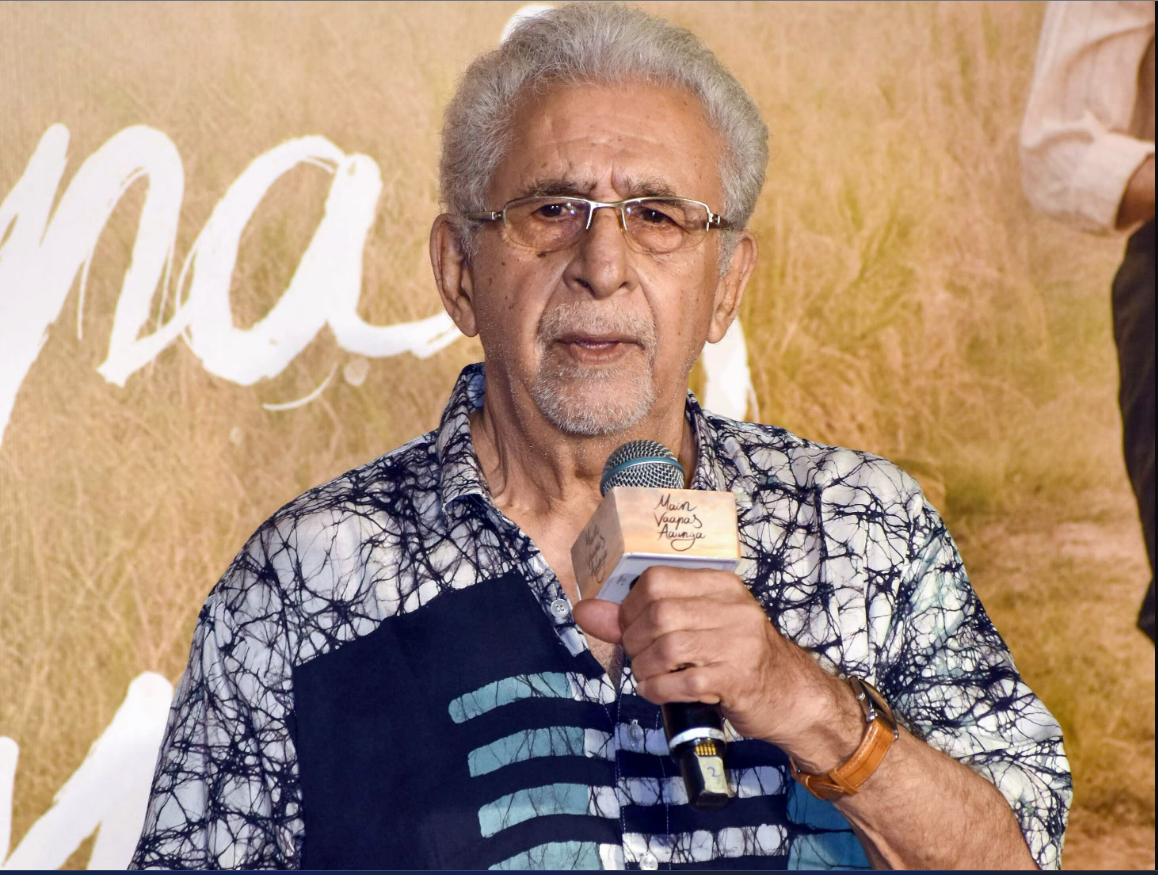
Veteran Indian actor Naseeruddin Shah has strongly criticised the police response to student protesters at Delhi’s Jantar Mantar, expressing solidarity with the youth-led movement and warning the authorities that their actions would not be forgotten.
Shah shared an emotional video after clashes erupted during the Chalo Sansad March, where police used batons to disperse demonstrators. The protest was organised over alleged irregularities in the NEET-UG examination and demands for accountability from the central government.
In the video, the acclaimed actor said he was deeply disturbed by images of young protesters being beaten. He accused those in power of encouraging ignorance, intolerance and cruelty, while praising students and educated young people for their resilience and courage.
Drawing on his own experience as an actor and teacher, Shah said much of what he had learned about his profession came from young people and students he had once tried to teach.
He said the treatment of protesters had left him both emotional and angry. Shah compared masked, baton-wielding security personnel to aggressive enforcement agents and urged them to consider how they would feel if their own children were treated in the same manner.
The actor warned that those responsible for violence against students could eventually face consequences for their actions.
Addressing the demonstrators directly, Shah encouraged them not to lose hope. He said many people across the country supported their cause and sympathised with their struggle.
He urged the students to continue raising their voices and said his faith in India’s youth had grown stronger because of their determination.
Shah concluded his message with the phrase “sab yaad rakha jayega,” meaning that everything would be remembered. The statement has since been widely shared on social media by supporters of the protest movement.
The controversy began after tensions escalated at Jantar Mantar during Monday’s Chalo Sansad March. Police intervened when demonstrators attempted to move towards Parliament, resulting in clashes, detentions and allegations of excessive force.
Videos from the protest showed officers using batons against sections of the crowd. The footage prompted widespread criticism from opposition politicians, activists and public figures.
The demonstration took place only days after climate activist Sonam Wangchuk was removed from the protest site and transferred to Safdarjung Hospital. His removal had already intensified anger among student groups and supporters of the movement.
Wangchuk, protesting students and the Cockroach Janta Party have demanded the resignation of Union Education Minister Dharmendra Pradhan over the alleged leak of the NEET-UG question paper and other claimed failures in the examination process.Educational Resources
The movement argues that repeated paper leaks and irregularities have damaged confidence in India’s competitive examination system and placed enormous emotional and financial pressure on students and their families.
The NEET controversy has since developed into a wider national debate about education reform, examination security, youth unemployment and police conduct during public demonstrations.
Several prominent figures from India’s film industry have also spoken in support of the protesters.
Actors and artists including Sonu Sood, Dia Mirza, Shabana Azmi, Swara Bhasker, Prakash Raj, Diljit Dosanjh, Riteish Deshmukh, Vir Das, Genelia Deshmukh, Richa Chadha, Sonakshi Sinha and Aayush Sharma have publicly expressed concern over the treatment of students.
Some celebrities have shared videos from the demonstrations, while others have called on the government to listen to the protesters and investigate their allegations.Business & Industrial
The involvement of well-known cultural figures has increased public attention on the movement and added pressure on the government to respond.
Opposition parties have also rallied behind the students. Congress leader Rahul Gandhi and other senior politicians staged a protest near Prime Minister Narendra Modi’s residence following the police action.
The government has said it is prepared to discuss concerns surrounding NEET and introduce reforms to improve the integrity of the examination system.
However, protesters maintain that promises of reform must be accompanied by accountability, transparent investigations and action against those responsible for the alleged paper leak.
Shah’s intervention has added another influential voice to the growing criticism of the police response.
His message focused not only on the immediate violence but also on the broader responsibility of the state to protect young citizens and allow peaceful dissent.
As the protests continue, the actor’s warning that the events will be remembered has become a rallying message among students and supporters demanding justice and examination reform.
