


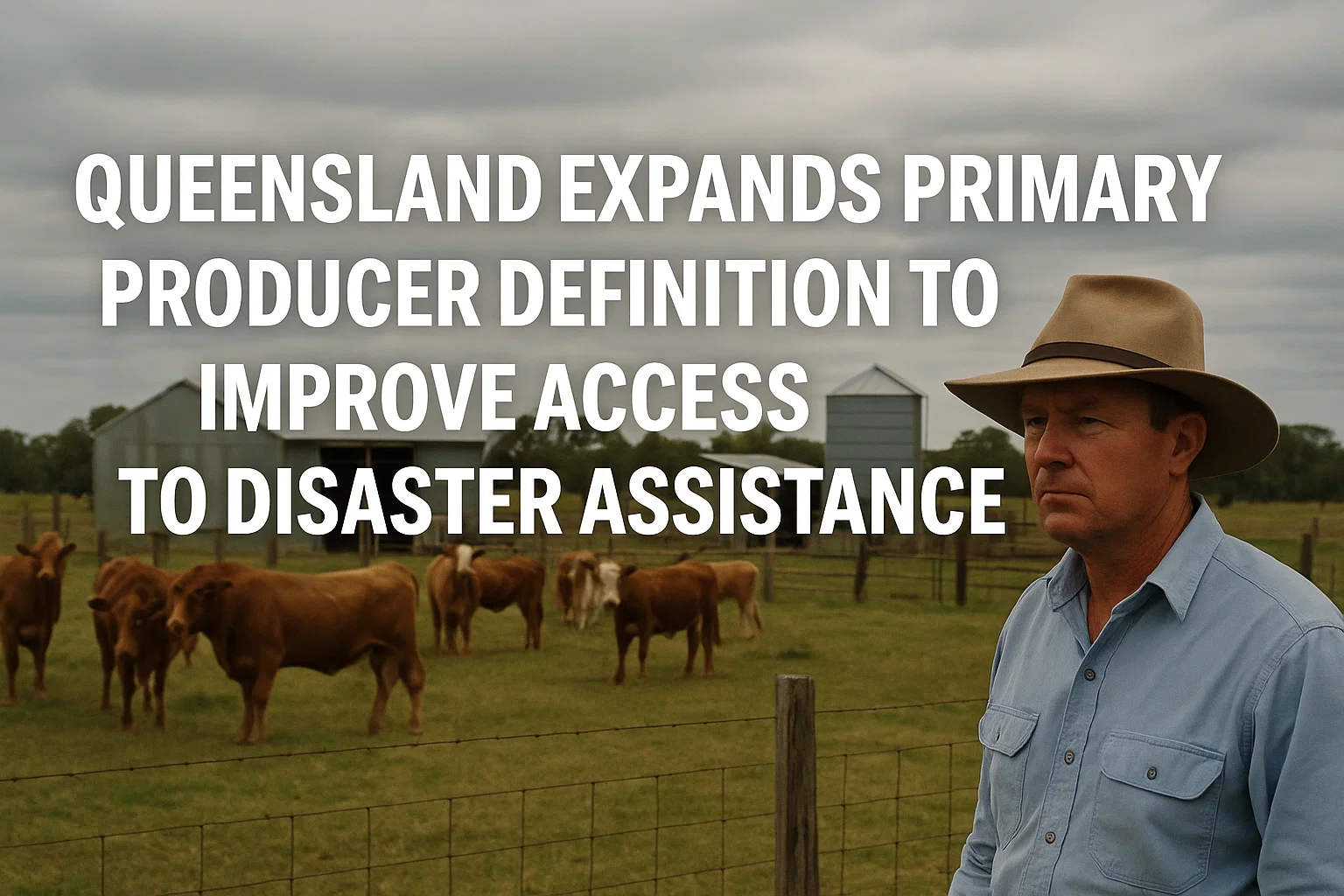
Queensland farmers previously denied disaster recovery support due to off-farm earnings may now qualify for assistance, following a broadened definition of what counts as primary production.
Under earlier rules, disaster grants, loans, and freight subsidies were only available to producers who derived—or were expected to derive—the majority of their income from on-farm activities. This excluded many farmers supplementing their income through agricultural services like contract harvesting, mustering, and milking.
Now, changes to Queensland’s criteria will retroactively apply to the devastating 2024–25 wet season, allowing more producers to access support.
A Welcome Change for Young and Diversifying Farmers
Harvest contractor Luke Roveda, who bought farmland near Ingham two years ago, was hit hard by flooding in February. Roads and culverts were damaged and crops destroyed, yet he was ineligible for help because much of his income came from harvesting.
“We just pushed through without assistance,” Mr Roveda said. “But now, with these changes, we can apply and finally fix the damage.”
The updated disaster relief policy, under the joint Commonwealth-State Disaster Recovery Funding Arrangements (DRFA), now includes income from agricultural support services as part of primary production.
Queensland Minister for Primary Industries Tony Perrett said the change recognizes the evolving nature of farming and would support those working toward growing their operations.
“Disasters don’t discriminate,” he said. “These new rules will cover all three major flood events we’ve had this year.”
Modern Farms, Outdated Definitions
Canegrowers CEO Dan Galligan said the old eligibility criteria didn’t reflect today’s farming landscape.
“At a recent meeting in Ingham, half the farmers were ruled ineligible within minutes because they had diversified incomes,” he said. “Their operations are growing, but the rules hadn’t kept pace.”
Each state defines a “primary producer” based on a national classification from the Australian Bureau of Statistics, but has the power to interpret it independently. Until now, Queensland excluded support services from its definition.
AgForce CEO Michael Guerin called the revision a significant step forward.
“Farming today is different. Off-farm income is often essential — whether for young people saving for land or for families weathering tough seasons like drought or flood.”
Not All Farmers Covered Yet
Despite the progress, some producers say the revised criteria still fall short.
South Burnett farmer Nick Holliday, who raises pasture-fed eggs, pork, and beef, successfully appealed a previous ruling that denied him disaster assistance. He was hopeful the latest changes would offer broader protection but remains disappointed.
“This was a real opportunity to fix a flawed system,” he said. “Instead, we still have different rules depending on your job.”
Mr Holliday noted inconsistencies between government departments — someone might qualify as a farmer for tax or registration, but not for disaster relief.
Calls for Further Reform
Premier David Crisafulli said the government remains open to continued dialogue: “If more changes are needed, we’ll keep pushing.”
Jo Sheppard, CEO of the Queensland Farmers’ Federation, said her organisation has been advocating for change for over a decade.
“Farmers are diversifying to stay viable, but agriculture remains at the heart of their work,” she said. “These farmers must be supported during disasters — their success is vital for the sector, rural communities, and consumers alike.”
