


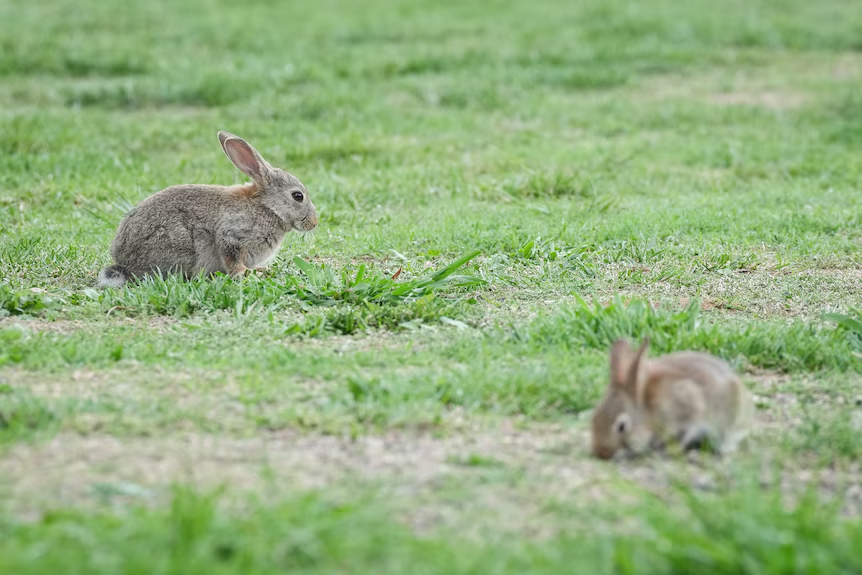
A thermal-assisted rabbit control program, which began in the Mulligans Flat and Goorooyarroo nature reserves in 2014 and expanded to Canberra Nature Park in 2023, is now active in the area.
“It’s a tightly controlled process,” said Mark Sweaney from ACT Parks and Conservation.
“Professionals use low-powered air rifles and follow safety-first protocols during the operation.”
The need for the program has grown as concerns rise over an increase in rabbit numbers.
“In Australia, we’ve largely forgotten what an out-of-control rabbit population looks like — but we might be on the verge of seeing it again,” said Jack Gough, CEO of the Invasive Species Council.
Rabbits reappearing in unusual places
Australia has experienced rabbit plagues before, with severe environmental and agricultural consequences due to a lack of control measures at the time.
Past biocontrol methods, including the release of myxomatosis and calicivirus, successfully reduced rabbit numbers to record lows. However, experts stress that new viruses are needed every decade or so because rabbits develop resistance over time.
As the impact of previous viruses wanes and public memory fades, there’s growing pressure to accelerate development of the next rabbit biocontrol.
Many Canberrans have noticed rabbits turning up in unexpected areas — front yards, neighborhood streets, and even the lawns of Parliament House.
“This is what happens when there’s plenty of food and ideal breeding conditions,” Mr Sweaney said.
“Rabbits start appearing in new locations and returning to old ones.”
In favorable seasons, female rabbits can produce up to three litters per year, each with as many as eight young.
“Just a few rabbits can multiply into thousands in a very short time,” Sweaney explained.
Mr Gough added that a couple of good seasons followed by drought is the “perfect storm” for a rabbit outbreak.
“With virus protection wearing off, we’re going to see this issue escalate and land squarely in front of politicians.”
A rapid breeding challenge
To prevent rabbit numbers from growing, about 87% of the local population must be removed annually, Gough said. Areas that are hard to access or where rabbits are virus-resistant become breeding grounds and allow the population to spread.
Though the ACT has a Rabbit Control Working Group — which includes ACT government bodies, the National Capital Authority, and Defence — some areas remain difficult to manage.
One such location is the hedged landscape around Lake Burley Griffin and Kings Avenue Bridge, which shelters rabbit populations.
“We spend over half a million dollars each year on rabbit control in the ACT, not even counting staff costs,” Mr Sweaney said.
“But we need more biocontrol options in development — that’s where the real impact comes from. Even with significant resources, many areas are still out of reach.”
Why rabbit control matters
Although they may seem harmless, rabbits have a massive ecological footprint.
Dr Tanja Strive, senior principal research scientist at CSIRO Health and Biosecurity, calls them a “reverse keystone species” due to their widespread negative effects.
They destroy crops, outcompete native species, and support populations of other invasive animals like foxes and feral cats.
“Controlling rabbits leads to multiple biodiversity gains,” Dr Strive said.
“One way to reduce fox numbers over time is to manage rabbit populations.”
Targeting rabbits is a cost-effective biodiversity strategy, she explained, since it benefits the broader environment.
Dr Strive’s team has long focused on developing rabbit-specific biocontrols, especially strains of rabbit haemorrhagic disease virus (RHDV), a calicivirus used in Australia since the 1990s.
“A good biocontrol must be specific to rabbits, repeatable, and highly effective,” she said.
If rabbit numbers surge again, decades of ecological progress could be lost.
“This isn’t about killing masses of rabbits. It’s about keeping populations low,” Strive noted.
She also stressed the need for a vaccine to protect domestic and pet rabbits before introducing any new virus.
Biocontrol losing attention and funding
Dr Strive worries that declining rabbit populations over the past decade may have led to reduced urgency and investment.
“Biocontrol may have become a victim of its own success,” she said.
“With low numbers for so long, people stop seeing it as a priority.”
She warned that without new biocontrol tools, Australia risks another population boom.
“It doesn’t take much for rabbits to bounce back — they breed rapidly,” she said.
Although her research still receives some industry and government support, there’s not yet enough funding to deliver a new biocontrol product.
“Sustained, long-term investment is always a challenge in science,” Strive said.
Jack Gough echoed her concerns:
“We’re in a constant race with rabbits to keep their numbers in check. If we slow down, we’ll lose that race.”
At CSIRO’s Black Mountain labs, Dr Strive’s team is also exploring future options like gene drives — a genetic technique that could potentially cause rabbits to breed themselves out of existence in a targeted, species-specific way.
“Gene drives are a promising tool, but they’re still years away,” she said.
“In the meantime, we need at least one or two new viruses ready to go.”
