


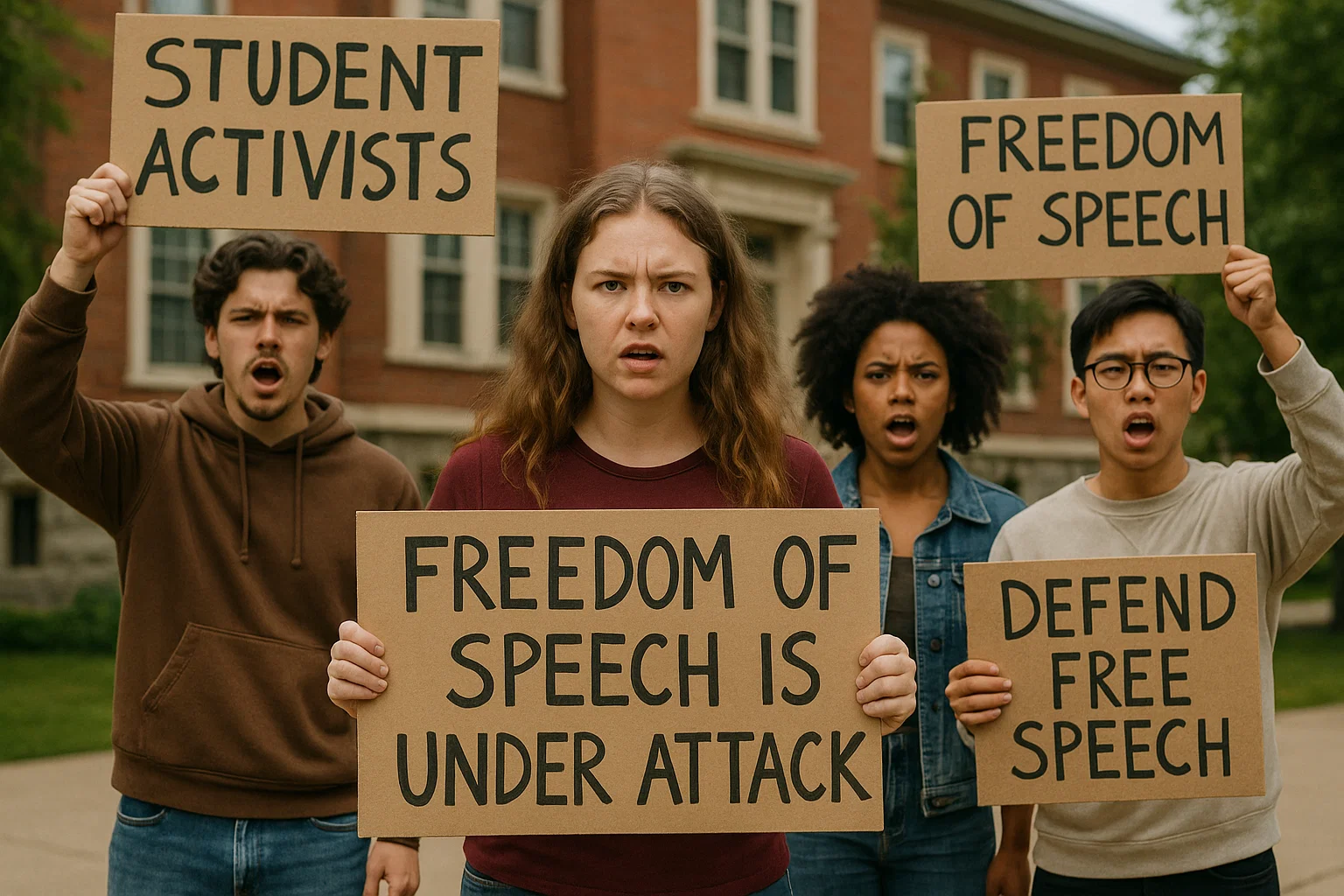
When Finn Penter put up six posters outside a lecture theatre at the University of Western Australia (UWA), he didn’t expect to face formal disciplinary action.
Finn, a student guild member at UWA, had posted the flyers to raise awareness about university regulation changes that he believes restrict students’ ability to protest. The posters read, “free speech is under attack” and “clubs are under attack.”
A member of Socialist Alternative and an active voice in pro-Palestinian campus protests, Finn expressed disbelief at the disciplinary response.
“I looked into it — most people get disciplined for things like plagiarism or aggressive behaviour,” he said. “It’s absurd that sharing a political opinion is being treated the same way.”
While UWA did not comment on Finn’s case directly, a spokesperson said posters and stickers are only allowed in designated Guild areas. They added that security staff were repeatedly called to remove unauthorised materials from university buildings last year.
Finn sees his reprimand as part of a broader crackdown on free expression at universities. Earlier this year, UWA also banned students from making announcements before lectures — a rule that has since been partially relaxed.
Protest Restrictions Extend to Other Universities
UWA isn’t alone. Universities across Australia have introduced new rules in the wake of a wave of pro-Palestinian demonstrations and campus encampments. Though institutions insist these measures aren’t directly targeting such protests, students disagree.
Monash University in Melbourne introduced a revised student code of conduct this year, which initially included a controversial clause prohibiting behaviour that could damage the university’s reputation. That clause has since been removed, but students remain uneasy.
The updated code still bans conduct that disrupts “orderly” university activities. A Monash spokesperson said the code was developed in consultation with student groups and that references to reputation were mistakenly included and later corrected.
Madi Curkovic, from the Monash Student Association and an outspoken supporter of Palestinian rights, believes universities are deliberately curbing protest rights.
“Open discussion should be part of university life,” she said. “But what we’re seeing is increasing authoritarianism on campus.”
Police Visits Add to Tensions at the University of Melbourne
In Melbourne, students involved in protests at the University of Melbourne say police have visited the homes of demonstrators. One student described feeling afraid of a possible raid after a visit from police.
The visits were linked to a protest where students, some masked and wearing keffiyehs, entered an academic’s office, chanting and putting up stickers.
While protesters say the demonstration was peaceful and held during office hours, the academic involved, Professor Steven Prawer, said he felt intimidated.
“Imagine being in a bank and people walk in with their faces covered — that’s what it felt like,” he told triple j Hack.
Victoria Police confirmed that officers responded and removed protesters, though they did not say whether further investigation was ongoing.
The University of Melbourne said it maintains contact with police to ensure safety on campus and will act on unacceptable behaviour, including referring matters to police if necessary. The university also said it supports peaceful protest but imposed a ban on indoor demonstrations in March after complaints from staff and students.
Balancing Free Speech and Safety at the University of Sydney
At the University of Sydney, administrators are also considering new protest regulations following last year’s encampments. Proposed changes would restrict banners, mass emails, and public announcements unless pre-approved.
Dror Liraz, head of the Australasian Union of Jewish Students at the university, supports the changes, arguing they help protect Jewish students from antisemitism.
“These rules aren’t stopping protests,” Dror said. “They just make sure protests can happen in a way that doesn’t involve hate.”
Born in Israel, Dror was involved in demonstrations last year demanding the resignation of the university’s vice-chancellor. She said the campus environment has become emotionally draining.
“It’s been hard to concentrate, especially during the encampments,” she said. “It felt like people hated me, no matter what I did.”
Dror believes some limits on protest timing and methods could improve campus safety.
“If someone says antisemitism is part of free speech, that’s just racism,” she said.
