
More than 14 million of the world’s most vulnerable people — including millions of young children — could die as a result of the Trump administration’s significant cuts to U.S. foreign aid, according to new research published in The Lancet.
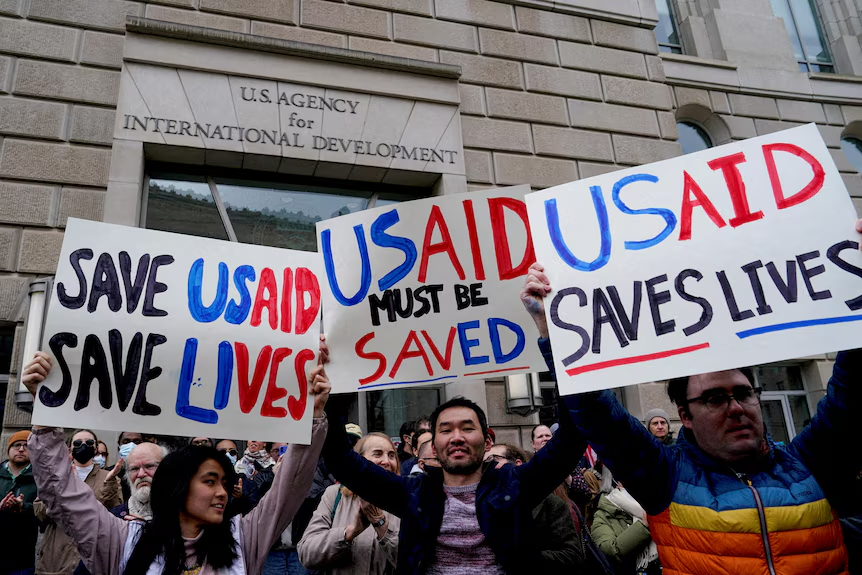
The study, released as global leaders gather in Spain for a major UN aid summit, warns that dismantling funding from the U.S. Agency for International Development (USAID) could reverse two decades of health progress in low- and middle-income nations.
Until Donald Trump’s return to office in January, USAID accounted for over 40% of worldwide humanitarian aid. Just two weeks into the new administration, Trump’s former advisor Elon Musk remarked that the agency had been “put through the woodchipper.”
Researchers estimate that between 2001 and 2021, USAID funding helped prevent 91 million deaths in developing nations. By modelling the impact of an 83% funding cut — the level announced earlier this year — the team projected that over 14 million preventable deaths could occur by 2030. This includes more than 4.5 million children under five, or roughly 700,000 child deaths annually.
Study co-author Davide Rasella of the Barcelona Institute for Global Health described the scale of the potential fallout as comparable to a global pandemic or a large-scale armed conflict.
Although USAID made up only 0.3% of U.S. federal spending — about $64 annually per citizen — its global health programs have proven highly effective. The research found that USAID-supported initiatives were associated with a 15% overall drop in mortality, and a 32% decline in deaths among children under five.
The funding was especially impactful in fighting preventable diseases. Countries receiving robust support saw 65% fewer HIV/AIDS-related deaths compared to those with little or no USAID backing. Deaths from malaria and neglected tropical diseases were cut in half.
However, since the U.S. drastically reduced its contributions, other major donors including Germany, France, and the UK have also announced similar cuts, raising the risk of even more deaths in the coming years, according to study co-author Caterina Monti.
The death projections are based on current aid pledges, meaning outcomes could improve if funding is restored. As dozens of global leaders meet in Seville for the largest aid-focused gathering in a decade, the U.S. will notably be absent.
“This is the time to increase investment, not retreat,” said Professor Rasella.
James Macinko, a co-author from UCLA, emphasized how small U.S. contributions have a massive impact: “Americans give about 17 cents per day to USAID — and that amount can save millions of lives. Most people would support continuing that aid if they knew how effective it is.”
