


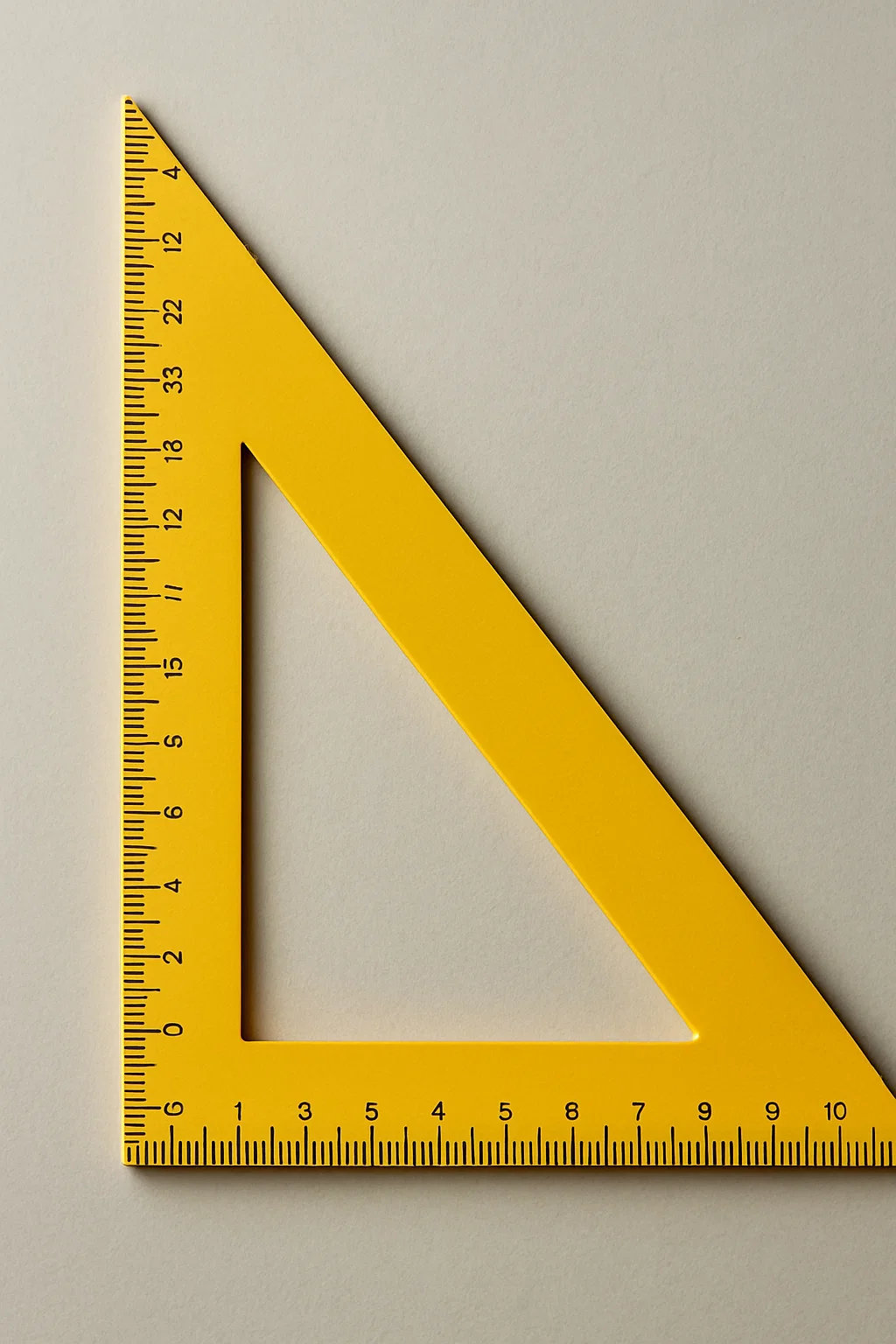
The next time you grab a bag of potatoes at the supermarket or fill your car with petrol, you can thank a treaty signed 150 years ago for the metric system that plays a central role in daily life.
On May 20, 1875, representatives from 17 nations gathered in Paris and signed the Metre Convention—also called the Treaty of the Metre.
At that time, different countries, and even individual states and cities, often used their own systems for measuring distance and weight. This lack of standardisation hindered trade and scientific advancement.
To address this, the Treaty of the Metre led to the creation of the International Bureau of Weights and Measures, which originally defined the metre and kilogram.
Over time, more nations joined the treaty—Australia, for instance, signed on in November 1947.
Additional units were gradually adopted to form the International System of Units, the foundation of the modern metric system.
However, the metre itself dates back nearly a century before the treaty that bears its name.
Its origin traces back to the French Revolution.
The metre’s evolution
In the late 1700s, as France reimagined itself during the revolution, it cast off old systems tied to monarchy and religion—including those for measurement.
The goal was to create a measurement system accessible to everyone, based on natural constants rather than arbitrary standards like a king’s arm length, explains Bruce Warrington, CEO and chief metrologist at the National Measurement Institute.
Thus, scientists of the era defined the metre—derived from the Greek word metron, meaning “measure”—as one ten-millionth of the distance from the North Pole to the Equator, measured through the Paris Observatory. Two astronomers were tasked with determining this distance, and after seven years of work, presented their findings in 1799. This led to the creation of the “Metre of the Archives,” a platinum bar that became the official standard.
(Although it was later discovered their calculations were slightly off, making today’s metre 0.2 millimetres shorter than intended.)
This original bar and its replicas were eventually replaced by about 30 new bars made from a durable platinum-iridium alloy. These were distributed globally in the late 1890s and served as the standard for decades.
As science progressed, however, so did the definition of the metre.
In the early 20th century, scientists realised they could measure length using light waves. Since light travels in waves, knowing a wave’s length—its wavelength—allowed it to be used as an ultra-precise measuring tool, Dr Warrington explains.
By 1960, the platinum bars were replaced with a new definition of the metre: the distance equal to 1,650,763.73 wavelengths of a particular reddish-orange light emitted by krypton gas.
As electronics manufacturing moved into microscopic scales—like smartphone transistors only billionths of a metre wide—this definition became insufficient.
Meanwhile, advances in atomic clocks, which use laser light to stimulate atoms and produce consistent oscillations or “ticks,” enabled much finer time measurement.
These breakthroughs, combined with the universal speed of light, allowed the metre to be redefined again.
In 1983, the metre was officially defined as the distance light travels in a vacuum in 1/299,792,458 of a second—since the speed of light is precisely 299,792,458 metres per second.
This new definition opened doors to more advanced forms of measurement, says Dr Warrington. For example, scientists now use it to precisely measure the Earth-Moon distance.
“The Apollo missions left a special mirror on the Moon’s surface, and even today, we can shoot lasers at it, time how long the light takes to return, and use that to calculate the distance to the Moon,” Dr Warrington explains.
These readings show that the Moon is slowly drifting away from Earth by about 3.8 centimetres each year.
Some countries have been slower to adopt the metric system fully. Notably, the United States—an original signatory of the Treaty—still uses imperial units in everyday life.
Nonetheless, Dr Warrington notes, the metric system is officially recognised in the US and forms the legal basis for its national standards, including the kilogram and the metre.
Even in Australia, remnants of imperial units persist—like trouser sizes and TV screen measurements.
One area where measurement still varies is in the kitchen, Dr Warrington points out.
“As a measurement enthusiast, I find it a bit frustrating that an Australian tablespoon equals four teaspoons, while most of the world uses three. So, depending on the origin of a recipe, that difference can affect your results.”
