


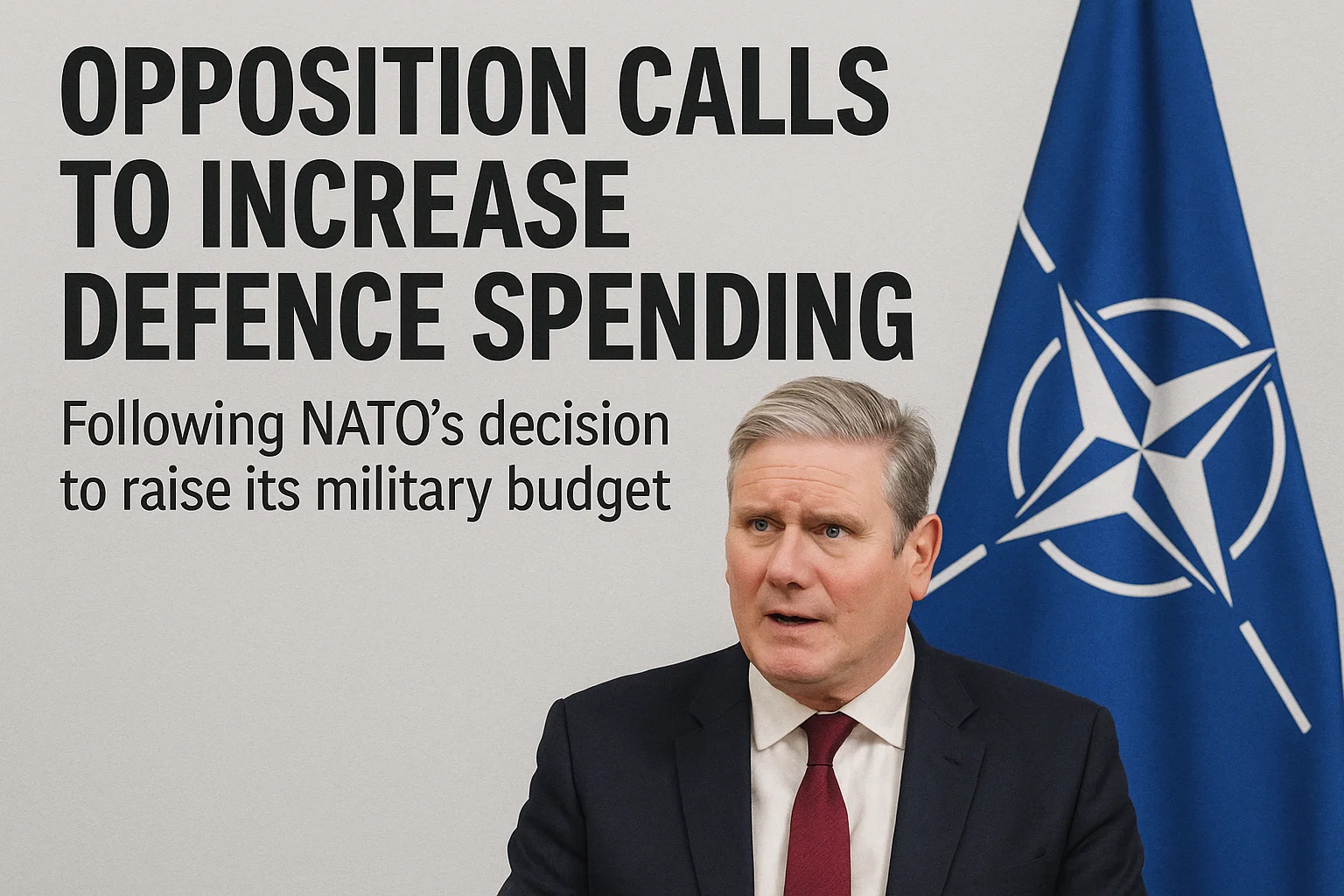
The Opposition has renewed its push for increased defence spending in response to NATO’s recent agreement to significantly raise military budgets.
At a summit in the Netherlands, all 32 NATO member nations committed to boosting their defence expenditure to 5 per cent of GDP — a move widely seen as a victory for Donald Trump, who had threatened to withdraw U.S. military support for Europe without greater financial contributions.
Deputy Prime Minister Richard Marles, representing Australia as part of the Indo-Pacific Four (IP4), acknowledged the significance of the decision but emphasised it was a NATO-specific matter.
“A very important decision has been made regarding European defence spending,” Mr Marles said from The Hague. “But our approach is based on our own strategic review and threat assessment, which has led to the largest peacetime increase in defence funding in Australian history.”
However, Opposition defence spokesman Angus Taylor took a firmer stance, urging Australia to follow NATO’s lead.
“We’re seeing authoritarian regimes assert themselves more aggressively — in Iran, in Russia, and especially across the Indo-Pacific,” Mr Taylor told Sky News. “Democratic nations must respond with stronger defence budgets.”
He stressed that while Labor has acknowledged rising global threats, it hasn’t sufficiently backed its plans with immediate funding.
“These are the most uncertain times since World War II, and we agree with the Prime Minister on that. But you have to match plans with funding — and Labor hasn’t done that,” he said.
Mr Taylor said the Coalition supports lifting Australia’s defence budget to 3 per cent of GDP, calling it essential for national sovereignty and alliance commitments.
“This isn’t about Trump’s demands — we supported stronger defence spending before that,” he said. “We’re advocating for it because it’s the responsible thing to do in a volatile global environment.”
Still, the Opposition’s 3 per cent target falls short of Washington’s latest request. During a meeting with Mr Marles earlier this month, U.S. Defence Secretary Pete Hegseth urged Australia to raise defence spending to 3.5 per cent of GDP.
That call sparked debate in Canberra, with growing concerns that Australia’s defence posture is not sufficiently robust, particularly in light of rising tensions with China.
While the Albanese government has pledged record levels of defence investment, most of the spending won’t take effect until after 2029. Critics argue that delays in funding and a focus on long-term projects are compromising Australia’s near-term military readiness — at a time when some experts predict a major conflict could break out before 2030.
