


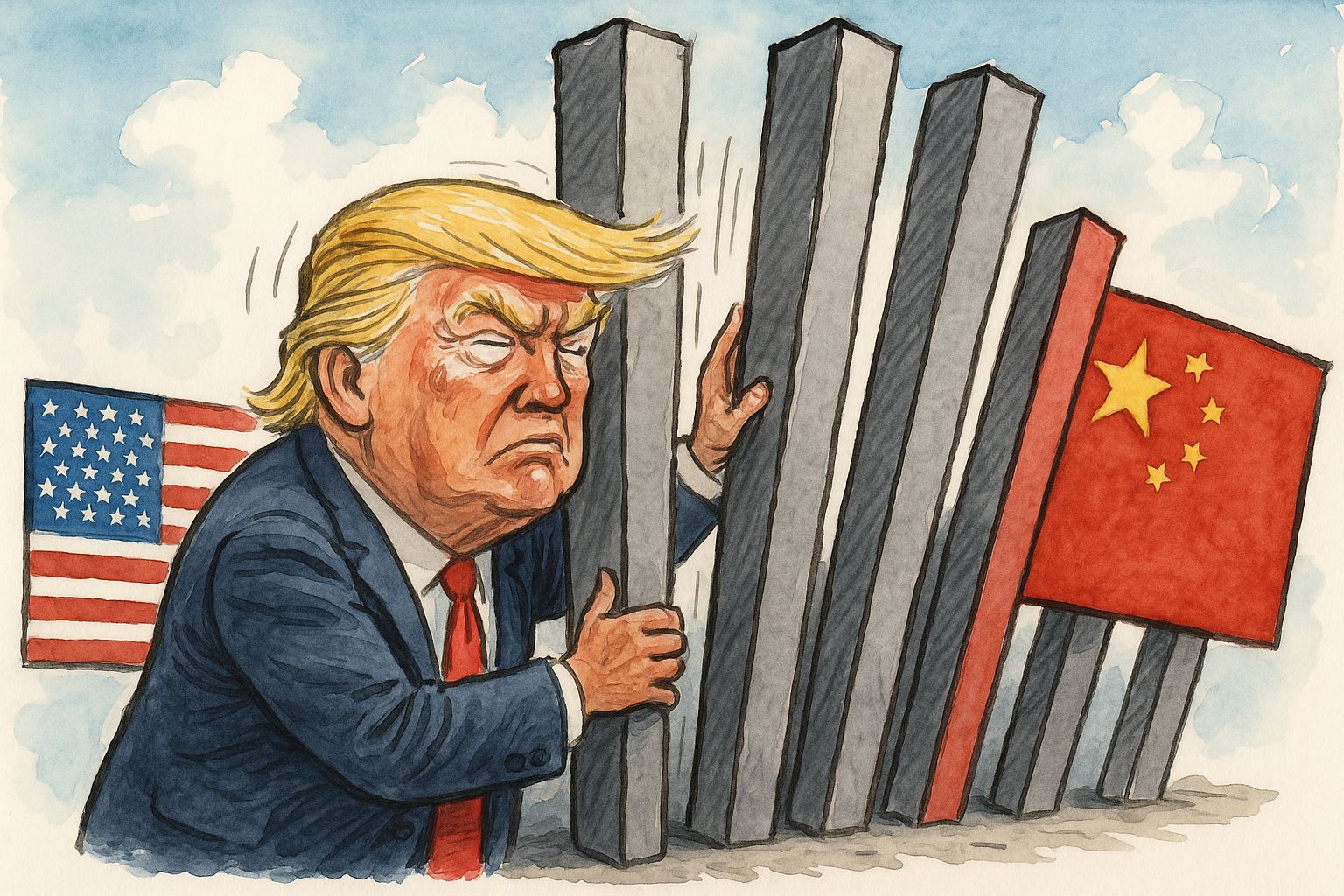
During his first term, former U.S. President Donald Trump implemented various protectionist trade policies, but the disruptions he has caused since returning to office—marked by a wide-ranging global trade war—have far exceeded those initial efforts.
Trump has pledged to impose “reciprocal tariffs” to eliminate America’s trade deficits, criticizing countries that export more to the U.S. than they import. Yet his tariffs have also targeted nations with which the U.S. runs surpluses, including allies like Australia.
His administration has justified tariff increases with various aims—national security, job creation, and revenue generation among them. The stated goal is to pressure trading partners into lowering their own barriers. However, even “revised” deals like the one with the UK still impose steep tariffs, with a 10% levy on most British exports to the U.S.
Trump’s erratic trade policies have unsettled the global economy. Tariff rollouts are frequently delayed or altered, and deadlines for deals are regularly extended. This inconsistency has earned him the nickname “Taco” — “Trump Always Chickens Out.”
The administration has reached few new trade agreements, and those secured have included unexpected, sometimes harsh, terms. A recent deal with Vietnam, for instance, sets a 20% tariff on imports, rising to 40% if Vietnamese exports include Chinese components—far above the 11% rate Vietnam had anticipated. Indonesia agreed to a 19% tariff in return for duty-free access for U.S. goods.
China has faced some of the most aggressive measures, with tariffs initially rising to 145%, then dropping back to 10%. Still, the average tariff remains over 50%, and Trump has threatened another hike if no deal is reached by August 12.
The European Union and Mexico have also faced tariff threats, prompting the EU to consider retaliatory steps. In parallel, the U.S. has increased duties on commodities like steel, copper, and auto parts, while tightening restrictions on rare earth imports.
Confusion dominates tariff enforcement. For instance, the U.S. taxed urea imports from Algeria and Qatar but exempted Russia—resulting in Russia doubling its market share by May.
Some tariffs appear politically motivated, such as the threat against Brazil, which aims to deter legal action against former President Jair Bolsonaro. Others, like reinstated aluminium and steel duties, hurt more workers than they help by raising production costs.
With over 10,000 tariff classifications affecting imports from more than 160 countries, the U.S. now has a chaotic and unmanageable trade system with potentially over a million unique tariff rates.
Many tariffs, justified on national security grounds, target U.S. allies—ironically weakening collective defense efforts and raising costs. Cutting off allied suppliers could harm U.S. defense manufacturing, not strengthen it.
Trump’s trade agenda threatens to damage the U.S. economy on multiple fronts. Instead of shrinking trade deficits, higher tariffs discourage investment and raise consumer prices. They invite foreign retaliation, hurting exports. Protectionist policies may temporarily boost domestic production, but that reduces import volume—and tariff revenue along with it.
Tariffs also fail to guarantee job creation. Some protected firms may automate rather than hire, while uncertainty causes others to postpone investments. This climate has fueled lobbying in Washington as businesses and foreign officials seek exemptions—an indicator of rising cronyism.
Six months into Trump’s second term, his tariff policy remains incoherent. It’s expensive, inconsistent, and economically harmful—eroding free-market principles and encouraging corruption rather than competitiveness.
