


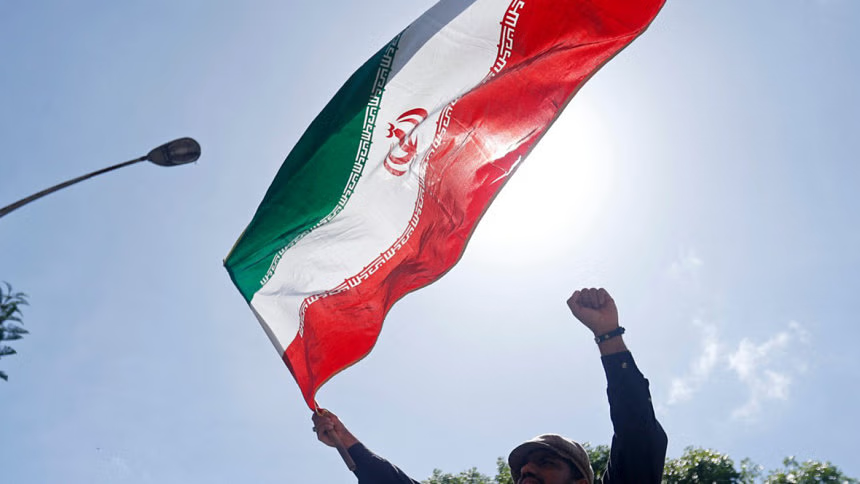
Iran’s ruling regime is facing mounting pressure as Israeli strikes continue to target its leadership, security forces, and state-controlled media. Yet, despite decades of periodic nationwide protests, Iran’s opposition remains deeply fragmented, divided across competing groups and ideologies, with little visible organisation inside the country.
Here’s an overview of some of the main opposition factions:
MONARCHISTS
Iran’s monarchy ended in 1979 when Shah Mohammed Reza Pahlavi fled amid the revolution. He later died in Egypt in 1980. His son, Reza Pahlavi, now based in the United States, advocates for regime change through non-violent civil disobedience and calls for a referendum to establish a new government. While Pahlavi enjoys strong support from segments of the Iranian diaspora who favor a return to monarchy, it’s unclear how much support this idea has within Iran itself. Most Iranians today were born after the revolution and have no personal memory of the monarchy. While some view the pre-revolution era with nostalgia, others remember its social inequalities and repression. Even among monarchists, divisions persist.
PEOPLE’S MUJAHIDEEN ORGANISATION (MEK/MKO)
The Mujahideen-e Khalq (MEK), originally a leftist group, opposed both the Shah and U.S. interests in the 1970s through bombing campaigns. Eventually, it clashed with other revolutionary factions and became highly controversial. Many Iranians, even those who oppose the Islamic Republic, remain critical of the MEK’s decision to side with Iraq during the Iran-Iraq War (1980-88). The group gained international attention in 2002 by revealing Iran’s secret uranium enrichment program but has shown little active presence inside Iran in recent years. The group’s leader, Massoud Rajavi, has been missing for over two decades, with his wife Maryam Rajavi now leading the group, which operates mainly in exile under the banner of the National Council of Resistance of Iran. Rights groups have accused the MEK of cult-like practices and internal abuses, allegations the group denies.
ETHNIC MINORITY GROUPS
Iran’s Kurdish and Baluch minorities, mostly Sunni Muslims, have long experienced tensions under Tehran’s Shiite Persian-led government. Various Kurdish groups have been active in organizing opposition in western Iran, sometimes launching insurgencies against government forces. In the southeastern region of Baluchistan, opposition spans from Sunni clerics seeking greater autonomy to armed jihadist factions linked to al-Qaeda. Despite their frequent participation in nationwide protests, both Kurdish and Baluchi opposition groups remain divided, with no single unified movement posing a major threat to the regime.
PROTEST MOVEMENTS
Mass protest movements have periodically erupted across Iran for decades. After the disputed 2009 presidential election, large demonstrations swept the country as protesters accused the government of rigging the vote in favor of incumbent Mahmoud Ahmadinejad over reformist candidate Mir Hossein Mousavi. The Green Movement, led by Mousavi and his ally Mehdi Karoubi, was eventually crushed, with both leaders placed under house arrest. While the movement initially sought reforms within the Islamic Republic’s framework, it is now largely considered inactive.
In 2022, another major wave of protests broke out, this time focused on women’s rights, under the banner of “Woman, Life, Freedom.” The demonstrations, which lasted for months, did not produce a unified leadership or organised movement. Many participants were arrested and imprisoned, further weakening the momentum.
