


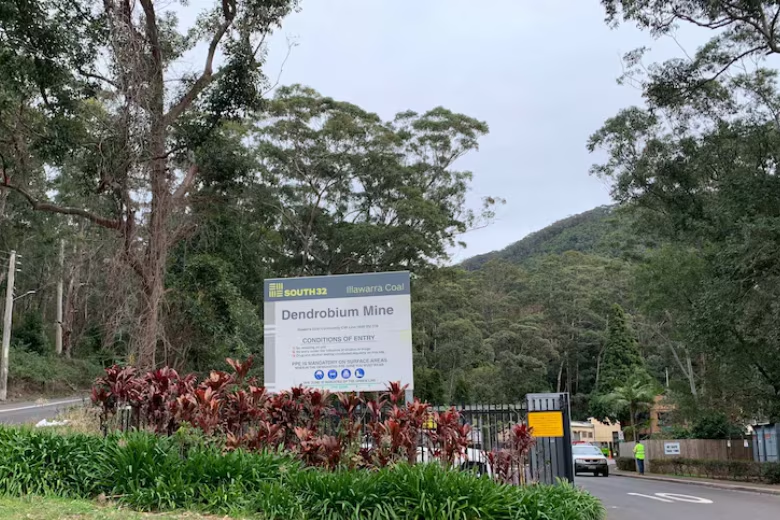
A mining company that extracted millions of litres of surface water from Sydney’s drinking catchment without authorization has agreed to fund the rehabilitation of a protected swamp under a settlement with New South Wales’ water regulator.
In 2023, the Natural Resources Access Regulator (NRAR) entered into a $2.9 million Enforceable Undertaking (EU) with South32, the previous owner of Illawarra Coal Holdings’ Dendrobium Mine.
Regulators found the mine had been removing up to 5 megalitres of surface water daily—equivalent to two Olympic-sized swimming pools—between 2018 and 2023 without the required licence.
At the time, this EU was the largest ever secured by NRAR, surpassing its previous record of about $360,000.
As part of the settlement, Illawarra Coal Holdings committed to funding a three-year project to rehabilitate 340 hectares of Wingecarribee Swamp, a heritage-listed site in the NSW Southern Highlands.
Wingecarribee Swamp, a rare montane peatland home to diverse plant species and the endangered giant dragonfly, plays a vital role in Sydney’s drinking water catchment, said NRAR’s Director of Investigations and Enforcement, Lisa Stockley.
“Although the company had groundwater licences, it lacked the proper approvals to take surface water,” Stockley explained.
The swamp was chosen for rehabilitation due to its critical role in maintaining water quality for the catchment.
Dendrobium Mine, located at Kembla Heights, has operated since 2002 and primarily produces metallurgical coal for Bluescope Steel in nearby Port Kembla.
At the time of the violation, South32 owned Illawarra Coal Holdings, but in August 2024, the company was sold to mining consortium GM3.
Stockley noted that GM3 now oversees the use of the settlement funds and that Illawarra Coal Holdings paid NRAR for investigation and monitoring expenses related to the EU.
“They are exploring new compliance strategies and improved surface water monitoring,” she said.
Wingecarribee Swamp has experienced significant environmental impacts over time, including peat mining in the 1960s, flooding from a 1974 reservoir project that submerged half the swamp, and a major collapse of its peat structure in 1998.
While acknowledging that full restoration isn’t possible, Stockley said the rehabilitation initiative—involving Water NSW and the Illawarra Local Aboriginal Land Council—would still bring substantial ecological improvements.
“It’s not about restoring it completely, but there’s a lot we can do to improve its condition,” she said.
The project will support training and employment and involve tasks like weed removal, vegetation assessments, and the identification of threatened species, including the critically endangered Wingecarribee gentian and the endangered leek orchid.
Stockley described the initiative as a strong example of “restorative justice,” benefiting both the community and the environment.
“It’s a positive outcome,” she added.
Although she praised EU agreements as an efficient enforcement alternative to court action, Stockley warned that non-compliance would lead to legal proceedings.
Georgina Woods from the Lock The Gate Alliance agreed but argued for a broader approach to ensure mining companies are held accountable and environmental repair continues.
“NSW lacks a dedicated fund for long-term coal mine rehabilitation,” Woods said.
“This case highlights the need to establish such a fund to support ongoing restoration work.”
The rehabilitation program is scheduled to be completed by mid-2027.
