


As Australia approaches another federal election, young people across the country — many too young to vote — are speaking up about the issues they believe political leaders need to address, from environmental protection to education and cost of living.
In the small seaside town of Coffin Bay, South Australia, 11-year-old Erica says the seasonal influx of tourists threatens the natural beauty of her home. The population swells from around 650 to over 4,000 during peak holidays.
“Everyone just leaves litter. There’s heaps of parties,” she said. “I went snorkelling the other day and there was heaps of plastic and nets… It was just heaps of litter in the ocean.”
Erica is urging leaders to reduce plastic use and switch to recyclable packaging, saying she wants Coffin Bay to remain beautiful for future generations.
Nearby, 13-year-old Norah, who lives on a farm outside Cummins, shared concerns about rural disadvantage — from limited educational opportunities to worsening drought conditions.
“If we want to pursue [careers in sport or study], we have to move far away from our home and our families,” she said. “There’s not much water here, and the federal government isn’t doing all that much to help.”
In Port Lincoln, 16-year-old Elke worries about the rising cost of living, university affordability, and housing.
“I want to go to university to study psychology but I’m worried I won’t be able to afford it,” she said. “I’m also scared because I’ve grown up watching all of these prices rise and I’m not sure what I can do about it.”
Meanwhile, in Mount Isa, Queensland, 14-year-old Stela said schools in remote towns face serious staffing issues, with teachers often overstretched and struggling with classroom disruptions.
“It’s hard to learn when there’s people wagging class all the time,” she said.
These voices echo themes in Mission Australia’s Annual Youth Survey, which found top concerns among 15- to 19-year-olds were cost of living, climate change, and safety.
First-Time Voters Call for Better Education
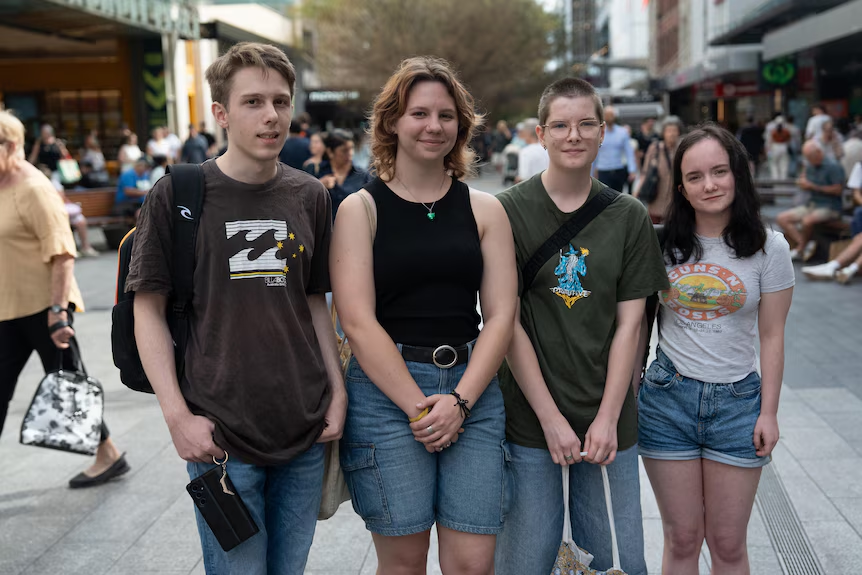
While younger students are thinking about the future, first-time voters are navigating a complex system with little formal preparation.
In Adelaide, 19-year-old Emily said she had not been taught how voting works.
“I think they expect young, 18-year-old adults, who don’t have any idea what they’re really doing, to just vote,” she said.
Dion, 18, said he left school in Year 10 and received no voting education at all, while Cianna, also 18, said she only learned by searching online.
Yong, 20, who is studying constitutional law, said his knowledge came from university, not school.
“After Year 9, there wasn’t a lot of education about how the government works or how to vote,” he said.
Australian Electoral Commission (AEC) South Australia manager Cameron Stokes acknowledged that voting can be confusing and said the AEC works to make the process clearer.
“We don’t want people turning up and their vote not counting,” he said.
