


It’s late afternoon at the dusty rodeo arena on the outskirts of Darwin, and a crowd is gathering to watch women race their horses around 44-gallon drums in a barrel racing competition.
A constant cloud of dust hangs in the air as each horse trots into the ring, stirring up the ground beneath them.
For many visitors from Darwin and surrounding towns, the Noonamah Rodeo is a colourful showcase of rural life — part sport, part spectacle.
Above the ring, a road train cab belches flames. Between events, there’s a freestyle motocross show, and country music will play long into the night.
For some, the rodeo is a chance to dress the part — pulling on R.M. Williams boots and Western shirts, channeling pop-culture cowboy flair. But for others, it’s all about business.
A cowboy community behind the scenes
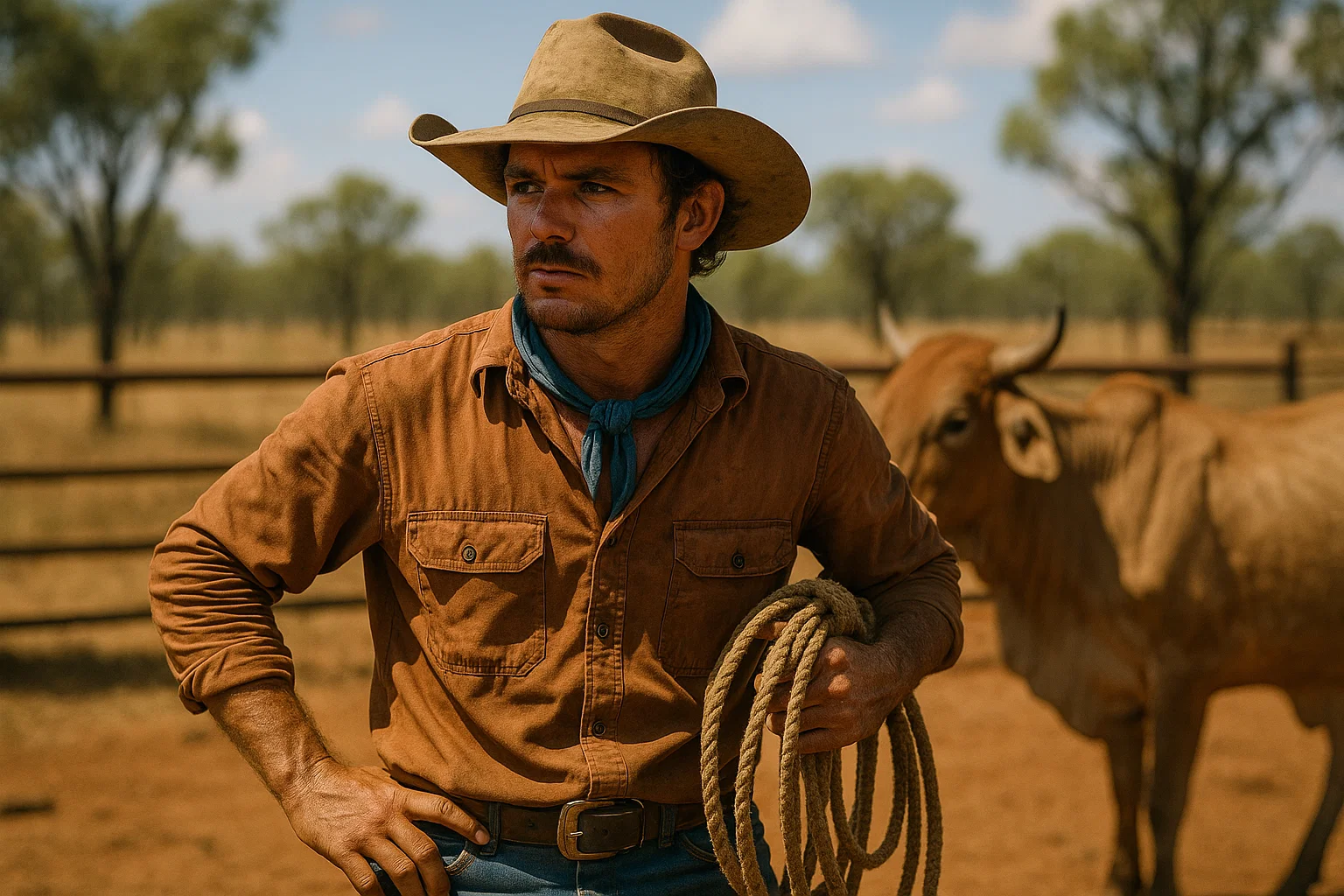
Back behind the stalls, young men in boots, battered jeans, and wide-brimmed hats gather. Many of them know each other from the rodeo circuit. They’re proud to call themselves “cowboys.”
Among them is Jack Milsom, who grew up in the Adelaide Hills. Just a year ago, at 25, he drove 3,200 km north with only directions in hand — no idea about the pay or the job itself — to chase the dream of working on a cattle station in the Northern Territory.
“I thought, bugger it — you only live once,” Jack says, with a mix of Aussie and British in his voice.
Now based at Old Mount Bundy Station, near Jabiru, he spends his days operating heavy machinery. On rodeo weekends, he swaps work gear for chaps and spurs.
“It’s hard work, long hours, but it’s worth it. You’re on the land, you finish the day, have a beer with the crew — and then do it all again.”
More than a show — a vital social outlet
Events like Noonamah aren’t just about sport — for station workers scattered across the Top End, they’re also one of the few chances to gather, compete, and reconnect with others who live the same remote lifestyle.
While women usually enter barrel racing, the men ride bulls — a rough, unpredictable challenge.
Behind the scenes, in a makeshift locker room ringed with cyclone fencing, riders prepare their gear in full view of the arriving crowd. Duffel bags litter the dusty ground, filled with bull ropes, brushes, and leatherwork.
Jack applies sticky rosin to the inside of his chaps, hoping for better grip during his ride.
Function meets fashion in cowboy style
You’d be hard-pressed to find a cowboy at Noonamah not wearing a broad-brimmed hat. But forget the felt hats of The Man from Snowy River — here in the Top End, straw hats are king.
“Those big brims aren’t just for show,” Jack explains. “They’re tools — you flip them upside down to give your horse a drink. And of course, they keep you out of the sun.”
While jeans are essential — tough enough to withstand being hooked by cattle — belt buckles are earned, not bought.
“You see people pretending, but the real cowboys here have done the work,” Jack says, gesturing to championship buckles awarded for rodeo wins.
More than just clothes: the cowboy mindset
To Dean Wallace, a competitor from New South Wales, dressing up doesn’t make someone a cowboy.
“There are folks here just for the show — they dress the part, drink too much, maybe get into a fight. But they’ve never stepped in cow crap or worked a paddock.”
Dean doesn’t care much for the “city vs bush” divide. For him, cowboy culture is about something deeper.
“There’s a code,” he says. “You don’t need to talk about it. It’s about being tough, brave, and looking out for your mates.”
While Dean grew up in a rural family, he believes others can earn the cowboy identity — if they’re willing to work for it.
“If you show up, put on the hat, pull on the boots and do the hard work — that’s it. You’ll know soon enough if it’s for you.”
As the final bull is herded away and the after-party kicks off, the real cowboys start packing their gear, heading to their utes for a quiet beer or well-earned sleep — leaving behind a dust-filled arena and a crowd ready to party.
