


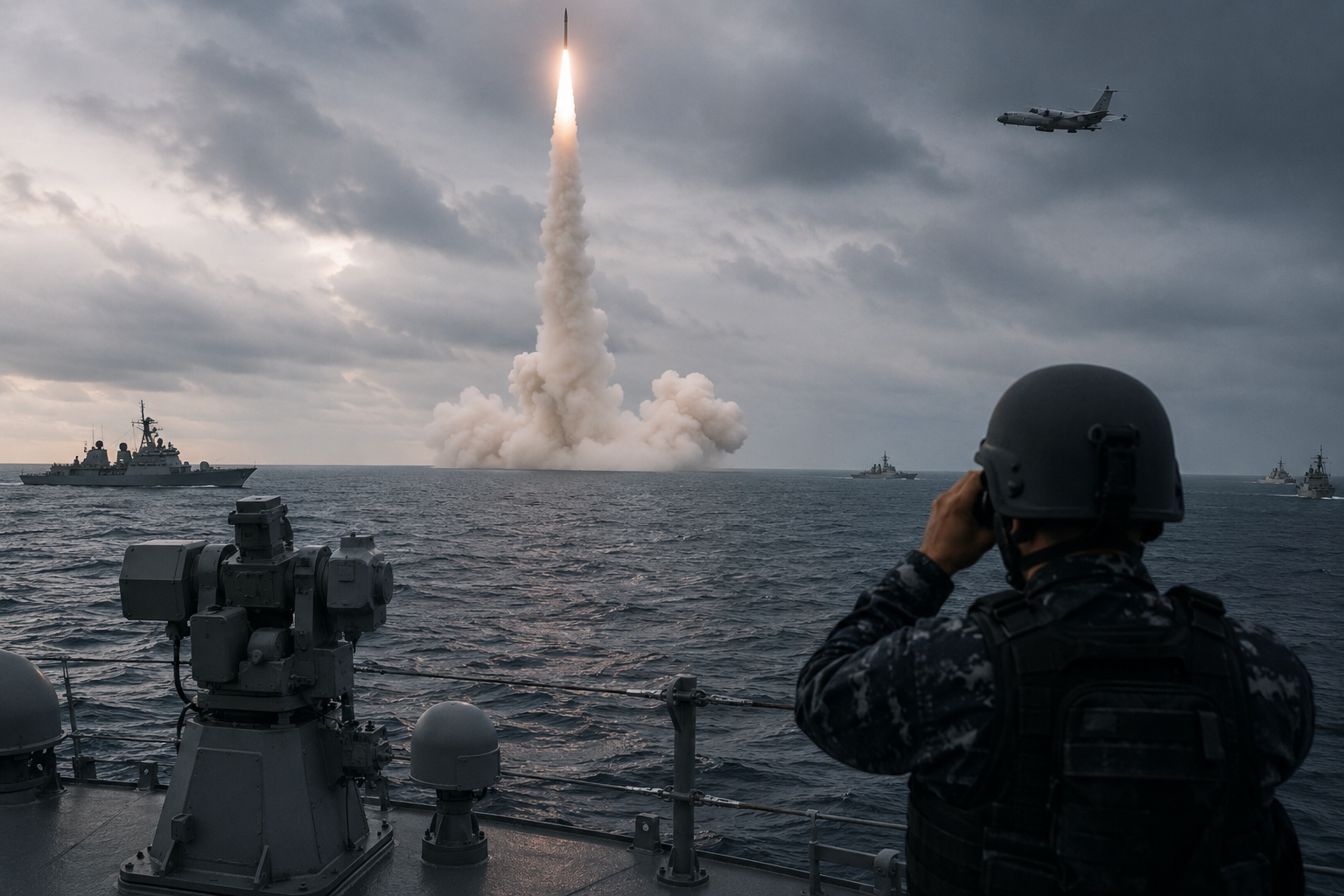
China’s recent launch of a nuclear-capable ballistic missile into the Pacific has intensified calls for a regional security agreement led by Pacific nations.
Australia’s Pacific Minister Pat Conroy said the missile test had harmed China’s standing across the region and demonstrated why Pacific countries should take greater responsibility for their collective security.
The missile was reportedly launched from a Chinese submarine on Monday. It travelled over several Pacific islands before landing in waters believed to be close to Tuvalu’s exclusive economic zone.
Although Beijing described the test as a routine military exercise, it drew strong criticism from Pacific leaders. Australian Prime Minister Anthony Albanese characterised the launch as provocative and destabilising, while leaders from Fiji, Papua New Guinea, Palau, Solomon Islands and Tuvalu also expressed concern.
Conroy said the reaction showed the test had weakened China’s reputation as a potential security partner in the Pacific.
He argued that the incident reinforced the principle that the region’s security should primarily be provided by Pacific countries themselves rather than relying heavily on external powers.
A proposed regional security agreement is expected to be discussed when leaders gather for the Pacific Islands Forum next month. However, Conroy acknowledged that negotiating such an arrangement could take several years and would require consensus among participating nations.
Solomon Islands Prime Minister Matthew Wale has been seeking support for the proposal. Despite describing China as an important friend of Solomon Islands, Wale said firing a missile across the region was inconsistent with the behaviour expected from a trusted partner.
The test took place during Albanese’s diplomatic tour of the Pacific and only hours after Australia signed a mutual-defence agreement with Fiji. The timing added to regional concerns about China’s expanding military capabilities and strategic ambitions.
Conroy also warned that the Indo-Pacific was experiencing its most significant military build-up since the end of the Second World War. He said the expansion was occurring without sufficient transparency or strategic reassurance, increasing the risk of misunderstanding or conflict.
When questioned about whether Australia could intercept a missile similar to the one tested by China, Conroy did not provide details about the Australian Defence Force’s anti-missile capabilities.
Instead, he said the government was strengthening national security through diplomatic partnerships and increased defence investment, ensuring the military had access to modern equipment.
Conroy declined to speculate about the possibility of a Chinese missile reaching the Australian mainland, describing the scenario as hypothetical. He said Australia was preparing for potential conflict while continuing to work with regional partners to prevent one from occurring.
