


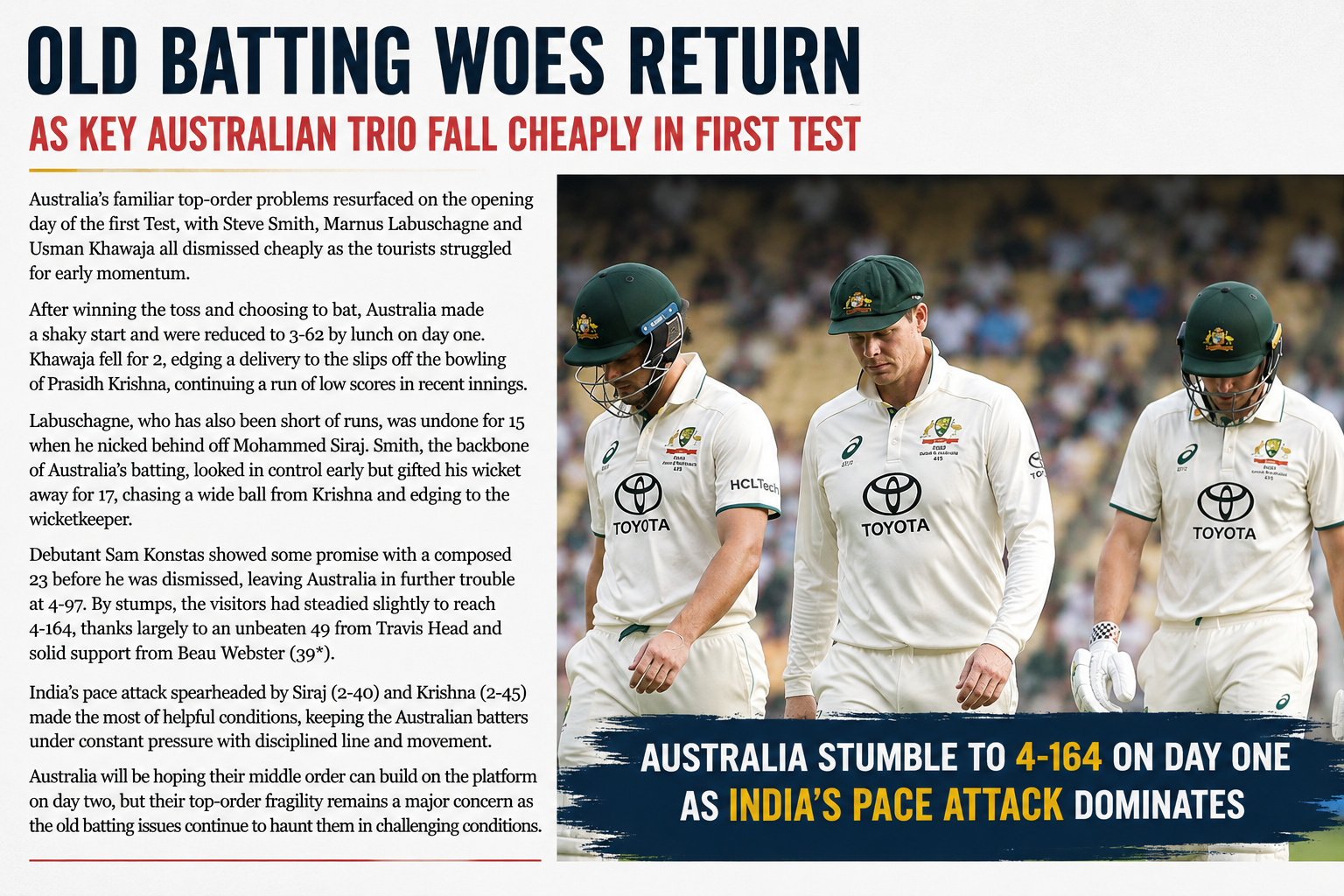
Australia’s familiar batting problems resurfaced in dramatic fashion during the opening Test against Bangladesh in Darwin, with three of the players facing the greatest pressure for their places failing to deliver when the hosts needed stability.
Jake Weatherald, Marnus Labuschagne and Cameron Green were all dismissed cheaply before lunch on the opening day, turning what had been viewed as an opportunity for Australia’s top order to build confidence into another worrying examination of its batting depth.
Weatherald entered the Test carrying significant expectations. The Darwin-raised opener had the chance to play a Test in familiar surroundings, but his position in the side was also under scrutiny following an inconsistent run at international level. He had made technical adjustments since the Ashes, including adopting a more upright stance, and there had been encouraging signs during his county stint with Leicestershire.
Those changes, however, did not produce the breakthrough innings Australia wanted. Weatherald battled his way to 23 before edging Hasan Mahmud to wicketkeeper Litton Das while attempting to drive away from his body. His dismissal again raised questions about whether Australia has found a dependable long-term opening solution following the retirement of David Warner.
The situation quickly became more difficult when Labuschagne arrived at the crease. Once one of the most dominant No.3 batters in world cricket, the Queenslander has endured an extended period of declining returns and again struggled to find fluency.
Labuschagne managed only one run from 20 deliveries before edging a ball to second slip. His cautious innings reflected many of the problems that have followed him during his recent form slump, with opposition attacks increasingly able to restrict his scoring and tempt him into mistakes outside off stump.
Green then walked in with captain Pat Cummins having encouraged him to play with greater freedom and confidence. The all-rounder initially appeared determined to follow that instruction, striking an early six and showing more attacking intent.
But his innings ended at just 13 when he mistimed a shot to midwicket, leaving Australia in serious trouble at 4-74. The dismissal added further debate over Green’s position in the batting order, particularly after former Australian captain Ricky Ponting suggested his current form did not justify batting ahead of Alex Carey or Beau Webster.
The failures were particularly damaging because Bangladesh were without express fast bowler Nahid Rana, regarded as one of their most dangerous pace options. Despite that absence, Bangladesh’s seam attack maintained disciplined lines and took advantage of movement from the Darwin surface.
Hasan Mahmud emerged as the standout performer, producing career-best Test figures of 6-55 as Australia were eventually bowled out for only 198. The collapse left the home side immediately under pressure in a series many had expected Australia to control.
Steve Smith provided the major resistance for Australia, scoring 71 from 109 balls. His innings prevented an even more damaging total, although he also survived several nervous moments. The experienced batter acknowledged after play that conditions had been more difficult than Australia anticipated, particularly during the early stages when moisture made the surface tackier.
Smith nevertheless rejected preparation as an excuse, pointing out that Australia had completed extensive training and match-simulation work before the Test. His comments added to the pressure on a batting group that has struggled for consistency despite Australia remaining one of the leading Test teams in world cricket.
Bangladesh then strengthened their position with the bat, reaching 1-96 by stumps on Day 1. Mitchell Starc claimed Australia’s only wicket, while Tanzid Hasan Tamim and Mominul Haque successfully negotiated the remaining Australian attack and built a solid partnership.
The poor start has intensified scrutiny on several Australian batting positions. Weatherald, Labuschagne and Green are not only fighting to help Australia win the current series but are also competing to secure their places during a demanding period in which Australia is scheduled to play a substantial number of Tests.
Selectors have alternatives available. Matt Renshaw and Cooper Connolly are among the players pushing for opportunities, while Josh Inglis remains another batting option in the squad. That competition means repeated low scores could quickly force changes if Australia’s established players fail to respond.
Australia will have another opportunity to bat in the Test, meaning the trio can still change the direction of the match and the discussion surrounding their form. But their first-innings failures have revived an uncomfortable issue for the national side: an experienced and highly rated team continues to look vulnerable whenever its top order is placed under sustained pressure.
For Bangladesh, the opening day offered further evidence that disciplined bowling and patient cricket can expose those weaknesses. For Australia, it was an early warning that the batting problems of previous summers have not disappeared.
Source basis: Daily Telegraph reporting and first-Test match coverage.
