


New laws to fortify Australia’s military bases could see private armed guards stationed around data centres and protesters jailed for years, rights advocates have warned, as Labor pushes the changes through the Senate as early as Thursday.
The proposed changes are designed to repel drones and intruders from military bases, and Labor is aiming to have them sail through the Senate with support from the opposition. But critics say provisions in the legislation could allow its security measures to capture almost anything related to defence, deputise private guards and jail activists for up to seven years.
“Labor tries to pretend this bill is about drones, but they’re giving the defence minister the power to turn almost anything, a parcel of land, a truck or a convoy, into a ‘security zone’,” Greens leader David Shoebridge said.
“This is an extraordinary expansion of military power over civilian life with no proper scrutiny and no meaningful safeguards.”
The concern stems from the bill allowing temporary security zones to be declared around where military equipment, supplies, personnel or other entities are, or where they are going. The zones could effectively act as moving force-fields, meaning a protester on a road where a defence truck was driving could fall foul of the law, Senator Shoebridge said in a statement.
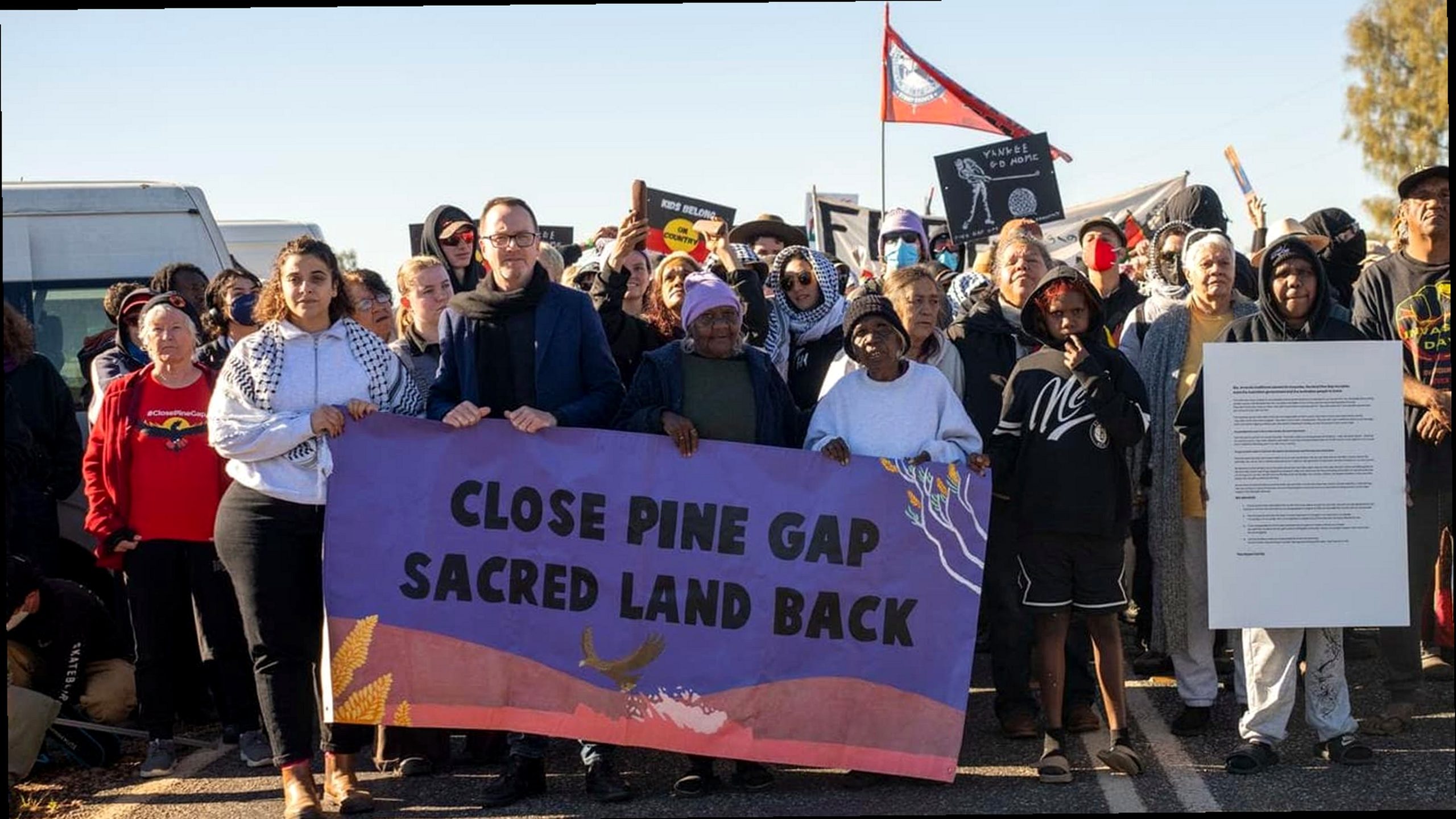
Under the bill, trespassing on the highest-order military zones, like Pine Gap near Alice Springs, would carry a seven-year maximum prison sentence and a fine of more than $150,000. Someone entering an ordinary defence zone, including a moving one, could also face two years’ imprisonment and a fine of more than $43,000 even if they are only likely to pose a risk to “defence security purposes”.
The defence minister would need parliament’s blessing to declare security zones, which would need more than the mere presence of personnel, assets and equipment, the defence department wrote to a Senate inquiry into the bill in October. The department said it still expected state and territory police to lead the way on guarding defence assets, and said increasing breaches meant the proposed changes were badly needed.
Recent examples cited by the department included a man allegedly breaking into an air force base in Darwin in September, assaulting a soldier and stealing a car. Defence is also mindful of a recent alleged terrorist plot on the US-linked RAF Fairford base in Britain, which the UK government has connected to Iran.
The department said the bill contained carve-outs for lawful protests and would only apply when it was reasonably likely someone would be seriously harmed or killed.
But the entanglement of artificial intelligence and defence has also raised the possibility of data centres being declared protected areas and surrounded by private security employed by tech giants, according to Digital Rights Watch. The group envisaged “commercially operated US-owned Pine Gaps in suburbs across Australia”, denying communities’ right to protest against construction.
“Most Australians would accept the need for ADF personnel and allied defence forces to train and develop capability together,” the group said in a submission to the Senate inquiry.
“Extending that invitation to include what are functionally mercenaries raises some questions, not to mention eyebrows.”
AAP has contacted Defence Minister Richard Marles for comment on the concerns.
