


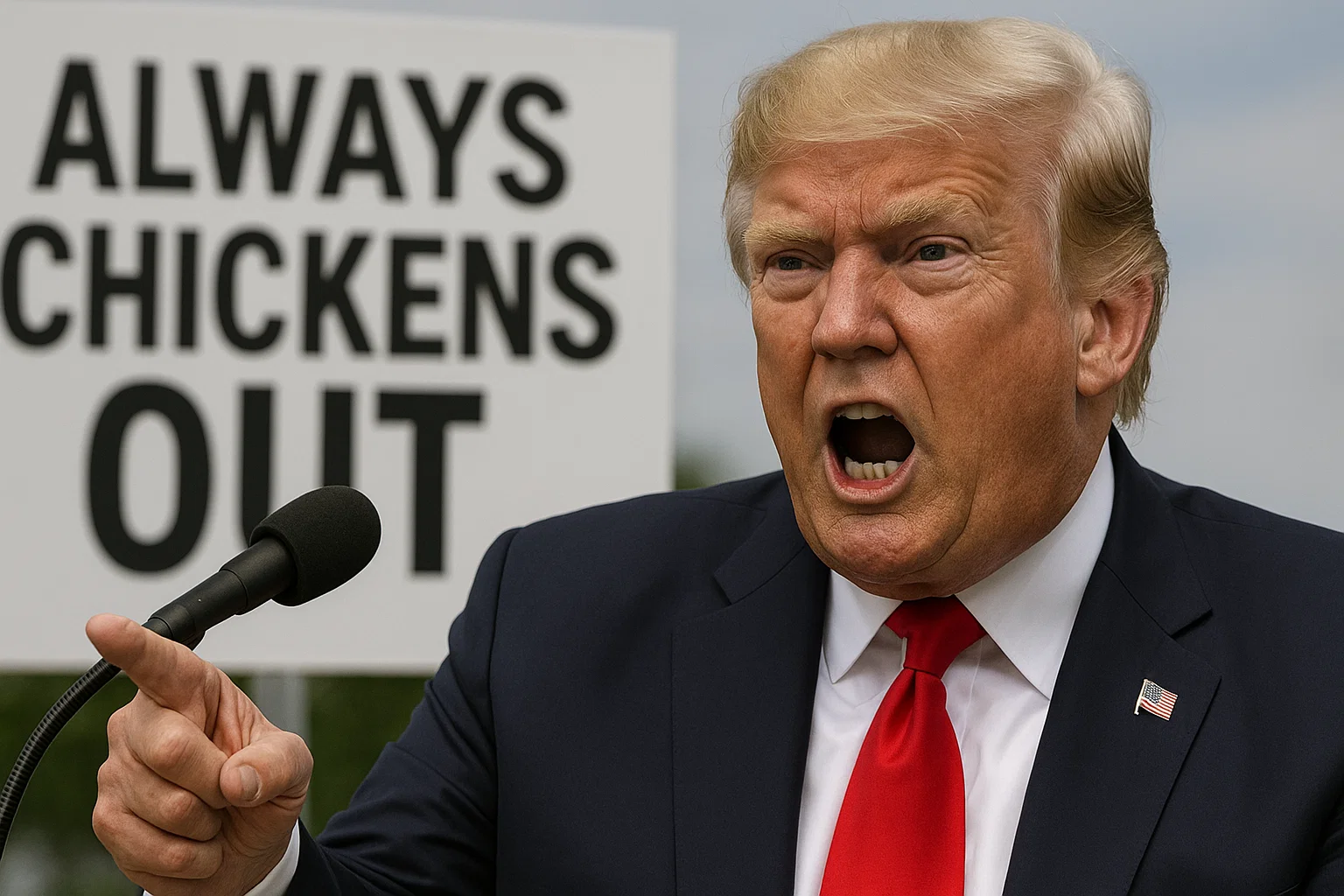
Donald Trump has angrily dismissed a growing theory on Wall Street suggesting he consistently backs down from his tariff threats, branding the idea as false and the question about it as “nasty.”
The theory, dubbed the “TACO Trade” — short for “Trump Always Chickens Out” — was coined by Financial Times columnist Robert Armstrong and has gained traction among financial analysts. It argues that Trump frequently announces aggressive tariffs only to retreat when faced with market pressure, undermining the credibility of his threats.
During a White House event where Fox News host Jeanine Pirro was sworn in as interim U.S. Attorney for D.C., CNBC reporter Megan Casella asked Trump for his response to the theory. Trump immediately rejected it, pointing to past negotiations with China and the European Union as proof of his tough stance, despite having reduced tariffs in the process.
“You call that chickening out?” Trump fired back, citing unverified figures about economic investment and accusing Casella of asking a “nasty question.”
Trump’s response included inconsistencies, such as conflicting deadlines for trade negotiations with the EU. He initially set tariffs at 20 percent, then reduced them to 10 percent, before announcing a spike to 50 percent — only to delay that increase after a phone call with European Commission President Ursula von der Leyen. The new deadline for a deal is now July 9.
The “$14 trillion invested” figure Trump referenced has no clear basis, with previous estimates from him ranging between $6 and $10 trillion — both unverified.
Casella, speaking later on CNBC, said Trump clearly disliked the question but noted his lengthy answer gave insight into whether his negotiating threats are still taken seriously on the global stage. She explained that while markets initially react negatively to Trump’s tariff threats, they tend to rebound once those threats are dialed back — reinforcing the theory behind the TACO label.
Wall Street analysts now question whether Trump’s threats can still carry weight in trade negotiations, or whether his pattern of retreat is diminishing their effectiveness.
