


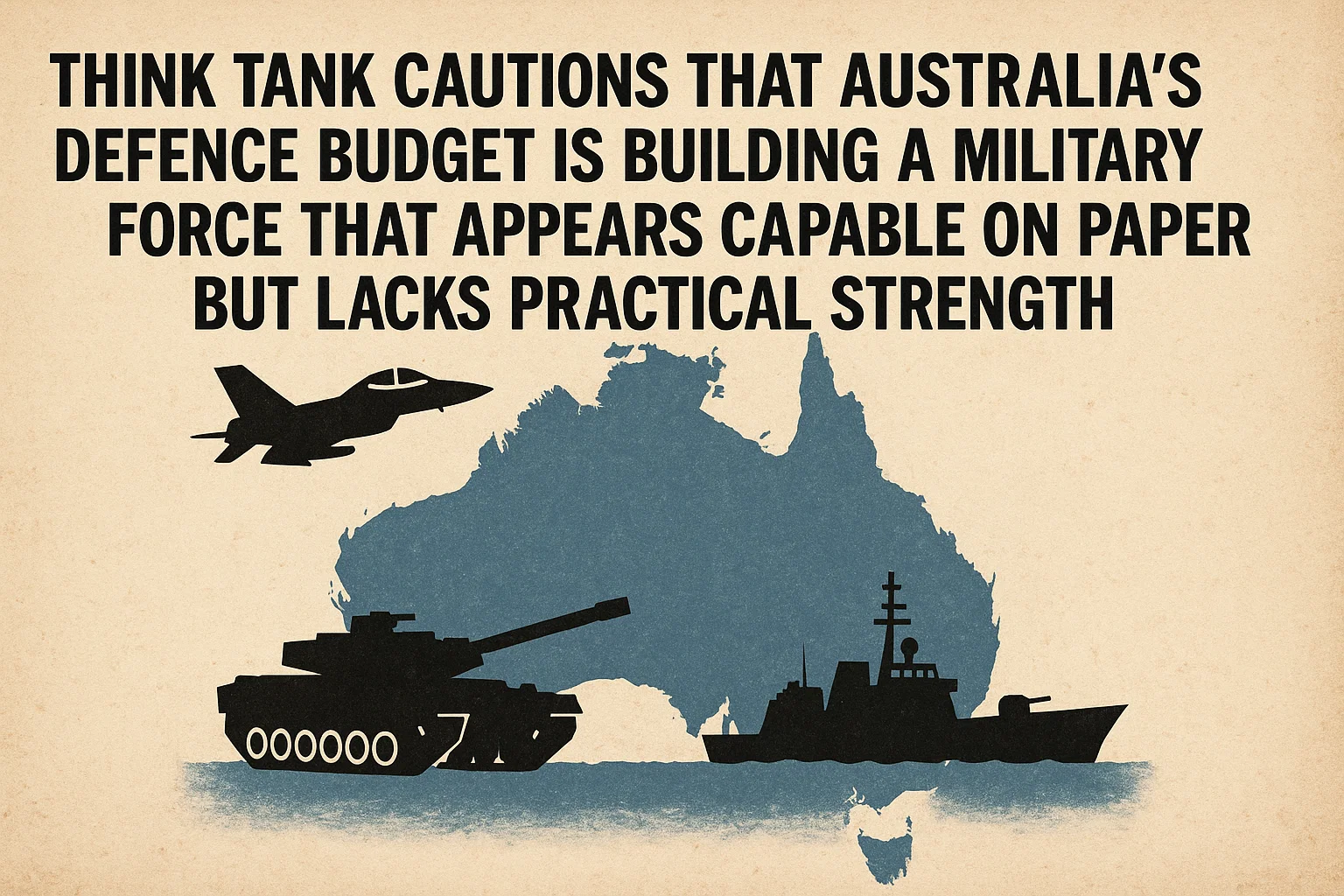
Australia risks having a “paper ADF” unless it improves its short-term military readiness, a leading defence think tank has warned.
A new report from the Australian Strategic Policy Institute (ASPI), released on Thursday, criticises the Albanese government for focusing too heavily on long-term defence investments while failing to allocate sufficient funding for immediate combat preparedness.
Authored by former Home Affairs deputy secretary Marc Ablong, the report argues that defence spending must be increased to match the urgency of the threats Australia faces. It notes that most of Labor’s major defence funding won’t come into effect until after 2029 — despite government forecasts of a potential global conflict by 2034 and warnings of a possible US-China clash before 2030.
“Although consistency is often valuable, it reflects a business-as-usual mindset in a world increasingly marked by crisis and conflict,” the report states.
While the government has boosted funds for sustaining key systems like the F-35 fighter jets ($190 million) and Collins-class submarines ($235 million), the report claims these efforts fall short of what’s needed for immediate readiness. It warns that despite recognising growing threats in the Indo-Pacific, the government has not sufficiently prioritised the current operational strength of the Australian Defence Force.
“Other nations in the Indo-Pacific are rearming rapidly — and while Australia is part of this trend, we are lagging behind,” the report says. “There is a clear gap between strategic intent and actual capability.”
Ablong highlights that major projects like AUKUS are crucial but won’t deliver meaningful capability enhancements for years. As a result, Australia is at risk of having a defence force that appears robust on paper but is unprepared for near-term conflict.
“Focusing on long-term capability at the expense of current readiness is leading to a hollowed-out force,” the report warns, citing personnel shortages and low munitions reserves as key concerns.
Prime Minister Anthony Albanese has dismissed the report’s findings, defending his government’s defence strategy. He told the ABC that ASPI should “reflect on how they participate in debates” and said the government was investing an additional $10 billion in defence, lifting spending to 2.4% of GDP.
“We are investing in both our assets and our regional relationships,” he said, calling the think tank’s criticism predictable, given that many of its members served in previous governments.
“We’re delivering on upgrades and acquisitions — and that’s what matters,” Albanese added.
