


Ammunition depots, armored vehicle hubs, combat aircraft shelters, and helicopter landing zones — Finland believes the emergence of these installations near its border signals it may be next in line for a Russian military advance led by President Vladimir Putin.
Once part of the Russian Empire, Finland now finds itself under increased scrutiny due to Putin’s stated belief that former imperial territories rightfully belong to Russia once again. In 2022, he invoked historical precedent by referencing Peter the Great’s 21-year Northern War, asserting that Russia was “returning” lands, not seizing them. This rhetoric was used to rationalize the invasion of Ukraine — a campaign still ongoing despite initial expectations of a swift victory.
Recent satellite imagery published by Finnish and U.S. outlets reveals extensive upgrades to Russian military sites along the 1,300 km border shared with Finland. These developments come amid growing concerns in Europe, especially as U.S. political dynamics introduce further uncertainty about NATO’s future cohesion and support.
Former President Donald Trump’s wavering commitment to the alliance and his reported interest in seizing NATO-adjacent territories, such as parts of Canada and Greenland, have only deepened these anxieties.
Despite setbacks in Ukraine — where Russia’s once-vaunted military has suffered significant losses — Putin has since mobilized his country’s economy for prolonged warfare. New conscripts are being outfitted, and production of military hardware is accelerating. In contrast, much of Europe remains underprepared, hampered by political discord and targeted disinformation campaigns.
Now, across the border, Russia is rapidly expanding its military presence. New warehouses, troop tents, helipads, and airfields are being developed to accommodate increased personnel and equipment. General Sami Nurmi of the Finnish Defence Forces states that Finland is monitoring these movements “very closely” and making preparations for potential escalation.
History has taught Finland the cost of ignoring early warning signs. Prior to the 2022 invasion of Ukraine, many dismissed Russia’s military buildup as mere posturing. Today, analysts like Finnish OSINT expert Emil Kastehelmi warn that Russia’s ongoing border expansions could soon place tens of thousands of troops near the frontiers of Finland, Norway, and the Baltic states.
While an attack isn’t imminent, Moscow’s intentions are clear. Facilities at Cold War-era bases such as Petrozavodsk, Severomorsk-2, and Olenya are being revitalized. At Kamenka — just 60km from the Finnish border — over 130 tents now provide space for some 2,000 troops. Petrozavodsk, only 160km from Finland, has added new warehouses capable of storing 150 tanks and is expected to host a new Russian military command center.
Kastehelmi predicts more large-scale projects will emerge as the war in Ukraine drags on, making it hard to gauge the full scope of Russian ambitions — but the scale appears substantial.
Putin’s expansionist goals extend well beyond Ukraine, with Latvia, Lithuania, Estonia, Poland, Moldova, and Romania all named as possible future targets. Danish and Estonian military intelligence services caution that Russia could be preparing for large-scale warfare against NATO members, particularly if it perceives internal division or weakness within the alliance.
By 2027, Russia may represent a significant military challenge to NATO, especially in the Baltic region, according to the International Institute for Strategic Studies (IISS). The organization urges member states to strengthen their military and industrial capabilities, reducing reliance on the U.S. and preparing for a scenario in which NATO may need to operate independently.
Finland, having once been under Russian control in the 19th century and resisting Soviet invasion during WWII, was quick to reassess its security strategy. Following Russia’s full-scale invasion of Ukraine in 2022, Finland and Sweden submitted surprise applications to join NATO in 2023.
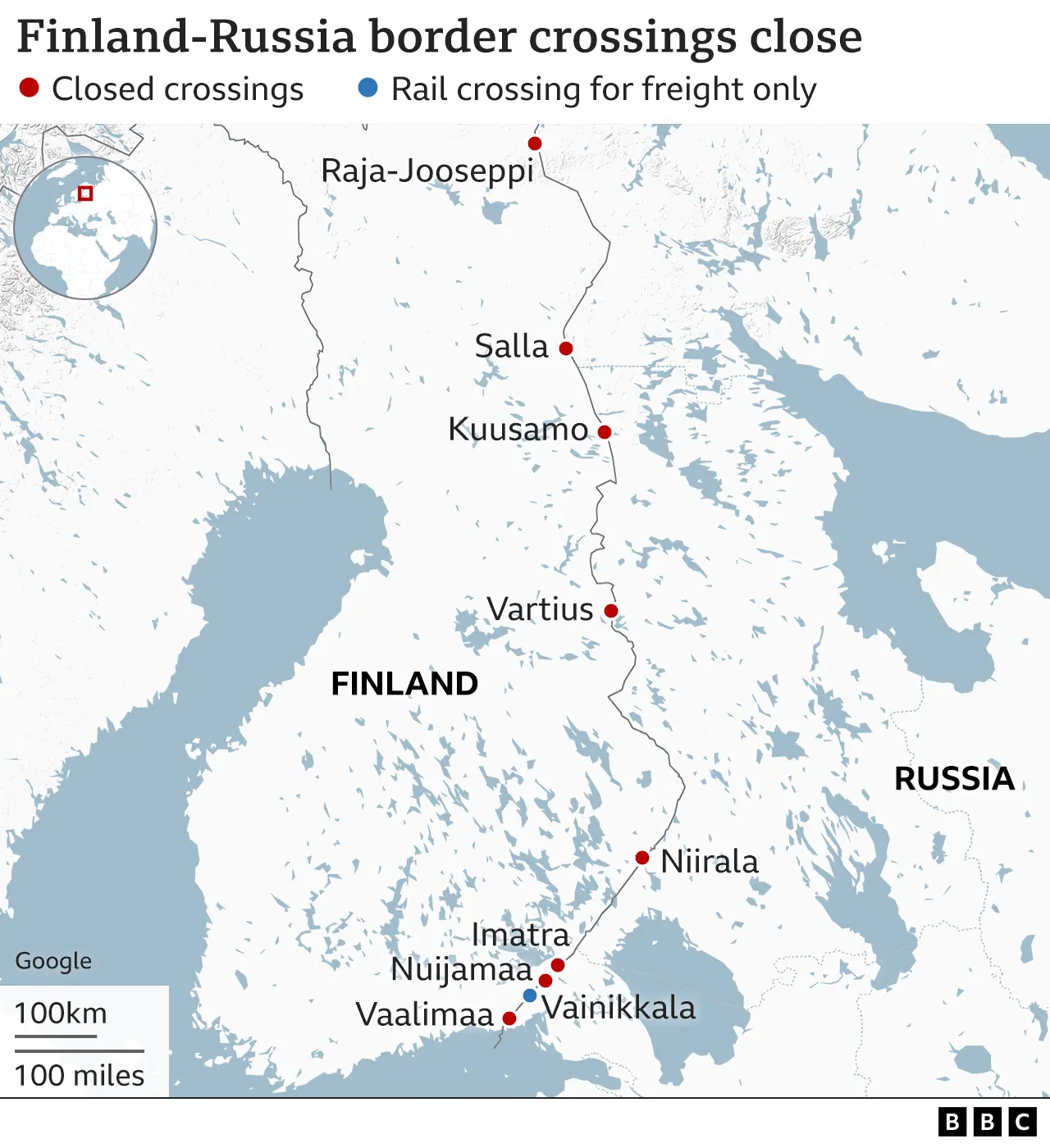
In response to the evolving threat, Finland has closed its borders with Russia and begun building a 200 km security fence. Defence budgets have been boosted, civil defence shelters are being renovated, and citizens have been instructed to prepare emergency kits and resist potential occupation forces.
According to German military analyst Julian Werner, “The question isn’t whether Europe can defend itself without the U.S. — it can. The real issue is whether it will invest now, while it still has the freedom to choose how to fight, rather than be forced into a reactive position.”
Some experts argue that the conflict with Russia has already entered a shadow phase: sabotage, cyberattacks, and disinformation campaigns. Russian ships and captains have been linked to undersea cable and pipeline damage. GPS signals have been jammed in several Nordic and Baltic nations, while coordinated efforts to push migrants across their borders have added pressure.
The Centre for Strategic and International Studies (CSIS) identifies critical infrastructure, transportation, and government systems as key targets of Russia’s hybrid warfare efforts.
Moscow, meanwhile, is openly reaffirming its imperial ambitions. Russian Foreign Minister Sergey Lavrov recently described NATO’s control over former imperial territories as illegitimate, calling the alliance “dangerous” and “fascist.”
According to the Institute for the Study of War (ISW), Kremlin officials — including Putin aide Nikolai Patrushev — are using historical justifications similar to those used before invading Ukraine to lay the groundwork for potential future aggression. The goal: to persuade Russian citizens and the international community that Moscow is reclaiming, not conquering.
