


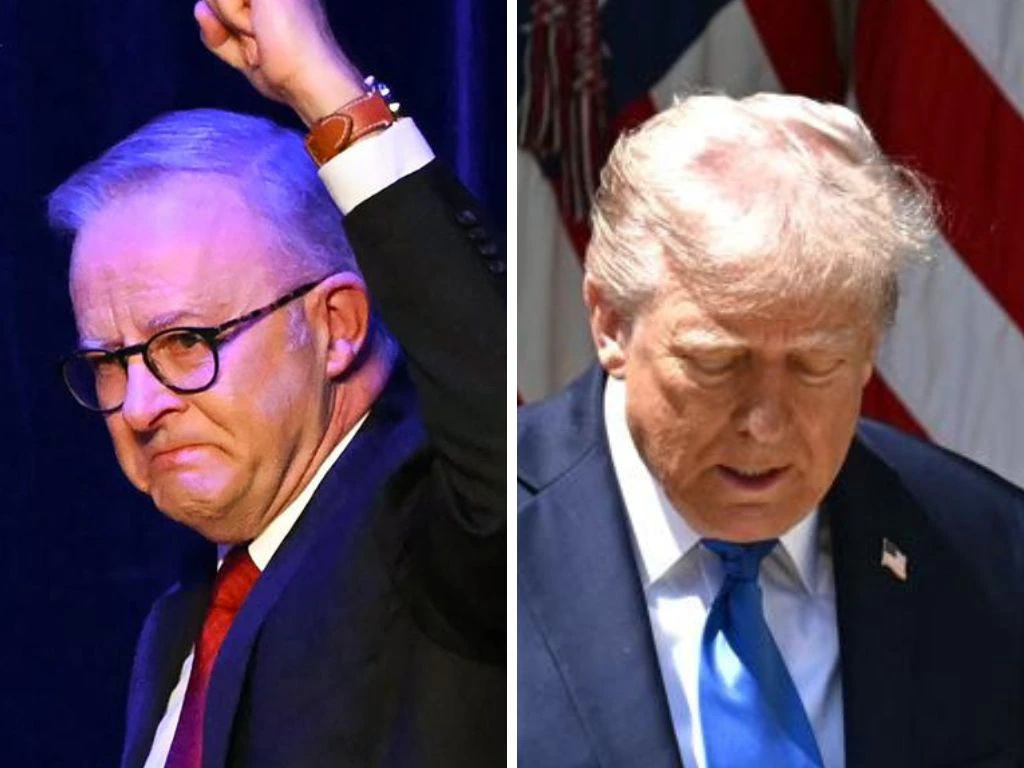
Anthony Albanese’s sweeping election victory has captured headlines worldwide, with many media outlets framing it as a triumph of “anti-Trump” politics.
The Labor leader’s win was not just historic at home — global observers saw it as part of a growing backlash against Trump-style conservatism. One of the most significant upsets was Peter Dutton’s dramatic defeat in Dickson, a loss many attribute to his polarising, hardline stance.
The BBC’s Tiffany Turnbull noted that Dutton was widely viewed as “Australia’s Trump,” and voters rejected his approach, especially on issues like immigration and China. Despite his efforts to distance himself from the comparison, the Trump-like tone of his campaign didn’t sit well with the public.
CNN echoed similar sentiments, pointing out how Australia, like Canada, seems to be pushing back against far-right ideologies. It described the result as a potential “blowback” linked to Trump’s influence, especially following his first 100 days in office.
The Washington Post credited Albanese’s resurgence to an “anti-Trump bump,” while the New York Post called Labor’s comeback a rejection of conservative politics driven by fears of Trump’s growing influence abroad.
The New York Times added a geopolitical layer, stating that U.S. trade wars under Trump had damaged Australia’s economy — once a major concern under China, now mirrored by growing unease toward U.S. policy.
Former Australian PM Malcolm Turnbull piled on, telling the BBC that Dutton ran a “very Trumpian campaign,” suggesting that U.S. politics strongly influenced Australian voters’ perception of the Coalition.
One senior Liberal MP didn’t mince words: “Honestly, easily, the single biggest factor is Trump. He’s smashed us.” They likened it to Canada, where the Conservatives recently tanked in polls due to similar associations.
Global Leaders React
World leaders were quick to congratulate Albanese, reinforcing Australia’s diplomatic importance.
- U.S. Secretary of State Marco Rubio reaffirmed the “enduring alliance” between the U.S. and Australia.
- Ukraine’s President Volodymyr Zelensky praised Australia’s support and looked forward to deeper cooperation.
- New Zealand PM Christopher Luxon highlighted the nations’ strong friendship and collaborative goals.
- UK PM Keir Starmer spoke of continued partnership and shared ambitions.
- India’s PM Narendra Modi called the victory a sign of Australians’ trust in Albanese’s leadership and expressed hope for stronger bilateral ties.
Conservative Backlash
The international conservative community hasn’t taken the results lightly. Right-wing commentators expressed confusion and frustration over the outcome, particularly as conservative momentum had seemed strong following Trump’s win and recent successes of Europe’s far-right parties.
One UK pundit vented online: “Can someone explain what’s happened in Australia for me please? I thought Labor were like our communists.”
Australian right-wing voices suggested that the Liberal Party had shifted too far left, abandoning traditional conservative values. Others pointed to a disorganised conservative alternative and media bias as key reasons behind Labor’s surge.
One Australian commenter said:
“The Liberal Party has drifted left, and our conservative independents are fragmented. Even worse, some independents gave preference votes to Labor. Add to that a heavily biased, woke media — it’s no surprise Labor won.”
