


Why Are People Turning Away from Mainstream Media and Seeking Alternatives?
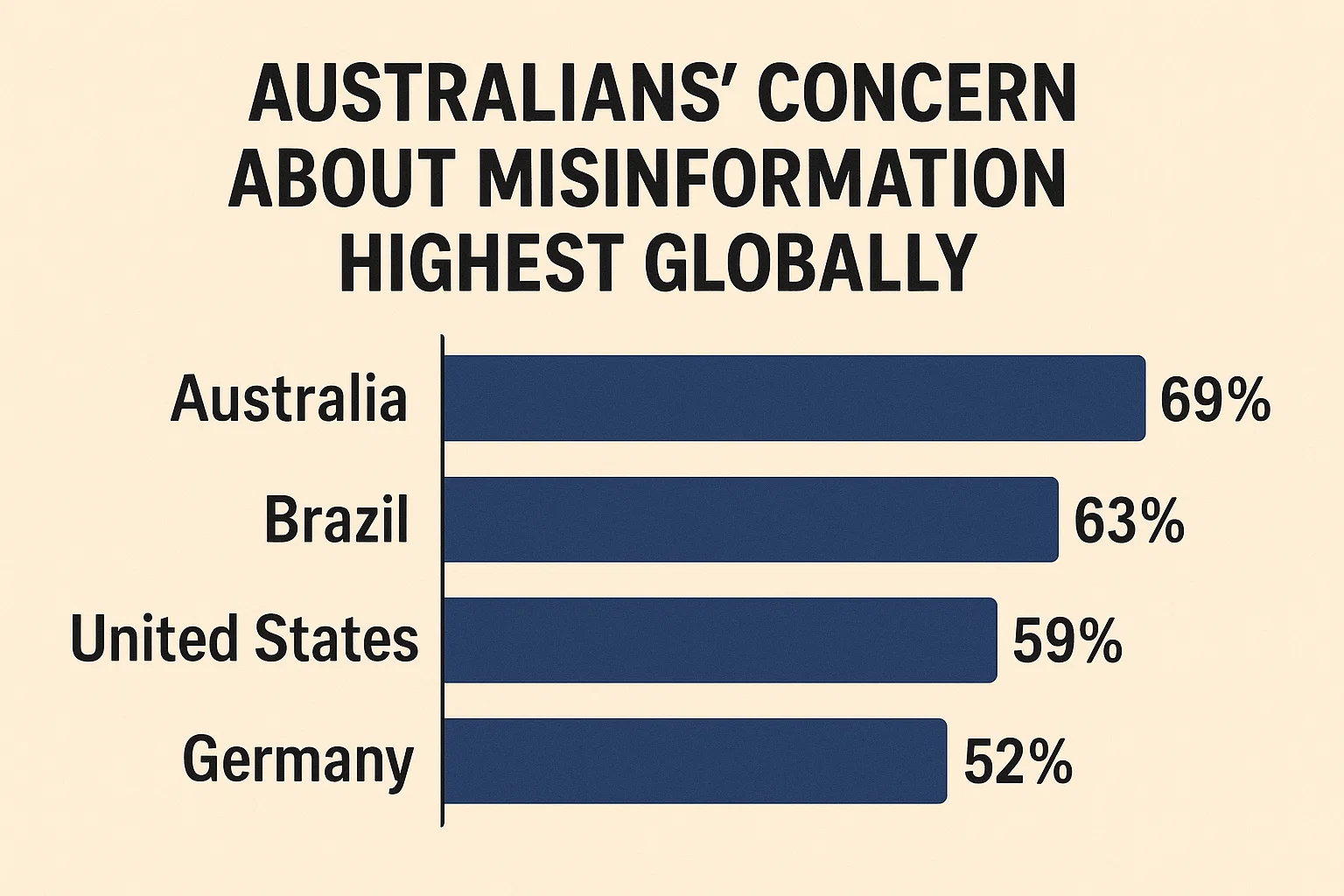
The University of Canberra’s recent media trust survey sheds light on a growing problem: Australians have some of the highest levels of concern about misinformation in the world. The report suggests an urgent need for a national media and digital literacy campaign to equip people with the tools to identify misinformation. But what would that look like?
Understanding How News is Made
Journalists are traditionally taught to follow the “Five Ws” when reporting: Who, What, Where, When, and Why. The first four are usually straightforward — for instance, reporting on a flood in Queensland that has killed over 100,000 livestock covers the What, Where, When, and Who. But the Why can be more complex, as it involves interpreting the meaning behind events, often inviting accusations of bias.
In theory, journalists gather facts and consult experts to provide context. These combined elements form a complete story. However, in practice, the process is not so clean-cut. The lines between facts, interpretation, and narrative often blur, especially with complex issues like climate science or international politics.
News as a Storytelling Exercise
At its core, journalism transforms the chaotic complexity of real life into coherent stories that help people make sense of the world. The critical difference between news and other forms of storytelling — like fiction or film — is that news claims to represent the truth. This implicit contract encourages readers to lower their guard and accept media narratives, making news stories uniquely influential.
Because of this power, immense efforts are made globally to control or distort media narratives, including by intimidating or even killing journalists. Powerful entities recognize that if they control the story, they control public perception.
Power and Influence in Media
Not everyone in journalism pursues truth for noble reasons. Some media outlets act as extensions of political parties, launch smear campaigns, or push for war. Ownership and political agendas have long shaped media behavior. But many journalists and editors, both in legacy and independent media, remain committed to earning their audience’s trust by reporting truthfully and fully.
They understand that omitting key facts, silencing certain voices, or allowing power to dictate narratives undermines public trust — and ultimately threatens their own relevance.
The Pressures Journalists Face
Modern journalism operates under significant pressure. Recent years have seen a surge in profits for defense contractors and cyber-intelligence companies, which benefit directly from global conflict. Australia’s sovereign wealth fund, for instance, has invested heavily in companies like Palantir Technologies and Elbit Systems as defense spending rises globally.
Meanwhile, governments, militaries, and lobby groups work hard to shape public discourse, often attempting to silence uncomfortable reporting. In Australia, strict defamation laws, legal threats, and targeted harassment campaigns discourage many journalists from covering sensitive topics or engaging certain sources.
Propaganda and Control of Narratives
Propaganda is not exclusive to authoritarian regimes. Every military and government, including Australia’s, engages in it to some degree. Strategies differ depending on the target audience — domestically or abroad — and often involve carefully managing media narratives.
For example, Australia’s relationship with Timor-Leste has involved both diplomatic outreach and covert surveillance, as revealed by court documents suggesting Australia monitored Timorese leaders in 2000. This creates a disconnect between public diplomatic messaging and private actions.
Writers like Hannah Arendt and Ilan Pappe have documented the extensive use of propaganda by powerful governments to manipulate public opinion. Pappe, for example, explains how pro-Israel lobby groups have shaped media coverage in the US and UK, targeting outlets like the BBC and The Guardian to control discourse.
Courageous Journalism
The University of Canberra’s survey found that audiences want journalists to be more courageous, ask tougher questions, and prioritize truth-telling. But what does that actually require?
George Orwell’s career offers insight. In a 1940 review of Hitler’s Mein Kampf, Orwell combined objectivity with moral clarity, saying he understood Hitler’s appeal but also admitted he would kill him if given the chance. Orwell demonstrated that moral judgment and factual reporting can coexist.
Are Journalists Activists?
Some argue journalists shouldn’t be activists. But every editorial decision — to cover or ignore a story — reflects subjective judgments about what’s “important.” And “important” inevitably depends on whose interests are being served.
Currently, for instance, parts of the Australian media are intensely critical of the Albanese government’s superannuation policy. This coordinated campaign raises questions about what motivates such editorial choices and how they reflect broader activism within journalism.
If Australia were to launch a national media literacy campaign, these complexities — including the influences, limitations, and moral challenges journalists face — would need to be part of the conversation.
