


An Australian hiker who was feared missing after catastrophic flooding struck the Nepal-Tibet border region has been found safe, offering a rare moment of relief as rescuers continue searching for thousands of people still unaccounted for.
Sydney woman Cara Severino, 26, had been trekking in Nepal’s Langtang region when the devastating flash floods and landslides swept through the Himalayan border area. Communications collapsed across large parts of the disaster zone, leaving her family unable to reach her and prompting fears she had been caught in the destruction.
Severino eventually managed to contact her parents from Gosainkunda, telling them she was safe after reaching the area with the assistance of other hikers. Australian consular officials later made contact with her and helped coordinate her safe movement out of the affected region.
In a statement after being located, Severino expressed gratitude to the people who helped her escape and said her thoughts remained with Nepalese families who had lost relatives as well as families still waiting for news of missing loved ones. She described witnessing the devastating human impact of the disaster while travelling through the affected area.
Her rescue comes as the scale of the catastrophe continues to grow. By Sunday morning, authorities reported 675 confirmed deaths in Nepal and seven in Tibet, while close to 3,000 people remained missing across the wider disaster zone. The figures have continued to change as emergency teams reach isolated communities and recover victims from mud, rivers and destroyed settlements.
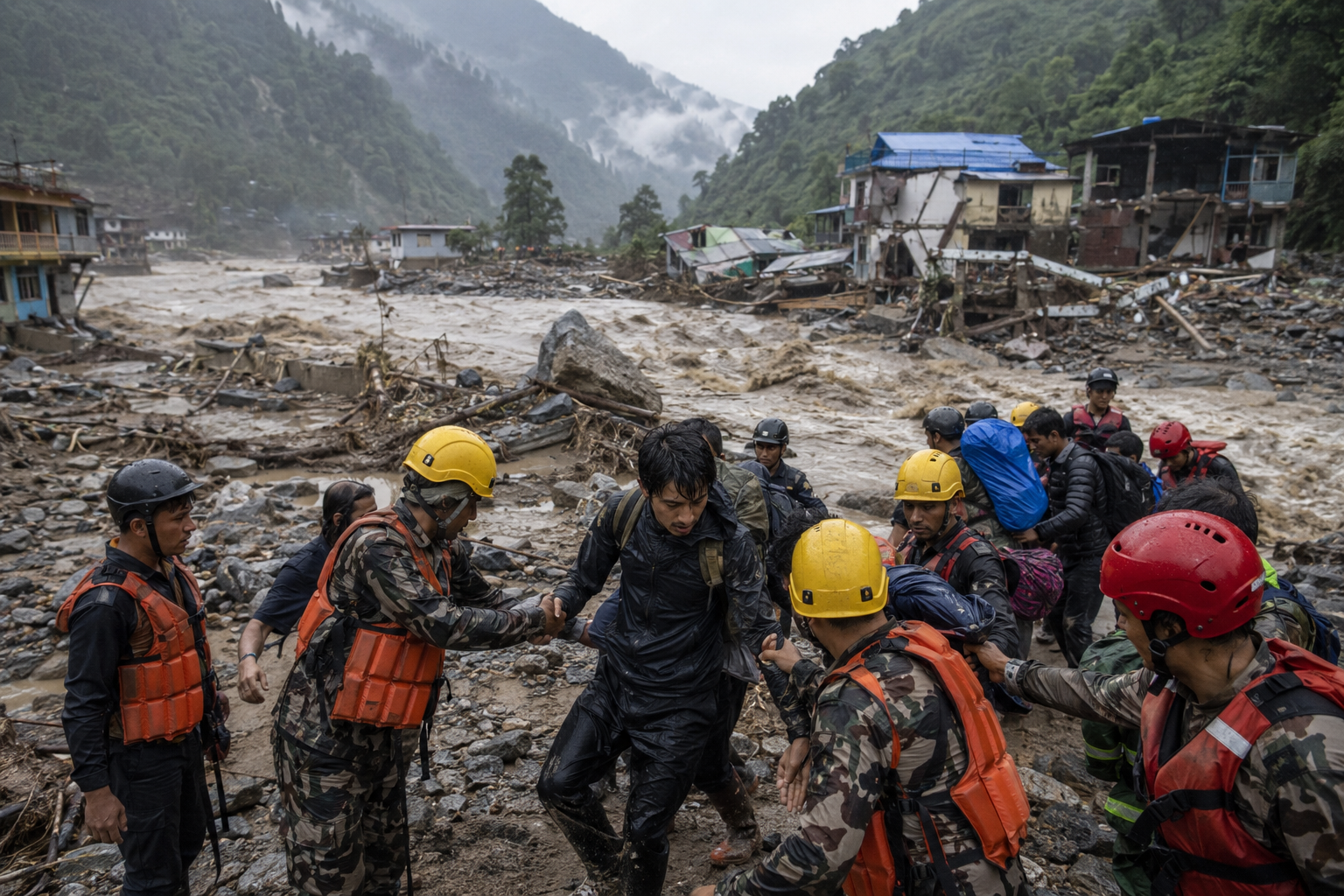
The disaster struck on August 26, sending an enormous surge of water, mud, rock and debris through valleys near the Nepal-China border. Nepalese authorities have said the exact cause is still being investigated, although satellite analysis and disaster experts have pointed to a possible glacier or snow-and-rock collapse high in the Himalayas as a major trigger.
Entire settlements were overwhelmed with little warning. Roads, bridges, power infrastructure and communication networks were destroyed or badly damaged, making some communities almost impossible to reach by land.
The destruction has also complicated efforts to establish an accurate number of casualties. Nepal’s Foreign Ministry said on Saturday that hundreds of bodies had already been recovered while thousands remained unaccounted for, including Nepalese citizens and foreign tourists.
Among the missing are dozens of Australians who had travelled to the Himalayan region for trekking, pilgrimage and organised tours. Australian authorities have deployed additional consular and humanitarian personnel to Nepal while working with local agencies, tour operators and families to determine the whereabouts of those still missing.
Foreign Minister Penny Wong has said Australian officials are working urgently to establish the welfare of those unaccounted for. The Department of Foreign Affairs and Trade has received hundreds of calls from concerned relatives and is continuing to support families seeking information.
A particularly difficult search operation is underway at a hydropower facility in Nepal’s Rasuwa district, where more than 100 workers are believed to have been trapped inside a tunnel after floodwater and debris struck the area.
Nepalese army rescuers have managed to break through part of the mud-filled tunnel and have begun pumping air inside while using cameras and excavation equipment in an attempt to determine whether survivors remain trapped. Nepalese Home Minister Sudan Gurung said the operation was continuing as authorities raced against time.
Rescue crews are also working across remote valleys and damaged villages, often relying on helicopters because roads have disappeared beneath landslides or been washed away entirely.
Thousands of people have already been rescued, but the challenging Himalayan terrain, unstable slopes, deep mud and risk of further flooding are slowing operations. Emergency authorities have also monitored newly formed barrier lakes that could potentially release additional floodwater downstream.
The humanitarian impact is enormous. The Red Cross estimates that more than 93,000 people have been seriously affected and require assistance, with communities facing shortages of shelter, clean water, food and medical support.
Nepal has begun seeking specialised international assistance for areas such as complex rescue operations, damaged infrastructure and the identification of victims. India and China have also provided support, while Australia and other countries have offered humanitarian assistance.
For Severino’s family, confirmation that she survived brought enormous relief after days without communication. But across Australia and many other countries, hundreds of families remain caught between hope and grief as the search continues.
The rapidly rising death toll means the Nepal-Tibet floods are already one of the region’s most severe natural disasters in recent years. With isolated areas still being reached and almost 3,000 people unaccounted for, authorities have warned that the final scale of the tragedy may not be known for some time.
