


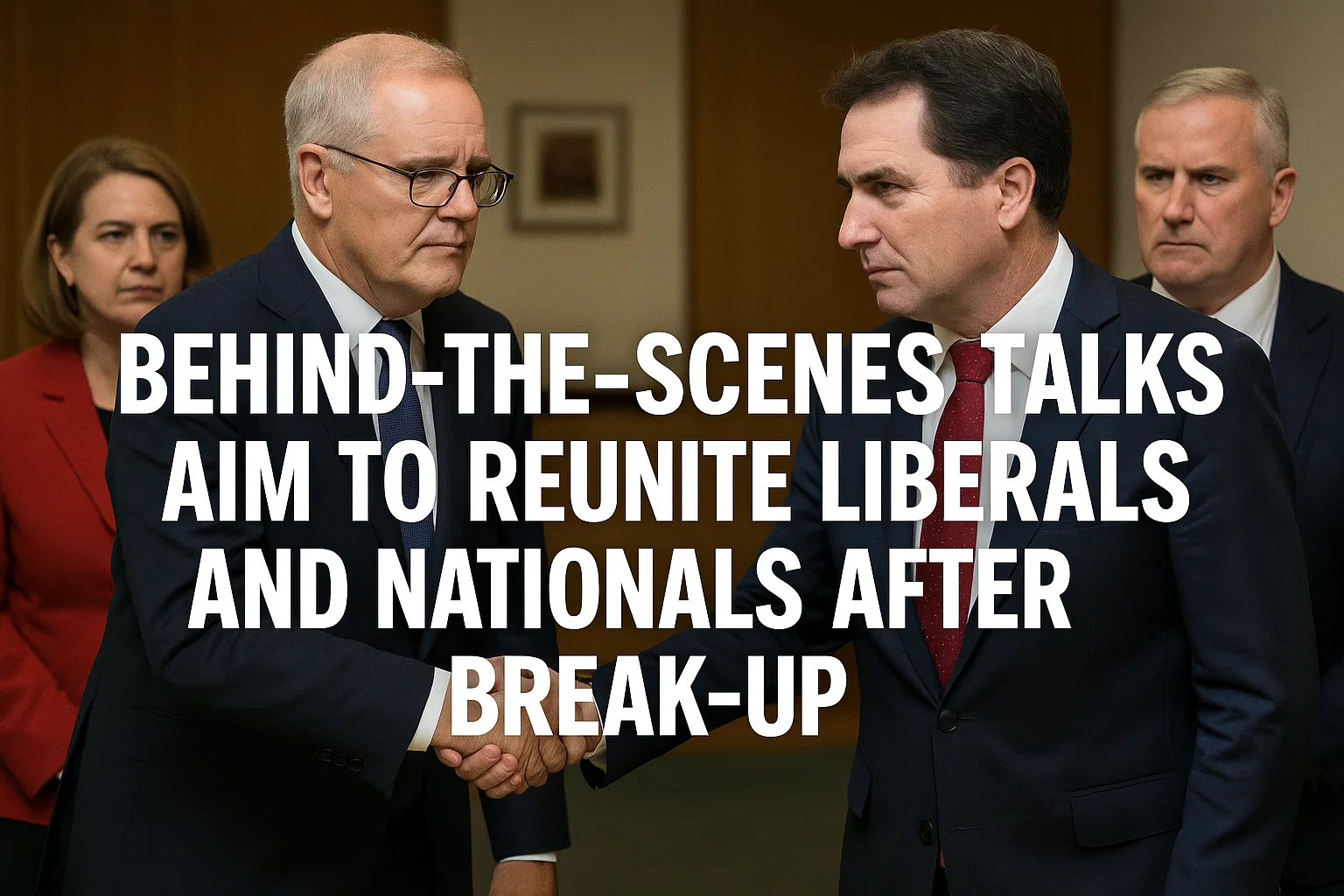
Just a day after formally ending their long-standing alliance, efforts are already underway to reunite the Liberal and National parties.
Nationals MP Darren Chester told the ABC that he is in discussion with colleagues from both parties about a potential reconciliation within weeks. Though not part of the party’s leadership, Mr Chester served in the former Coalition government’s cabinet.
“I’m concerned that returning to parliament as two separate parties will hand Labor an advantage,” he said. “We owe it to our supporters to try again to form a coalition that can offer a strong and stable opposition… If the Nationals want to deliver for regional Australia, we need to be in government.”
Mr Chester reaffirmed his support for the Nationals’ policy platform but agreed with former Liberal PM John Howard’s warning about the dangers of division within the Coalition.
“Perhaps it’s time for senior figures from both sides to meet with the current leadership and work toward a solution sooner rather than later,” he suggested.
Nationals Leadership Stands Firm
The Nationals leadership — David Littleproud, Kevin Hogan, and Bridget McKenzie — were in high spirits Tuesday evening after orchestrating what many are calling one of the most significant political ruptures in recent memory.
Gathered in Mr Littleproud’s office over beef burgers, the trio reflected on the day’s events. Senator McKenzie stood by the decision.
“It’s about moving forward — being able to speak openly and represent regional Australians without compromise. It’s a huge opportunity,” she told the ABC.
Events Leading to the Split
Last Wednesday, Mr Littleproud and the party’s federal director, Ben Hindmarsh, travelled to Albury to meet Liberal leader Sussan Ley. The meeting was arranged due to Ley’s mother’s ill health and the looming deadline for a shadow cabinet announcement.
Littleproud presented four policy demands as conditions for maintaining the Coalition: support for nuclear energy, a $20 billion future fund for regional Australia, improved rural phone coverage, and new powers to break up supermarket monopolies.
Ms Ley declined to guarantee these, citing the Liberal Party’s upcoming election policy review. According to one Nationals MP, “She told him to shove it up his jumper.”
Returning to Canberra, Mr Littleproud convened a virtual party-room meeting Friday morning. He told colleagues the Nationals’ key policies would be “scrapped” and absorbed into the Liberals’ review process — and discussions never progressed to shadow cabinet roles.
Tensions Escalate
Nationals leadership followed up over the weekend, again asking for commitments in writing. The response from Ms Ley’s office, however, reiterated that all policies would be subject to review — a reply that did not sit well with the Nationals.
“This is fundamental to us. We weren’t going to let our platform be diluted by shadow cabinet processes,” one Nationals insider said.
By Tuesday, the Nationals reconvened — once again via Microsoft Teams — and momentum had built in favour of formally leaving the Coalition. While some within the party had misgivings, the majority supported the move.
Littleproud’s public declaration was met with a united show of support from Nationals MPs and senators.
A History of Tensions
Though the split marks a major shift in a century-long partnership, it isn’t the first time the two parties have fallen out. Historical examples suggest such ruptures can lead to unpredictable political realignments.
Ms Ley, who was notified just 30 minutes before the public announcement, later told media the disagreement stemmed from the Nationals wanting their shadow ministers to have free rein to oppose Coalition policy — a claim some Nationals dismissed as “total bullshit.”
Despite the outward unity, some within the Nationals have raised concerns about the decision. One MP, speaking anonymously, said the leadership had failed to plan properly for the break.
“I’m just glad they’re not running our military — we’d be out of ammo before the battle started,” the MP quipped.
