


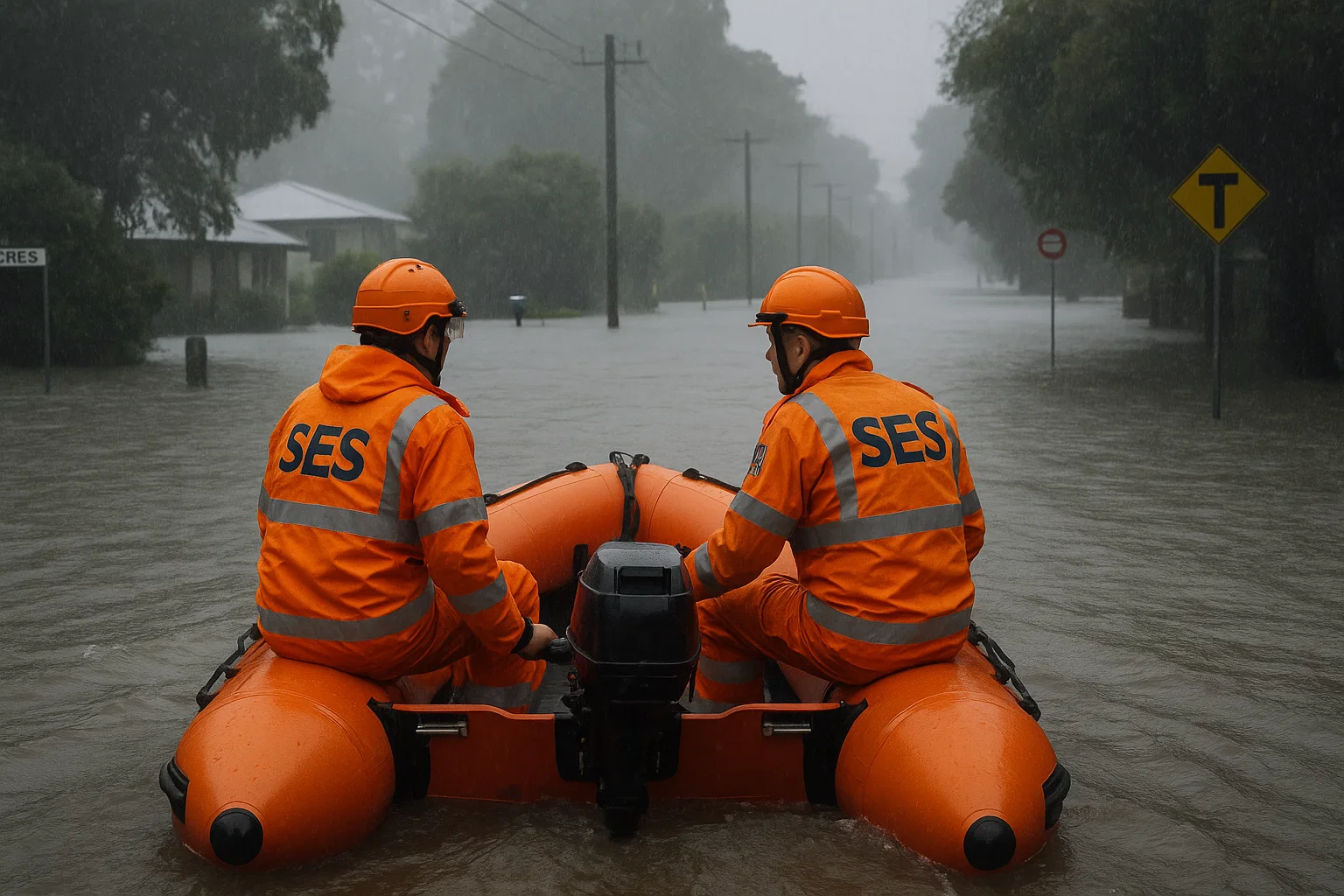
As extreme weather batters the Mid North Coast and Hunter regions, emergency services say that important lessons have been learned—and put into action—since the last major flood events along the New South Wales coast.
One person has died and three others are missing as heavy rainfall is forecast to continue across the catchment area, with the possibility of a fourth consecutive day receiving over 100 millimetres of rain.
More than 1,000 volunteers, first responders, and defence force personnel are currently assisting in civilian rescues and addressing damage in the northern part of the state.
Stay up to date with our live coverage of the NSW floods
By midday on Thursday, close to 150 warnings were active, with 50,000 people living in areas advised to prepare for possible evacuation.
A midday forecast from the Bureau of Meteorology (BOM) predicted several more hours of rain, though it indicated rainfall would begin to ease before tapering off by Friday.
“Today is expected to bring the heaviest rain for the state’s north-east, with much drier conditions from tomorrow,” said senior meteorologist Angus Hines.
Flood rescue operations in Taree using dinghies
Over 1,000 volunteers have been mobilised in response to the floods.
(ABC News: Liam Patrick)
The Northern Rivers region, devastated by the catastrophic Lismore floods in February 2022, saw loss of life and billions of dollars in damage.
That disaster prompted an independent state inquiry and a recovery impact report from the Lismore City Council.
Emergency Services Minister Jihad Dib acknowledged the progress made since those events.
Speaking on Thursday morning, he noted there was still the “potential for further incidents” following recovery from ex-Tropical Cyclone Alfred and March storms.
In this situation, Dib explained that emergency services had already begun “pre-deploying resources and planning” more than a week before the storm system arrived.
Authorities in NSW caution about ‘unpredictable’ weather in the Hunter region
Minister Dib also highlighted that communication efforts had advanced since the 2022 Lismore floods.
“One of the key aspects is communication,” he said.
Rather than issuing immediate evacuation orders, warning systems and the Hazard Near Me app now send layered alerts to keep residents informed.
“Typically, alerts progress from watch and act, to prepare to evacuate, to evacuation, and finally move to higher ground.
“We aim to structure the messaging through the SES to keep communities well-informed.”
Aerial photo shows homes submerged in muddy floodwater
Flooding in Lismore, February 2022.
(Supplied: Rotor Wing)
Member for Maitland, Jenny Aitchison, agreed that coordination among agencies had notably improved over the past three years.
She highlighted advancements in data systems, which have evolved from “whiteboards and butcher’s paper” to “incredible” digital tools.
“These systems can process around 600 data points and models using inputs from the Bureau of Meteorology and other agencies,” she said.
Jenny Aitchison stands in front of green trees and grass
Jenny Aitchison said emergency responses have moved beyond “whiteboards and butchers paper.”
(ABC Newcastle: Romy Stephens)
Aitchison added that the community was “fortunate” this event and ex-Cyclone Alfred had unfolded at a slower pace.
“The most important thing for people to understand is that the ground is already saturated, river levels are high, and rainfall remains unpredictable,” she said.
“My thoughts are with everyone who’s been displaced.”
Northern region SES zone commander Andrew Cribb said new protocols for life-threatening rescues had also been implemented this time.
Have improvements been made since the 2022 Lismore flood disaster?
A statue stands alone outside a church surrounded by floodwater.
A year after devastating floods hit northern NSW, leading to widespread rescues, could the region handle a similar event differently today?
Chief Superintendent Cribb pointed to changes in rescue prioritisation as an example of policy improvements stemming from Lismore.
He said the availability of essential infrastructure and high-clearance vehicles had been a major benefit to local communities.
According to Cribb, the Hunter region—situated low on the floodplain—is seeing flooding in its usual problem areas.
“These communities are remarkably resilient in how they respond,” he said.
