


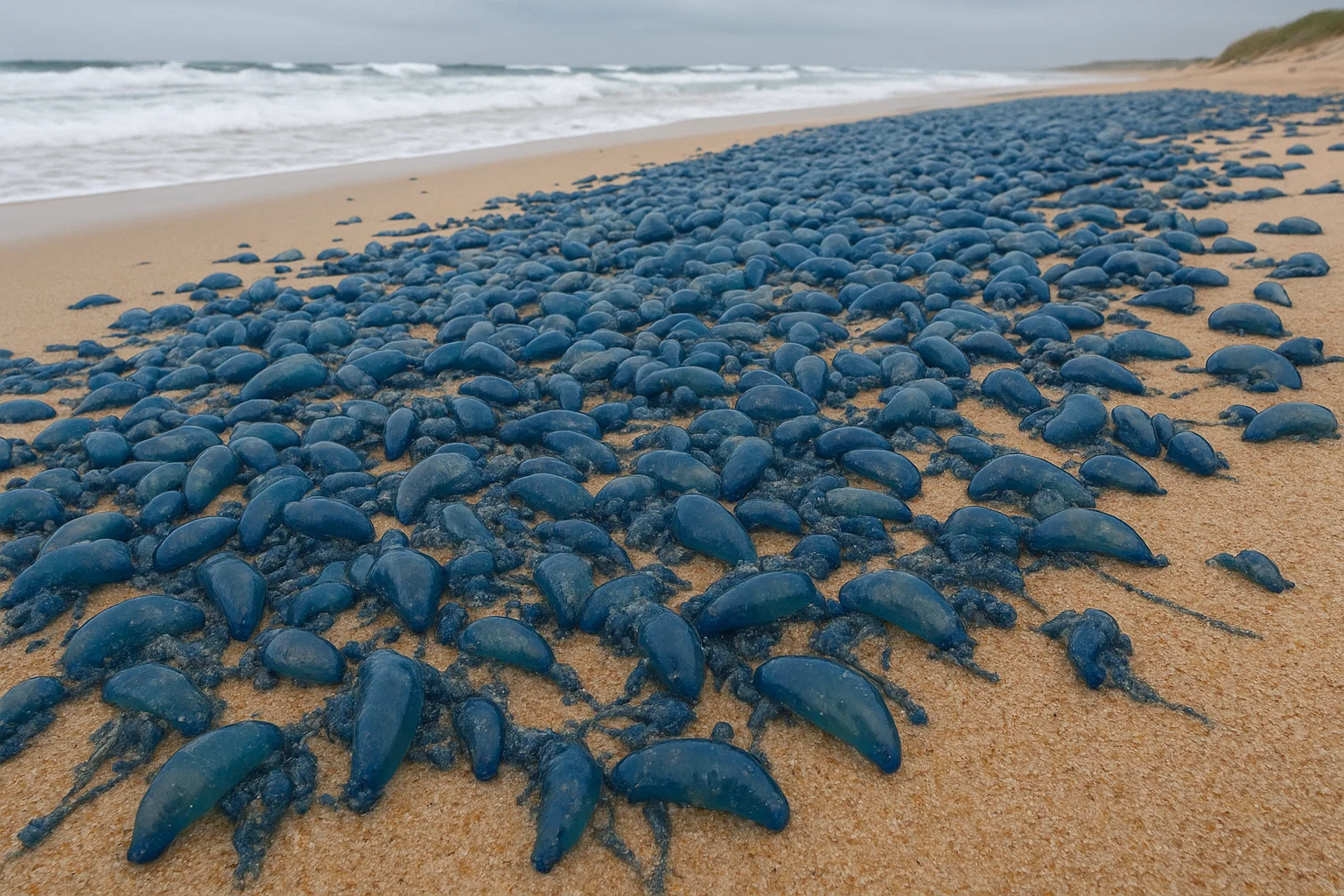
The South Australian government has reported that the algal bloom affecting the state’s coast and the Coorong has now reached metropolitan Adelaide beaches.
Beachgoers and marine experts have observed a surge in dead sea life, including species washing up at popular locations such as Glenelg, Grange, and Semaphore.
Marine biologist Mike Bossley, who has spent decades exploring local shorelines, said he had recently seen marine species on the beach he had never encountered before.
“I’ve spotted different types of rays and sharks, numerous pipefish, a species called ling—which is quite rare—and several fish I couldn’t even identify,” he said.
The algal bloom, triggered by a marine heatwave, has caused water discoloration and foam across the Fleurieu Peninsula, Kangaroo Island, Yorke Peninsula, and the Coorong.
In March, swimmers and surfers began experiencing illness after water exposure. Since then, a significant number of dead marine animals have washed ashore throughout South Australia.
Environment Minister Susan Close confirmed that the bloom’s reach into metropolitan beaches was partly due to recent storms.
“Some of the bloom has drifted toward our coast, and the storm has also brought dead sea life from the gulf onto the beaches,” she said.
“This is very upsetting for people.”
Reports from citizen scientists over the past month have documented dead fish appearing on beaches from Sellicks Beach to North Haven.
Dr Bossley said he had noticed a marked increase in dead marine life since a storm earlier in the week.
“I was horrified to come down and see dead fish, sharks, rays—just marine life everywhere,” he said.
Glenelg North resident Ali Wylie, a regular beach visitor, was shocked by the scene.
“I didn’t know the bloom had reached here. It’s devastating,” she said.
“I was already heartbroken by what happened in the Coorong. Now it’s on our doorstep. What can we do?”
Rodney Shugg, who walks daily with his dog Pablo along Semaphore Beach, said he had found various dead sea creatures since the storm, including small sharks and rays.
He attempted to return living animals to the water and noted some unusual crab species not commonly seen in the area. He also observed red discoloration on the undersides of the dead animals but no visible injuries.
Shugg expressed concern for pets after hearing that a dog became sick from ingesting something found on the beach.
At Largs North Beach, marine conservation student Emily Beckmann found a dead Australian sea lion and said she has recorded over 30 different dead species in recent days.
“As someone who cares deeply about marine life, it’s heartbreaking to see these animals lifeless onshore instead of thriving in their habitat,” she said.
“With no known remedy for the toxin and no signs of improvement, it’s devastating.”
Beckmann has been using the iNaturalist platform to log her observations and help monitor the bloom’s effects.
The state government is urging the public to report sea life deaths to Fishwatch to aid researchers.
“The quicker we can collect samples and test, the sooner we’ll have answers,” Dr Close explained.
Dr Bossley emphasized that the bloom is a stark warning about the impacts of climate change.
“These blooms are happening globally due to marine heatwaves,” he said.
“We need urgent action from governments to address the issue.”
Dr Close added that efforts must be made to strengthen ecosystems against environmental stressors like algal blooms.
“We have to care for nature so it can withstand these pressures and recognize the link to climate change. This is a global issue requiring serious attention,” she stated.
While the bloom is still persisting, the Department for Environment and Water noted a recent drop in sea surface temperatures in shallow coastal areas. However, deeper offshore waters continue to face marine heatwave conditions.
In response to the emotional toll, Dr Bossley is working with mental health professionals to establish eco-grief workshops for those struggling with the environmental loss.
“You don’t need to be a scientist to feel the sadness of this,” he said.
“Everyday beachgoers who love the ocean are being affected just as much.”
