


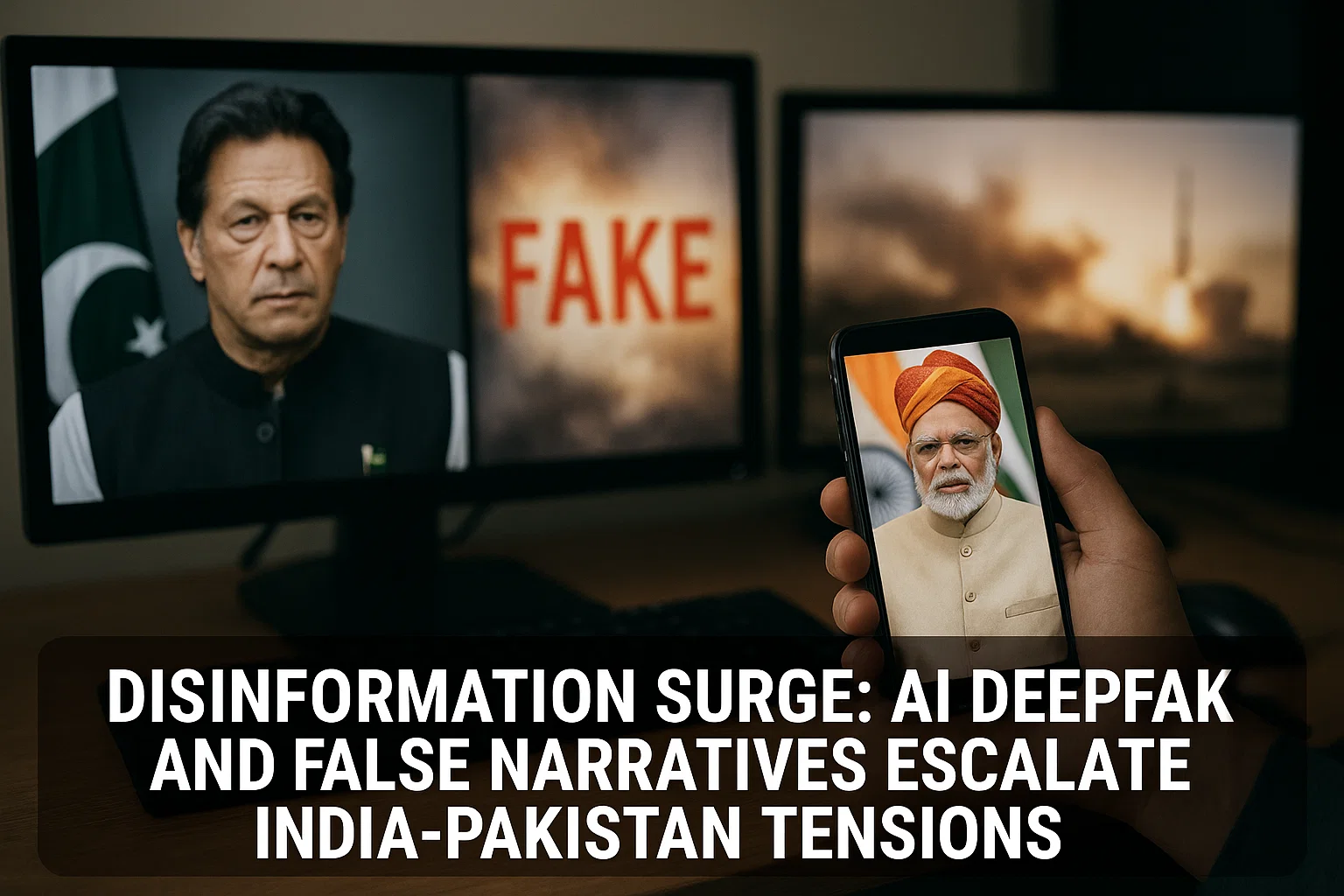
As a deadly attack rocked Pahalgam in Indian-administered Kashmir last month and triggered military tensions between India and Pakistan, an equally intense battle unfolded online — a war over truth.
Fake videos, AI-generated content, recycled war footage, and fabricated stories flooded platforms like X, WhatsApp, Facebook, and YouTube, spreading fear and confusion on both sides of the border.
Among the most widely shared were AI-generated images falsely showing destruction. One viral post depicted Rawalpindi Stadium in ruins, allegedly struck by a drone. The image, entirely fabricated, reached millions.
Another fake post claimed Pakistan’s Prime Minister Shehbaz Sharif had conceded defeat, further fueling online hysteria.
“This was electronic warfare,” said Raqib Hameed Naik, executive director of the Center for the Study of Organized Hate (CSOH) in Washington DC. “AI-generated visuals were weaponised to create false military victories and stir nationalist fervor.”
The Rise of Deepfakes in Conflict
One of the most dangerous developments during the crisis was the spread of highly realistic deepfakes — videos manipulated with AI to create false impressions.
A particularly convincing video showed a deepfaked version of Pakistan Army spokesperson General Ahmed Sharif Chaudhary seemingly admitting the loss of two jets.
“The lip sync was almost perfect,” said Nighat Dad, founder of Pakistan’s Digital Rights Foundation (DRF). “Only minor linguistic errors gave it away.”
The goal was psychological warfare: to weaken Pakistani morale and portray Indian dominance. The clip was widely shared, even appearing on mainstream Indian news channels before being debunked.
Another viral piece used video game footage, enhanced with music and patriotic captions, to depict Indian fighter jets shooting down Pakistani aircraft. In reality, the clip was from a flight simulator.
Old footage of actual military incidents was also recycled, often misrepresented as new developments.
Disinformation from Both Sides
False claims weren’t exclusive to one side. A fabricated article made to look like a publication from the UK’s The Daily Telegraph praised the Pakistani Air Force — despite no such article ever being published. The image was shared by Pakistan’s deputy prime minister and local media.
Misleading content — unintentionally shared — and disinformation — spread with intent to deceive — both surged during the conflict. Even verified users and major media outlets circulated false content.
In one instance, a video of a couple dancing in the Kashmir hills was misrepresented as the final moments before they were killed in the Pahalgam attack. Despite the couple later posting a video confirming they were alive, the false version continued to spread.
“When I corrected users, some responded by saying the truth didn’t matter if the lie hurt the enemy,” said DRF researcher Sara Imran.
Satire and Misinformation Collide
Other recycled clips, including naval drills and Israeli airstrikes in Gaza, were falsely portrayed as attacks by the Indian Navy on Karachi or strikes on Pakistani targets. These led to moments of panic, particularly in cities like Peshawar and Karachi.
In response, some Pakistanis used humour and satire to push back. Videos of locals sipping tea while mocking dramatic headlines became popular online.
But the misinformation also led to serious harm — inciting hate speech, spreading unfounded accusations against Kashmiris, and promoting violence.
Censorship and a Flawed Response System
On April 28, India blocked 17 Pakistani YouTube channels and several X accounts, including news outlets and even official government profiles. Neither the Indian government nor platform representatives provided detailed responses.
“India’s content blocking has been criticised for its lack of transparency and due process,” said Ms Dad.
Despite the efforts of organisations like AFP FactCheck and BOOM Live, the flood of disinformation overwhelmed fact-checkers.
BOOM Live urged media to improve verification processes and called on social media platforms to strengthen their moderation systems.
“The Community Notes feature on X completely failed,” Mr Naik said. “Of 437 posts reviewed, 179 came from verified accounts, but only 73 had any form of flagging.”
He reached out to X but received no reply.
Truth as the First Casualty
AI tools were even used to mimic Prime Minister Sharif’s face and voice, falsely portraying him as surrendering. Yet moderation systems across platforms largely failed to contain the spread.
“It’s about helping civilians distinguish between truth and lies,” said Mr Naik. “In the fog of war, truth is the first casualty. We need cross-border fact-checking and transparency more than ever.”
