


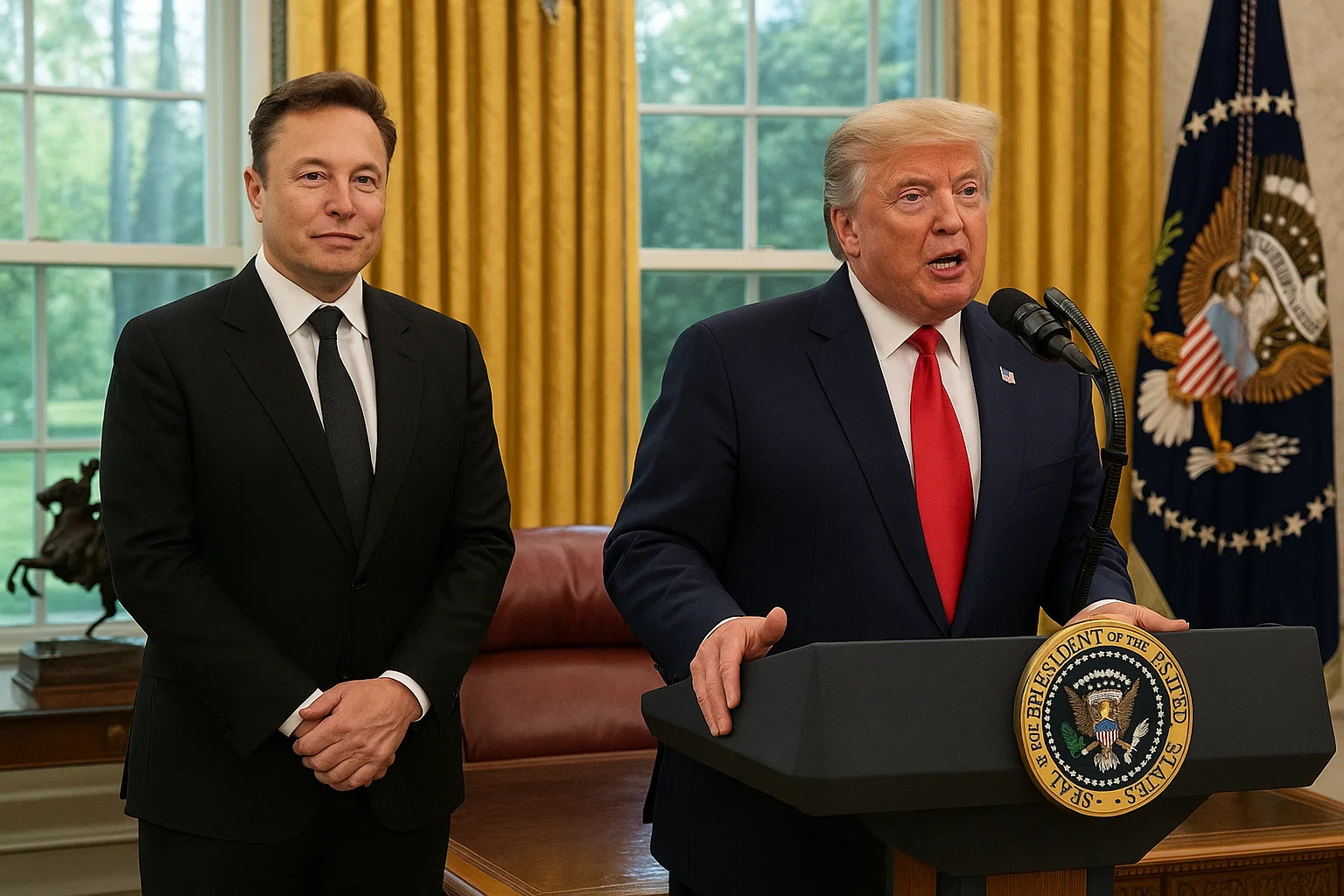
Billionaire Elon Musk made a headline-grabbing departure from the Trump administration during a dramatic Oval Office appearance on Friday, where he sported a black eye and rejected claims of drug abuse. Despite stepping down from his official role, he pledged to remain a “friend and advisor” to President Trump.
As he ended his tenure leading the Department of Government Efficiency (DOGE), Trump praised Musk’s “incredible service” and awarded him a symbolic golden key to the White House. The president added that Musk was “really not leaving” and would remain closely involved.
Over the past four months, Musk’s department implemented sweeping reforms, eliminating tens of thousands of jobs, closing entire government agencies, and reducing foreign aid. However, many of the projected $1 trillion in savings are still pending.
Speculation Over Musk’s Appearance
Attention during the event quickly shifted to Musk’s visibly bruised eye. Musk attributed the injury to roughhousing with his young son, saying, “I told him to punch me — and he did.”
The explanation came amid fresh allegations in The New York Times, which claimed Musk used ketamine excessively during the 2024 election campaign, reportedly causing bladder issues. The report also mentioned alleged use of ecstasy and hallucinogenic mushrooms, along with Musk carrying a pill box.
When asked about these allegations, Musk dodged the question, instead criticizing the media outlet and referencing its Pulitzer Prize for reporting on Russian interference in the 2016 election.
Trump brushed off the drug accusations, saying, “I wasn’t [aware],” and reaffirmed his support for Musk: “I think Elon is a fantastic guy.”
Deputy Chief of Staff Stephen Miller also downplayed the issue, saying the administration’s primary concern remained drugs entering the U.S. from Mexico.
Disillusionment and Fallout
Musk’s departure was positioned as a celebratory farewell, but behind the scenes, it came amid growing disillusionment. Musk reportedly became frustrated with Trump’s expansive tax and spending proposals, which he felt contradicted the budget-slashing aims of DOGE.
At the start of his stint in government, Musk had been highly visible at Trump’s side — traveling with him and attending major events. His aggressive push to restructure the federal government aligned with a tech-driven ideology but clashed with more traditional cabinet members.
DOGE’s performance fell short of expectations. Though the White House claimed $170 billion in savings, independent estimates placed the number much lower — as little as $2 billion, according to The Atlantic.
Meanwhile, Musk’s business ventures have also struggled. Tesla faced declining sales and shareholder discontent, while SpaceX experienced multiple rocket failures. Critics have urged Musk to refocus on his companies.
