


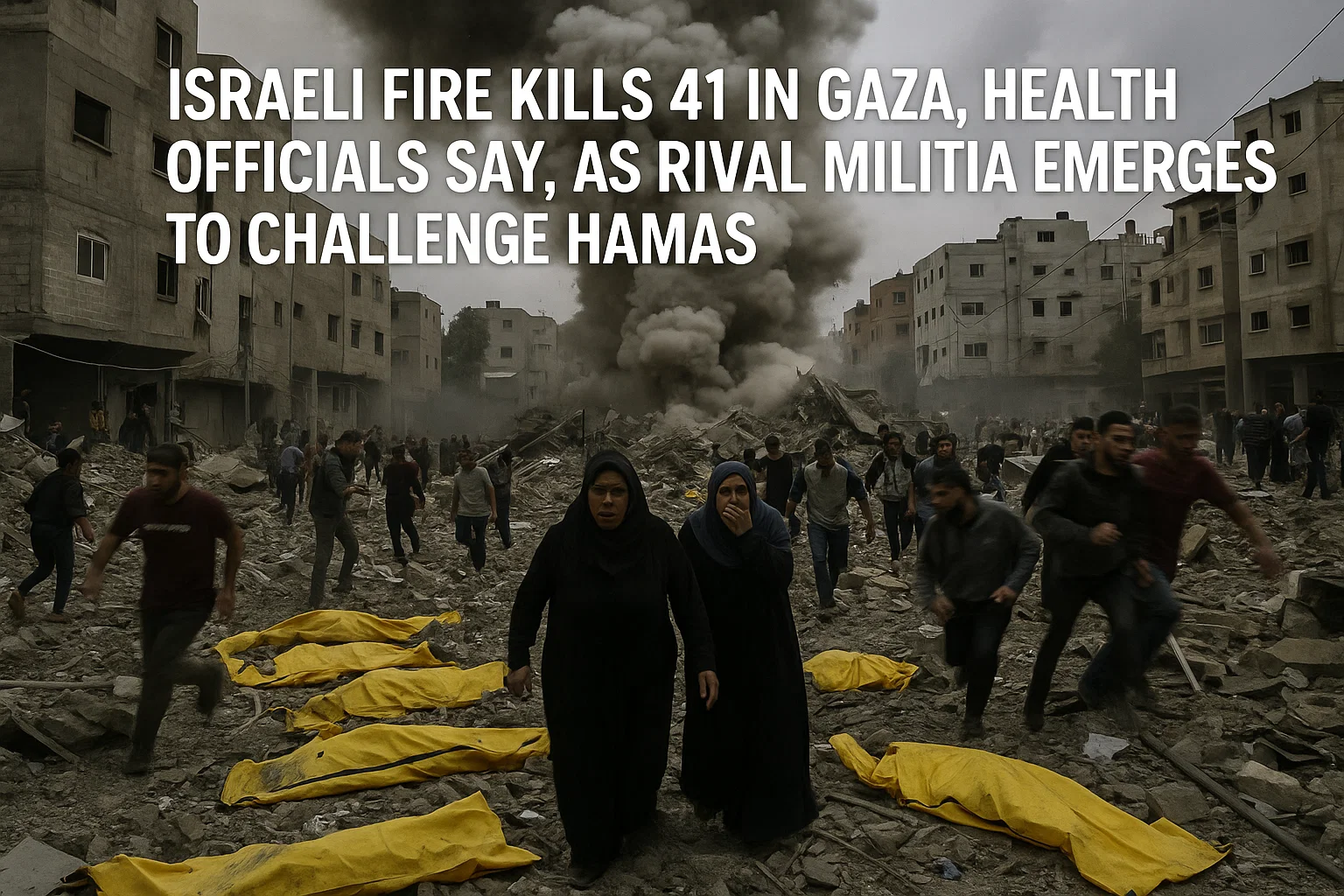
At least 41 Palestinians were killed in the Gaza Strip on Wednesday by Israeli airstrikes and gunfire, according to local health authorities, with most deaths occurring near an aid distribution site operated by the US- and Israeli-backed Gaza Humanitarian Foundation (GHF).
Hospitals in Al-Shifa and Al-Quds reported at least 25 fatalities and dozens more injured after Israeli troops opened fire near the former settlement of Netzarim, where people had gathered for aid.
The Israeli military said its forces fired warning shots at individuals they believed posed a threat in the Netzarim Corridor, a designated combat zone.
“The IDF is aware of reports of injuries and is reviewing the details,” a statement said.
Later the same day, officials at Nasser Hospital in Khan Younis reported that six more people were killed by Israeli gunfire at another GHF site in Rafah. Meanwhile, an Israeli airstrike in Khan Younis killed at least 10 more, bringing Wednesday’s death toll to 41.
Since GHF began operations two weeks ago—following a three-month blockade—Gaza’s health ministry says 163 people have died and over 1,000 have been injured while attempting to access aid.
The United Nations, which previously warned that Gaza was on the edge of famine due to the blockade, condemned the killings and continues to report that food supplies remain dangerously low.
Palestinians were seen scavenging through debris at GHF centres, with many relying on limited relief in increasingly desperate conditions.
Aid Group Calls for More Supplies, UN Refuses Partnership
The Gaza Humanitarian Foundation said it had no immediate knowledge of Wednesday’s incidents but emphasized that it was coordinating closely with Israeli forces to maintain safe routes.
“The solution is more aid, which will reduce the urgency and chaos,” the foundation told Reuters.
“We currently don’t have enough food for everyone, but are doing our best under extremely volatile conditions.”
International aid groups and the United Nations have refused to partner with GHF, criticizing its use of private contractors and military backing from Israel, which they say violates humanitarian norms.
Israeli-Hamas Ceasefire Stalls; Hostage Talks Continue
On Tuesday, Israeli Prime Minister Benjamin Netanyahu stated that there had been “significant progress” in hostage negotiations, but said it was too early to expect a breakthrough.
Efforts by the US, Egypt, and Qatar to restore a ceasefire have made little headway, with both Israel and Hamas unwilling to shift on key demands. Two Hamas sources told Reuters they had not received any new offers for a truce.
The war began on October 7, 2023, when Hamas-led fighters killed 1,200 people—mostly civilians—in southern Israel and took 251 hostages, triggering Israel’s ongoing military campaign.
Since then, over 55,000 Palestinians—mostly civilians—have been killed, according to Gaza’s health ministry. Much of Gaza, home to more than two million people, has been devastated by bombardment.
Hamas Accused of Killing Rival Militia Members
Violence has also erupted between Hamas and a rival militant faction, the Popular Forces—also known as the Anti-Terror Service—which claimed that Hamas fighters had killed over 50 of their members as they escorted GHF aid convoys.
Led by 32-year-old Yasser abu Shabab, a former inmate who escaped a Hamas-run prison after it was bombed by Israel, the Popular Forces now number around 300 fighters and reportedly operate in eastern Rafah with Israeli support.
Last week, Netanyahu confirmed that Israel had been arming the group to help weaken Hamas.
“Weakening Hamas will ultimately save the lives of Israeli soldiers,” he said.
Controversy Over Israeli Support for Anti-Hamas Militia
Netanyahu’s admission that Israel has supplied arms to a Gaza-based anti-Hamas group drew criticism at home, especially since the security cabinet was reportedly bypassed in the decision.
According to Israeli media, the support—initially denied by the militia—includes Kalashnikov rifles taken from Hamas and extends to coordinated military actions.
Abu Shabab told Israeli military radio his group had not received weapons from Israel, claiming instead that their arms were sourced locally.
“Our aim is to defend Palestinians from Hamas. We don’t work with the occupation forces,” he said.
“Saying otherwise is just a sign of how influential we’ve become.”
Despite this denial, Israeli media outlets have confirmed reports of deeper collaboration between the Popular Forces and the IDF. On Tuesday, the IDF allegedly conducted a drone strike that killed four Hamas fighters engaged in combat with the militia, according to news channel i24.
