


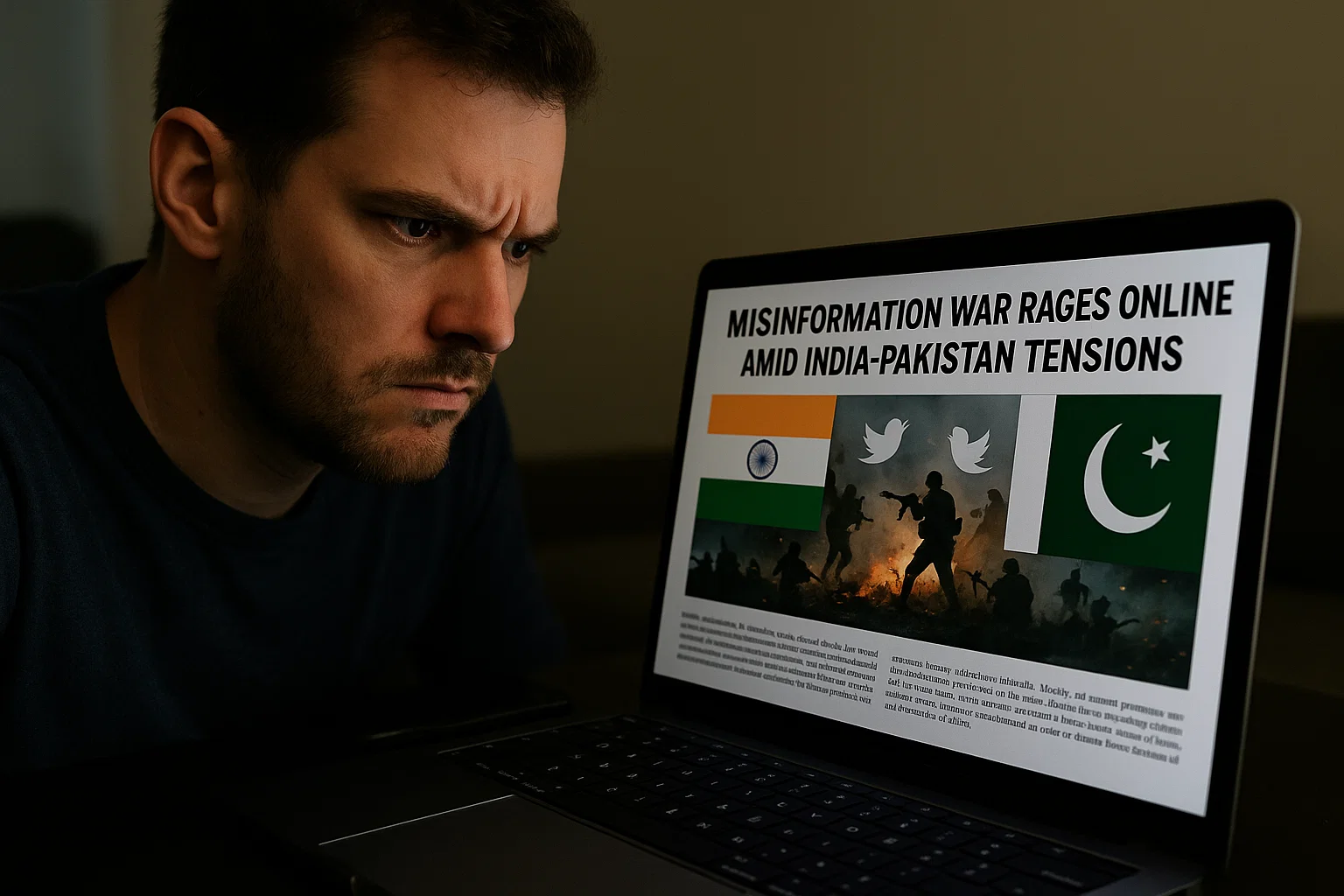
Last month, as a deadly attack struck the tourist hub of Pahalgam in Indian-administered Kashmir, igniting fresh military tensions between India and Pakistan, a parallel conflict unfolded online — a battle over information.
Artificial intelligence-generated videos, recycled war footage, and fabricated narratives rapidly spread across platforms like X, WhatsApp, Facebook, and YouTube, intensifying fear and confusion on both sides of the border.
Among the most viral were fake visuals of destruction. One AI-generated image, viewed millions of times, falsely showed Pakistan’s Rawalpindi Stadium in ruins after a supposed drone strike. Another misleading post falsely claimed Prime Minister Shehbaz Sharif had conceded defeat.
“This was a form of electronic warfare,” said Raqib Hameed Naik, executive director of the Washington-based Center for the Study of Organized Hate. His team catalogued hundreds of deceptive posts aimed at constructing fictional accounts of military success and stoking nationalistic fervor.
Deepfakes and Fictional Wins
One particularly troubling trend during the Pahalgam crisis was the emergence of advanced deepfakes — AI-manipulated audio, video, and images.
One such video, appearing to show Pakistan Army spokesperson General Ahmed Sharif Chaudhary admitting the loss of two jets, went viral. Nighat Dad, founder of the Digital Rights Foundation in Pakistan, said the lip-syncing was nearly flawless, with only minor dialect inconsistencies betraying its fake origins.
“It was one of the most convincing deepfakes I’ve seen,” she said, noting it aimed to damage Pakistani morale and portray an Indian victory — a goal it achieved, as the video was even picked up by mainstream Indian news shows before being debunked.
Gaming Footage and Old Clips Masquerade as News
Another popular fake used video game footage, complete with dramatic music and nationalistic messaging, to claim Indian jets had shot down Pakistani aircraft over Bhuj. “It was just a flight simulator,” said Mr Naik.
Old clips of fighter jets and naval exercises were also reused. One example included outdated footage from a naval drill, misrepresented as an Indian Navy strike on Karachi port. Some residents in Karachi and Peshawar initially panicked before realizing the truth.
Meanwhile, fake images of UK newspaper The Daily Telegraph were circulated, falsely praising Pakistan’s Air Force, though the outlet never published such an article.
Disinformation Goes Mainstream
Both misinformation — misleading content shared without intent to deceive — and disinformation — intentionally deceptive material — were widespread. And it wasn’t limited to obscure users. Verified accounts and mainstream outlets also shared unverified claims.
One example involved a video of a couple dancing in Kashmir, falsely portrayed as their final moments before the attack. Even after the couple clarified they were alive, the video continued to circulate. “Even with the couple debunking the video, it still spread like wildfire,” said DRF’s Sara Imran. When she flagged it, some users doubled down: “If it psychologically hurts the other side, it doesn’t matter if it’s fake.”
Humour as Resistance, Hate as Consequence
In response, some Pakistanis turned to humor and memes to counter the falsehoods. Videos emerged of locals drinking tea in contrast to alarmist headlines.
But the situation also sparked hate speech and violent rhetoric. Ms Dad’s organization documented a surge in genocidal threats, fabricated claims about Kashmiris harboring terrorists, and hostile content targeting entire communities.
Efforts to challenge these narratives were met with censorship and systemic obstacles.
Platform Failures and Censorship
On April 28, India blocked 17 Pakistani YouTube channels and several X accounts, including media outlets and official government handles. Critics, including Ms Dad, called out India’s opaque blocking policies and suppression of dissenting voices.
Despite ongoing fact-checking by groups like AFP Factcheck and BOOM Live, the sheer volume of misinformation overwhelmed efforts. BOOM Live recommended stricter media verification protocols and stronger social media moderation systems.
According to Mr Naik, of the 437 posts analyzed on X, 179 came from verified accounts, yet only 73 featured any community notes.
He noted that platforms like X and Meta failed to act decisively. “The system of checks and community notes failed miserably, especially during the conflict,” he said.
