
Mother Remembers “Happy and Cheeky” Son as Inquest into Toddler’s Death Concludes
The mother of a 14-month-old boy, known only as KBS due to legal restrictions, has given a heartbreaking tribute to her son as the final evidence was presented in an inquest into his death in Wagga Wagga.
KBS was found unresponsive in his cot on January 13, 2019, and was taken to Wagga Base Hospital, where he was later pronounced dead. An autopsy revealed he died from a ruptured spleen caused by blunt force trauma. Additional injuries included broken ribs and cigarette lighter burns on his hand and ankle.
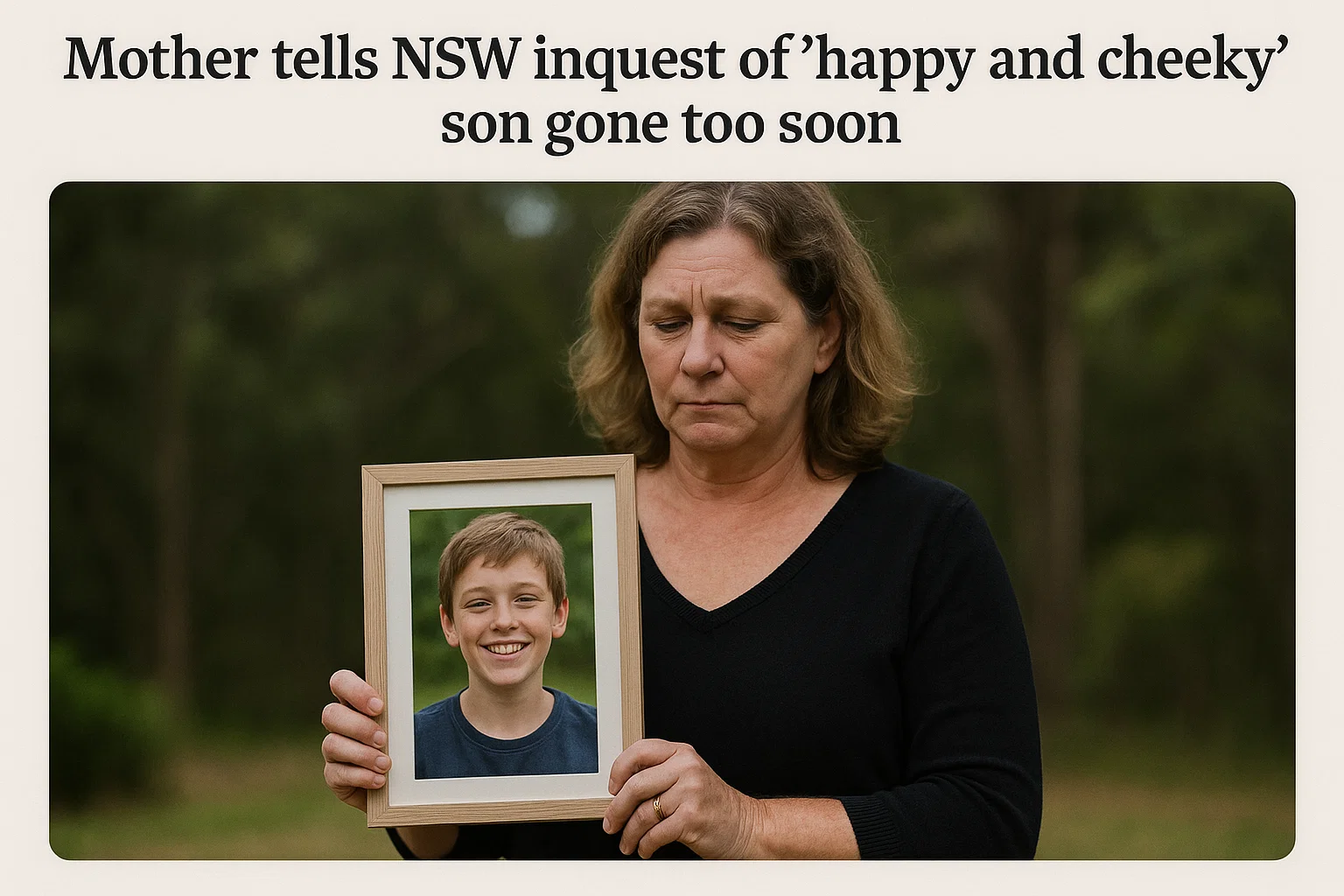
Fighting back tears in the Wagga Courthouse, the boy’s mother described him as a “happy and cheeky boy who loved to dance.” She recalled how his birth in 2017 brought light into her life during a difficult period.
“I don’t have the words to describe the impact losing [my son] had on me and my family,” she told the inquest. “I didn’t get much time with my son, but the time I did have was the best time of my life.”
The boy’s paternal great-grandfather also submitted a written statement, reflecting on the brief time he had with his great-grandson. “Sadly, this was the only time I met him,” he wrote. “The next time I saw him was in his coffin being buried.” He said the loss had “devastated” the family.
Gaps in Child Safety Oversight
The inquest also heard testimony from a former regional manager with Mission Australia, who had been overseeing the Brighter Futures program case for the family. The manager stated that a new safety assessment should have been carried out after KBS was returned to his mother’s care in December 2018 — just weeks before his death — given past concerns about drug use and child neglect.
Although KBS had been staying with his grandmother as recently as November 2018, the boy’s mother had returned to Wagga from the coast and resumed care of him in early December. The manager acknowledged that this change should have triggered a fresh assessment. However, the inquest was told that because Brighter Futures is a voluntary program, Mission Australia case workers lacked the legal authority to enforce compliance, unlike the Department of Communities and Justice (DCJ).
A former Mission Australia case worker testified that the family began to disengage with support services in the weeks leading up to KBS’s death. After a handover in late 2018, the new case worker made several unannounced visits in January 2019 and said they believed the family was avoiding them.
“I could hear people inside, but the doors weren’t answered,” the worker said. “That’s when I had concerns they were avoiding me.”
Mission Australia was referred the case by DCJ in November 2018, but the rapid escalation and breakdown in contact left case workers unable to assess the child’s wellbeing before his death.
Deputy State Coroner Carmel Forbes will deliver her findings at a later date.
