


Despite Millennials and Gen Zs forming the largest group of eligible voters, young people remain significantly underrepresented in Australia’s federal parliament.
The average age of members in the previous parliament was 52, with less than a quarter aged 45 or younger, compared to the median age of the general Australian population, around 38.
This age difference was immediately evident to Senator Fatima Payman.
“Walking into Parliament House, where the average age was closer to my father’s than my own, it was challenging to feel I belonged,” Senator Payman told triple j hack.
Elected at 27, Senator Payman was the youngest parliamentarian in her term, often referred to as the “Baby of the House” or Senate.
There were times she felt out of place, particularly when colleagues referenced political events from the 1980s or mentioned people as though everyone knew them personally.
Her life experiences frequently differed from those of her colleagues.
“I was the only person in the room still paying off a HECS debt, or who was familiar with TikTok and BeReal,” she said.
Payman mentioned that being younger allowed her to question established norms openly, even within her own party.
“I wasn’t a political ‘nepo baby’, so I didn’t carry past alliances or political baggage,” she said.
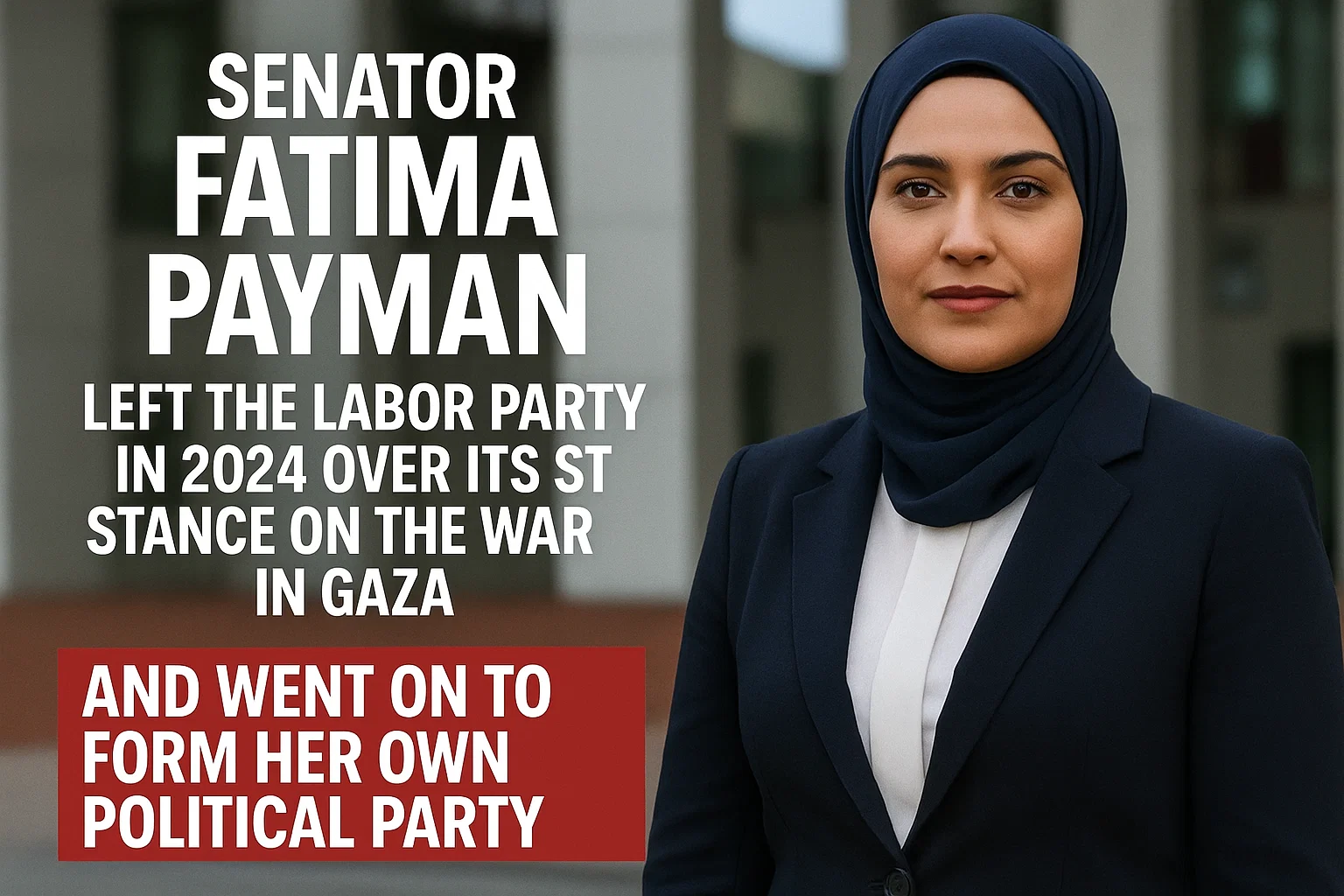
She ultimately left the Labor Party in 2024 due to its position on the Gaza conflict, forming her own party, Australia’s Voice.
According to Payman, her former Labor colleagues often underestimated her capabilities.
“There was constant micromanagement and frequent check-ins, as if they didn’t see me as an equal,” she explained.
This feeling of underestimation intensified during international delegations.
“People occasionally mistook me for an intern or junior staffer, and I had to clarify that I was a senator representing Western Australia,” she said.
She acknowledged her role as Australia’s first hijab-wearing young senator made some uncomfortable, but she embraced the discomfort as necessary for meaningful change.
“I’m not changing my dress or speech just to fit in,” she said.
Senator Payman believes the increase in young representatives is positive but urged major parties to better listen to younger voices.
“Having a seat at the table is great, but younger MPs also need the microphone. Our voices must be heard,” she emphasized.
Shifting the Dialogue Positively
Wyatt Roy was just 20 years old when elected to the House of Representatives, making him the youngest-ever federal parliamentarian.
Roy shared with triple j hack that during his 2010 campaign, Labor opponents repeatedly highlighted his youth negatively, using the slogan “Don’t trust a learner in Longman” in their election posters.
Despite this, voters saw beyond his age.
“The public was open to new ideas and a long-term vision for the future,” he recalled.
Roy noted that it took some months after being elected to fully grasp the magnitude of his role.
His colleagues, however, embraced him, often seeking his insights.
“In many ways, being younger was an advantage because senior colleagues realized we might need fresh approaches,” he explained.
Roy added that his age helped colleagues appreciate the long-term impact of their decisions.
“They often turned to me, noting I’d be the one still around when today’s decisions impacted the future,” he said. “It genuinely improved the debates.”
He remains optimistic that someone younger will soon break his record.
Overcoming Early Challenges
Senator Sarah Hanson-Young, initially the youngest woman ever elected to Australia’s parliament in 2007, reflected on her early struggles.
Her record was surpassed this year by Labor’s Charlotte Walker, elected at 21, marking the incoming parliament as one of Australia’s youngest and most diverse ever.
Hanson-Young told triple j hack that as a young woman nearly two decades ago, she felt clearly targeted.
“Being younger, female, and a single mother made me stand out, which led to becoming a target,” she recounted.
Despite the challenges, her youth empowered her to push boundaries and pioneer new ways of connecting with constituents.
“I was the first Australian politician to use Twitter, now known as X,” she said, noting this approach allowed more direct voter engagement but also exposed her to online harassment.
She described experiencing sexism and harassment within parliament itself. Initially, older colleagues advised her to ignore it, urging her not to let bullies sense her discomfort.
“As a young person proving yourself, you don’t want to be the one complaining,” she explained.
Over time, Hanson-Young realized silence didn’t resolve the issue, and eventually gained the confidence to confront harassment openly.
In 2018, she filed a defamation lawsuit against Senator David Leyonhjelm for making derogatory comments about her. The following year, she received $120,000 in damages, donating the sum to women’s organizations.
Hanson-Young believes her decision to speak out helped spur broader discussions about parliamentary culture.
Reflecting on her early career and today’s parliamentary climate, Hanson-Young sees positive cultural shifts, noting that younger representatives entering parliament now could further accelerate this progress.
“My daughter is now 18, and seeing her generation set clear boundaries gives me hope. It’s healthier for women, men, and society overall,” she concluded.
