


The Reserve Bank of Australia is increasingly likely to leave interest rates on hold at its final meeting of 2026, after minutes from its November meeting revealed a growing debate inside the central bank over how much further rates need to rise.
Minutes released on Tuesday showed six members of the Reserve Bank’s Monetary Policy Board voted to raise the cash rate by 0.25 percentage points to 4.85 per cent, while three preferred to leave it unchanged. The increase was the Reserve Bank’s fifth this year and its second consecutive rise.
Commonwealth Bank Head of Australian Economics Belinda Allen said the detailed arguments from those who opposed the increase highlighted the likelihood of a pause in December.
“We judge December will not be a live meeting after two back-to-back interest rate hikes,” Allen said.
The view was consistent with CommBank’s assessment following the November decision that the Reserve Bank was likely to remain on hold after the split vote.
Why three Board members wanted to hold
The minutes showed the minority argued there was no need to decide immediately whether further interest rate increases were required. They pointed to the delayed impact of previous rate rises, a larger-than-expected increase in unemployment and the downturn in the housing market.
The three members were concerned the economy could be approaching a “materially sharper downturn” and placed more weight than the majority on the downside risks to economic growth.
Allen said the arguments against another increase were particularly important because the case for higher rates was already well understood.
“The case to hold provided some additional insights” and highlighted the hurdles to further increases, she said.
Those hurdles included evidence that the four percentage points of rate increases delivered before the November meeting were still flowing through the economy, as well as signs that inflation risks might be more balanced than the Reserve Bank staff assessment suggested.
Some Board members pointed to slowing market services inflation, stable wages growth and the fact that some evidence of higher inflation expectations was still new, or imprecise.
Why the majority raised rates
The majority of the Board, however, remained more concerned about inflation. The minutes showed those members believed the inflation outlook had deteriorated and that risks remained skewed towards further increases.
They were also concerned financial conditions might not be restrictive enough to rein inflation in, particularly if the neutral interest rate — the theoretical rate at which monetary policy is neither stimulating nor slowing the economy — had risen.
The Reserve Bank said estimates of the neutral rate appeared to have moved higher in recent years, meaning a given cash rate might be doing less to restrain economic activity than it once did.
But Allen said CommBank’s modelling suggested monetary policy was already restrictive.
“The cash rate is now substantially above model estimates of the neutral rate”, she said, adding that CommBank was also seeing evidence that households were changing their behaviour as borrowing costs rose.
Are households starting to pull back?
The Reserve Bank had pointed to large household savings buffers as one reason higher interest rates might not have been hitting spending as hard as expected. In particular, the minutes said substantial balances in mortgage offset accounts could be weakening the cash flow channel through which monetary policy affected household spending.
Allen agreed those buffers had provided support, but said CommBank data showed flows into offset and redraw accounts had slowed as households reduced additional mortgage repayments.
“This can only go on for so long and we are seeing signs households are pulling back on non-fuel spending,” she said.
The housing market had also continued to weaken. New housing lending fell 15.5 per cent in the September quarter, while investor lending dropped 32.3 per cent and home prices continued to fall.
That contrasted with recent household spending figures that had been somewhat stronger than expected, adding to the mixed signals facing the Reserve Bank.
Inflation risks remain
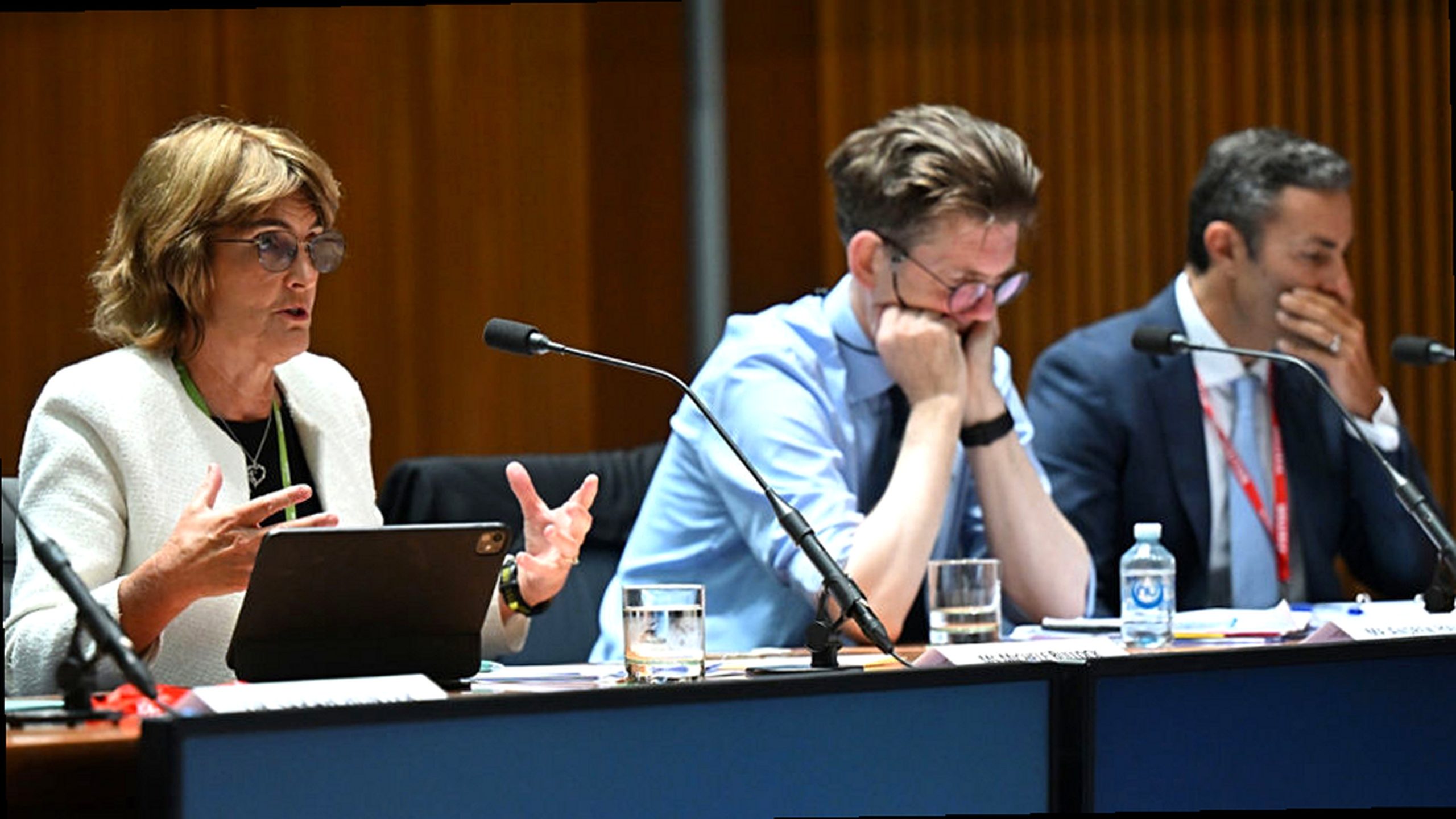
Speaking at the ASIC Annual Forum in Sydney on Tuesday, Reserve Bank Governor Michele Bullock identified three particular concerns around inflation, including oil prices remaining elevated, stronger demand from the AI investment boom and the risk of higher inflation expectations becoming embedded.
But she also pointed to the housing downturn and heightened economic uncertainty as providing a counterbalance which could offset some of those inflation pressures.
The Reserve Bank’s November forecasts had inflation remaining above 3 per cent until late 2027 and returning to the midpoint of its target range in mid-2028.
What happens next
Allen said CommBank continued to expect the Reserve Bank to remain on hold unless inflation surprised materially to the upside.
“The case to hike again will likely be driven by materially higher inflation than forecast or confidence the economy is not slowing as expected,” she said.
Several important data releases were still due before the Reserve Bank’s 7 and 8 December meeting, including October inflation figures on 24 November and September quarter GDP on 2 December.
But Allen said February was more likely to be the next meeting at which another rate rise could be seriously considered.
“February does remain ‘live’ but much will depend on the path of inflation and the economy over coming months,” she said.
CommBank has two rate cuts pencilled in for August and November 2027, although Allen said the near-term risks remained tilted towards a higher cash rate.
“Recent data highlight that the economic cycle is turning,” she said.
