


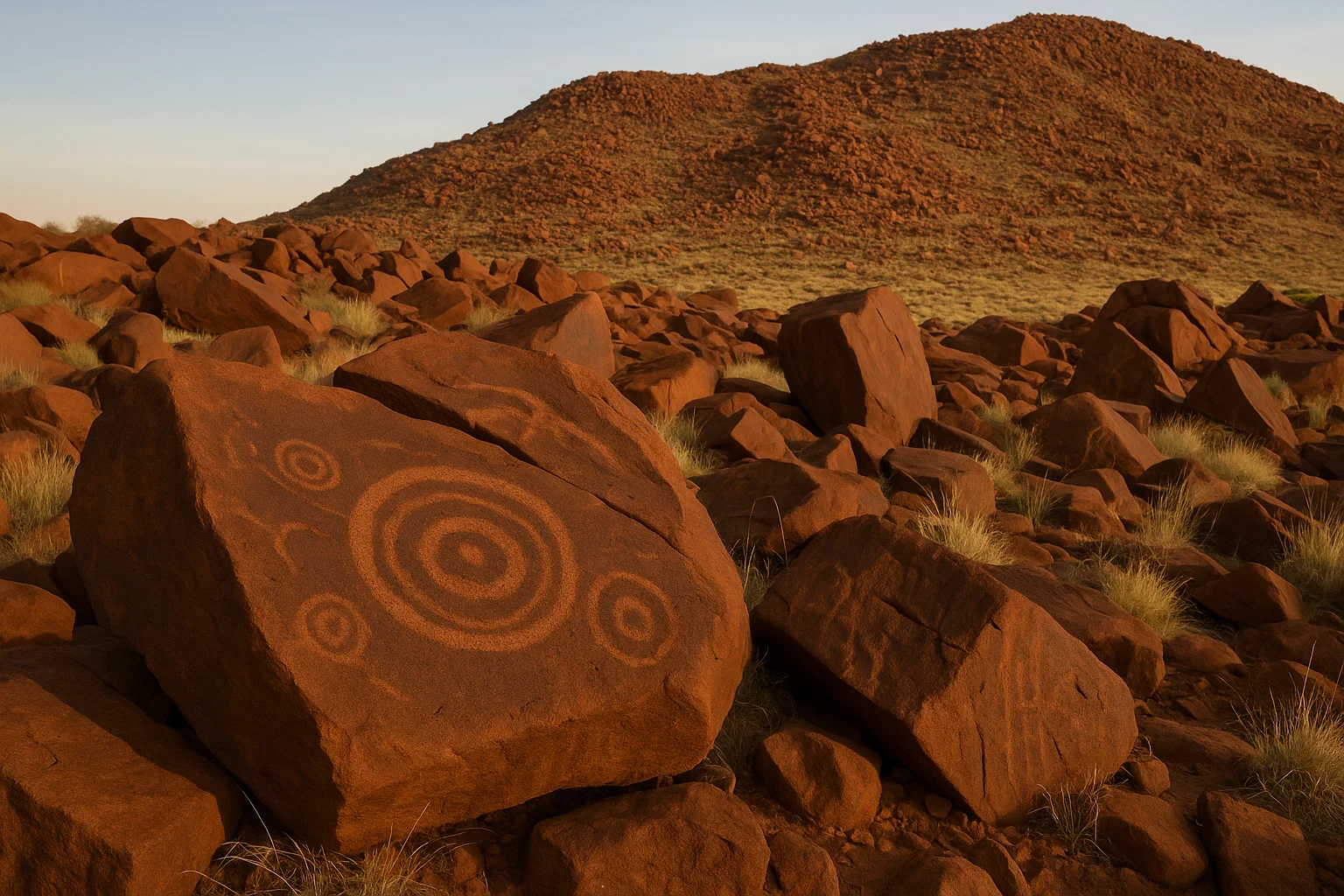
The United Nations is expected to reject Australia’s bid to secure World Heritage status for a vast area of ancient Aboriginal rock art in Western Australia’s north, raising concerns about industrial emissions harming the site near Karratha.
The Burrup Peninsula, known as the Murujuga Cultural Landscape, is home to petroglyphs estimated to be around 40,000 years old. The nomination process for World Heritage listing began in February 2023 under then-Federal Environment Minister Tanya Plibersek.
However, the nomination now appears at risk.
In a draft decision, the World Heritage Committee has sent the bid back to the Australian government, urging it to halt any new industrial development near or within the Murujuga area.
The committee also called for the “total removal of degrading acidic emissions” that are currently impacting the rock art.
This development comes as current Federal Environment Minister Murray Watt considers whether to approve a 45-year extension for Woodside’s North West Shelf LNG operations on the Burrup Peninsula. His decision is due by Saturday.
Protection of Global Significance
The UN requested that the Australian government notify it of any future major projects that could affect the “outstanding universal value” of the site — a designation given to landmarks considered globally significant and worthy of preservation for all humanity.
The draft recommendation will be reviewed at a UNESCO meeting in Paris this July.
For decades, Murujuga elders and scientists have been studying the effects of industrial activity on the ancient carvings. On Friday, the WA government released long-awaited findings from its Rock Art Monitoring Program.
However, concerns have been raised over the credibility of the study, with one prominent scientist alleging “unacceptable interference” in the research process.
The study confirmed that rock surfaces closer to industrial sites showed more signs of degradation than those farther away.
UNESCO’s draft decision advises Australia to complete its scientific assessments on industrial impacts before the nomination proceeds. It also recommends broader protective measures for the cultural and natural values of the region — including both land and marine environments.
